



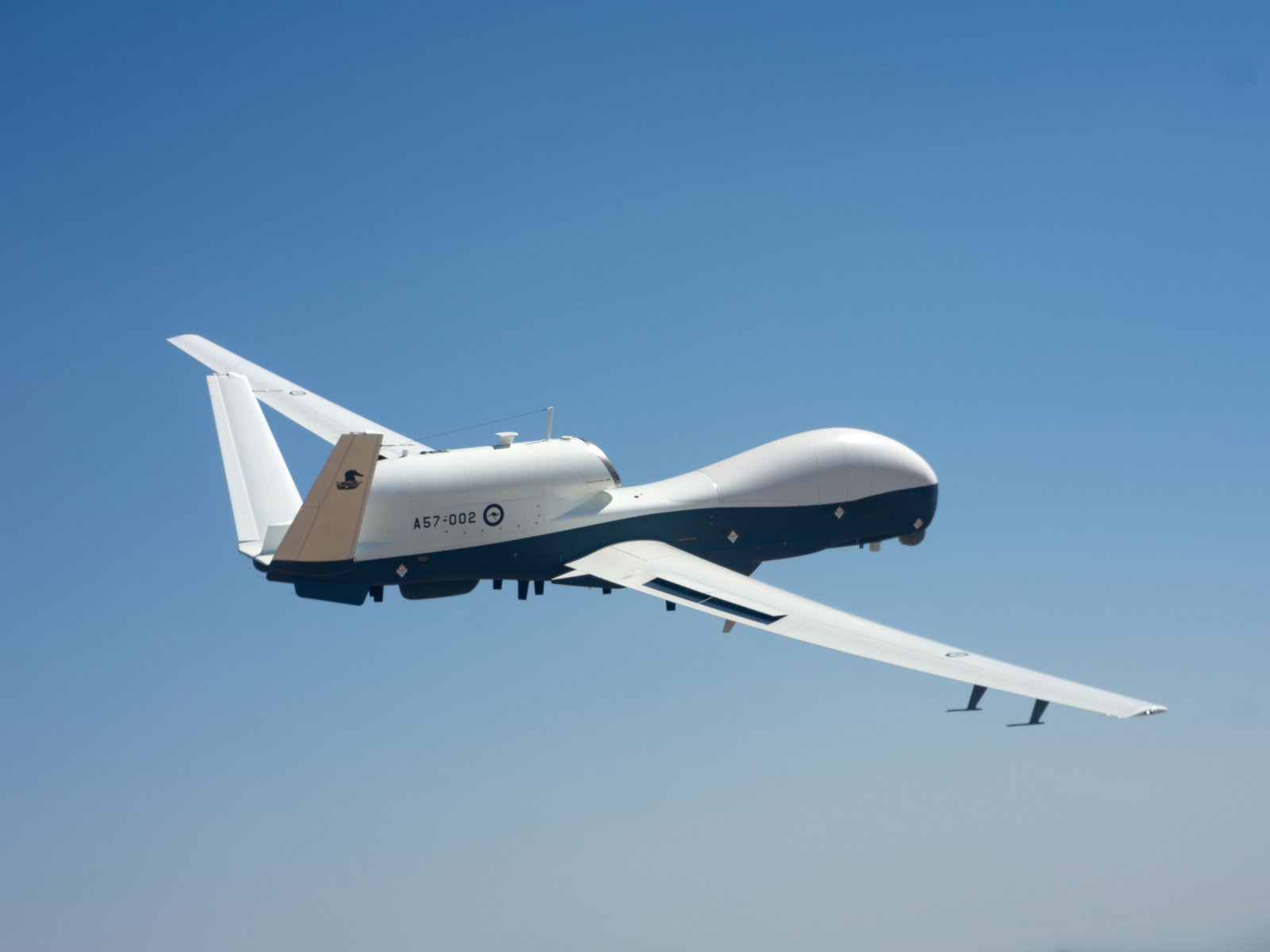
A high-value U.S. Navy surveillance drone has reportedly gone missing over the strategic waters near the Strait of Hormuz, sparking fresh questions about regional security and military activity in one of the world’s most sensitive maritime zones. The MQ-4C Triton aircraft was on a routine reconnaissance mission when it disappeared from radar.
According to Daljojo News analysis, the incident adds another layer of uncertainty to an already fragile security environment in the Gulf region. Any disruption involving advanced surveillance systems in this area carries strategic implications far beyond the immediate loss of equipment.
The disappearance comes at a time when maritime routes in the Gulf are under heightened monitoring due to past tensions involving Iran and the United States, making the timing of the incident particularly significant for global security observers.
What Happened?
Reports indicate that the MQ-4C Triton, a long-range unmanned surveillance aircraft operated by the U.S. Navy, was conducting a monitoring mission over the Persian Gulf and the Strait of Hormuz region. The flight reportedly lasted around three hours before the aircraft began its return journey to a naval air station in Sicily.
During the return phase, the drone is said to have transmitted an emergency signal before abruptly losing contact with radar systems. Shortly after the distress transmission, the aircraft reportedly deviated from its planned route and headed briefly toward the Iranian side of the operational zone.
Moments later, the drone began losing altitude rapidly and ultimately disappeared from tracking systems. Military officials have not yet confirmed whether the aircraft was destroyed, intercepted, or suffered a technical malfunction during flight.
The MQ-4C Triton is considered one of the most advanced maritime surveillance drones in operation, with an estimated value exceeding 200 million dollars. It is designed for long-duration intelligence gathering, particularly in high-risk maritime corridors such as the Strait of Hormuz.
Why This Matters
The Strait of Hormuz remains one of the most critical chokepoints for global energy transportation, with a significant portion of the world’s oil shipments passing through its waters daily. Any disruption in surveillance or security operations in this region can quickly escalate into broader geopolitical concerns.
The disappearance of a high-altitude reconnaissance drone raises questions about situational awareness in an already tense maritime environment. Such aircraft play a key role in monitoring naval movements, identifying potential threats, and supporting allied naval coordination across the Gulf.
If the aircraft was indeed lost due to hostile action, it could signal a shift in the operational risks facing advanced U.S. surveillance platforms in contested airspace. Even if the cause is a technical failure, the timing has intensified scrutiny on regional stability.
The incident also highlights the increasing vulnerability of high-value unmanned systems operating near contested zones where electronic interference, air defense systems, or navigational disruptions may be present.
What Analysts or Officials Are Saying
Defense analysts suggest that the disappearance of an MQ-4C Triton drone cannot be treated as a routine technical failure until full recovery and investigation data is available. The aircraft’s advanced communication systems typically allow for detailed tracking, making a sudden loss of contact unusual.
Some security observers believe the incident may reflect heightened electronic warfare activity in the region, while others caution against drawing early conclusions without verified evidence. Officials familiar with maritime surveillance operations stress that both technical malfunctions and external interference remain possible scenarios.
Regional defense commentators have also pointed out that the Strait of Hormuz has historically been a zone of heightened military monitoring and occasional confrontations, making any unexplained aerial loss particularly sensitive for both sides involved in Gulf security dynamics.
Daljoog News Analysis
The disappearance of a strategic surveillance asset like the MQ-4C Triton underscores how fragile modern intelligence networks can become in contested environments. Even highly advanced systems are not immune to the combined risks of technical failure, environmental interference, or hostile disruption.
What makes this case particularly significant is not only the loss of an expensive military platform but the timing and location of the event. The Strait of Hormuz is already under intense geopolitical observation, and any incident here tends to amplify existing tensions between major regional and global powers.
This event also highlights a growing challenge for modern militaries: reliance on unmanned systems operating in contested airspace where attribution of incidents becomes difficult. Without clear evidence, uncertainty itself becomes a strategic factor that can influence diplomatic and military decision-making.
From a broader perspective, such incidents contribute to a climate of mistrust, where every unexplained event is interpreted through the lens of escalation risk. This increases pressure on communication channels and raises the importance of transparent investigation mechanisms.
What Happens Next
Attention will now shift to whether the United States Navy can recover debris or data linked to the missing drone. Any recovered telemetry could help determine whether the loss was caused by technical failure, electronic disruption, or external engagement.
International monitoring agencies and naval forces in the region are expected to increase surveillance activity over the Strait of Hormuz in response to the incident. This may include adjustments in drone flight patterns and expanded maritime patrol coverage.
Diplomatic channels are also likely to remain alert, particularly given the sensitivity of operations in the Gulf following recent tensions. Any confirmation of external involvement could significantly escalate political pressure across the region.