


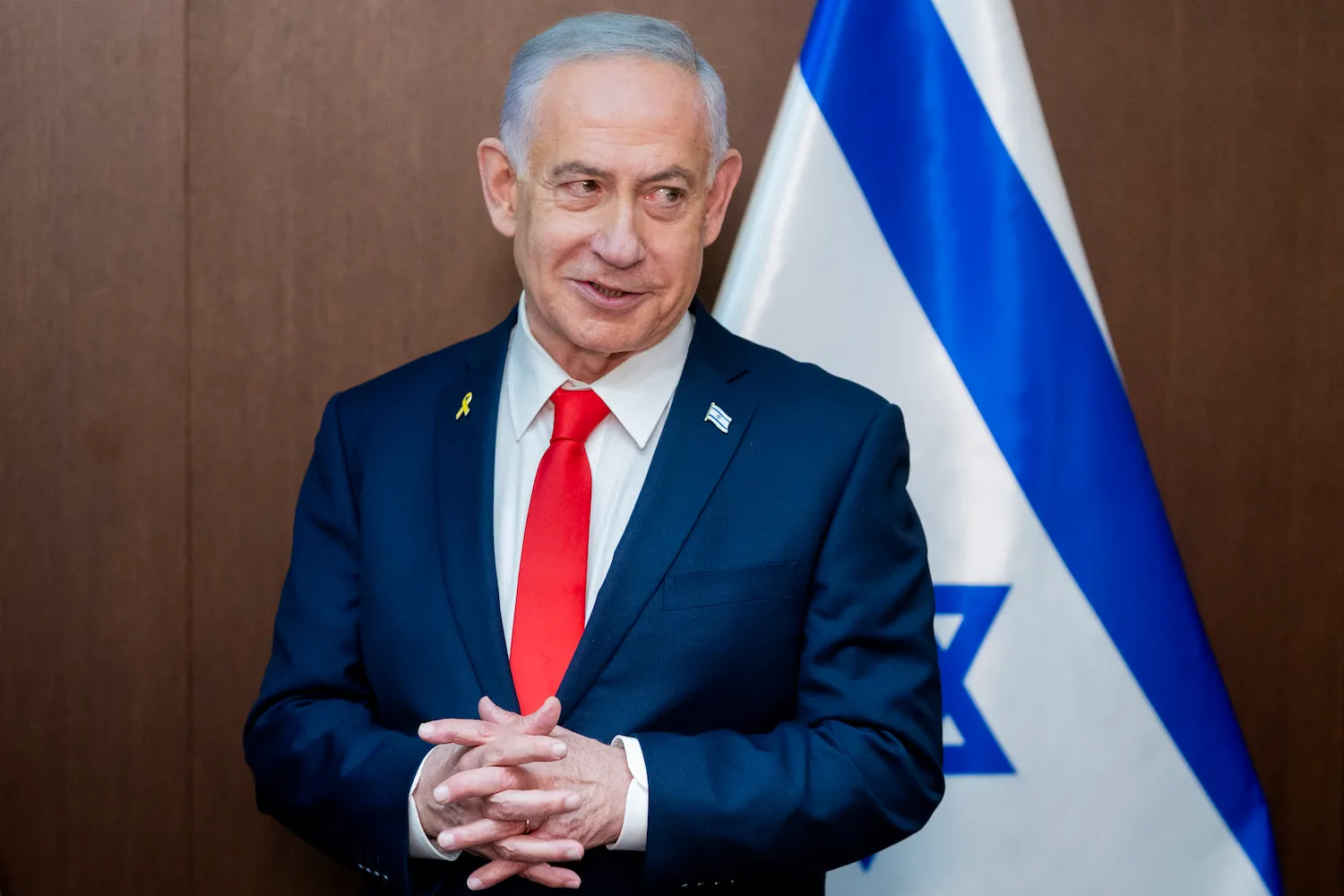
Israeli Prime Minister Benjamin Netanyahu has resurfaced publicly after days of speculation surrounding his whereabouts during escalating hostilities between Israel and Iran. Netanyahu addressed journalists on Thursday through a video link, marking his first public appearance since the conflict intensified.
According to Daljoog News analysis, Netanyahu’s reappearance appears aimed at countering rumors circulating across regional media suggesting he had been killed during Iranian strikes. His remarks, however, reflected a more cautious tone about the direction of the war.
The press conference took place amid ongoing missile alerts across central Israel, highlighting the continuing security pressure on the country as aerial exchanges between Israel and Iran continue to intensify.
What Happened?
After days of silence and growing rumors regarding his safety, Israeli Prime Minister Benjamin Netanyahu appeared before journalists via video conference on Thursday.
The remote briefing came after reports circulated in several Iranian media outlets claiming that Netanyahu had been killed during recent Iranian attacks. Israeli officials did not formally address the rumors beforehand, which helped fuel speculation across regional media and social platforms.
During the press appearance, Netanyahu was not physically present at the location and joined via a secure video link.
The timing of the appearance was notable. As Netanyahu spoke, missile warning sirens were reportedly sounding in parts of central Israel, indicating continued incoming threats linked to the expanding conflict with Iran.
Netanyahu used the briefing to discuss the ongoing military campaign against Iran and its regional allies. He stated that nearly two weeks of sustained aerial operations had significantly weakened elements of Iran’s security structure.
He specifically referenced damage to the Islamic Revolutionary Guard Corps and the Basij paramilitary network, organizations that play key roles in Iran’s internal security and regional operations.
However, Netanyahu acknowledged that even sustained air operations conducted with support from the United States might not necessarily lead to the collapse of Iran’s governing system.
Why This Matters
Netanyahu’s appearance comes at a critical moment in the conflict, as both sides intensify military pressure without entering full-scale regional war.
The Israeli government has long argued that Iran’s leadership structure and military networks represent a strategic threat not only to Israel but to regional stability.
At the same time, the current conflict shows the limits of military power in forcing rapid political change inside another country.
Even with advanced air operations and intelligence coordination, removing an entrenched political system such as Iran’s leadership structure remains an extremely complex objective.
The situation also raises concerns about escalation across the broader Middle East.
Israel’s ongoing operations are not limited to Iranian targets alone. Netanyahu confirmed that military pressure would continue against armed groups aligned with Iran in neighboring countries.
Security analysts warn that expanding the conflict to additional fronts could further destabilize the region.
What Analysts or Officials Are Saying
During the press briefing, Netanyahu was asked about possible Israeli actions against key figures within Iran’s leadership structure.
Among those mentioned was Mostafa Khamenei, who Israeli officials have recently identified as a central figure in Iran’s current wartime decision-making.
Netanyahu responded cautiously to questions about potential targeted operations against Iranian leaders or commanders linked to allied armed groups in Lebanon.
He indicated that Israeli authorities do not intend to publicly outline specific military plans or operational targets.
Netanyahu also addressed speculation about whether Israel is supporting opposition groups inside Iran with weapons or logistical assistance.
While he did not confirm such activities, he suggested that external pressure could help create conditions that weaken the Iranian leadership.
However, he acknowledged that any political change inside Iran would ultimately have to come from within the country itself.
Daljoog News Analysis
Netanyahu’s remarks reveal a more complicated reality behind the current conflict.
Despite strong rhetoric and sustained military operations, Israeli leadership appears increasingly cautious about predicting the collapse of Iran’s government.
This reflects the broader historical challenge of using external military pressure to force regime change.
Modern conflicts often weaken political systems but rarely cause immediate collapse without internal political movements.
Netanyahu’s decision to appear via video rather than in person also underscores the security pressures facing Israeli leadership during the conflict.
Missile threats, drone attacks, and regional military risks have significantly increased the vulnerability of high-profile political figures.
At the same time, the circulation of false reports about Netanyahu’s death illustrates the growing role of information warfare in modern conflicts.
Competing narratives, misinformation, and psychological pressure are increasingly used alongside traditional military strategies.
For both Israel and Iran, the battle now extends beyond airspace and missile defense systems into the domain of political messaging and public perception.
What Happens Next
Military operations between Israel and Iran are likely to continue in the short term, particularly through aerial strikes and defensive interception systems.
Israeli forces are expected to maintain pressure on Iranian-linked groups across the region, especially in neighboring areas where Tehran has established military partnerships.
Diplomatic efforts from global powers may also intensify as concerns grow that the conflict could expand beyond its current scope.
Meanwhile, political developments inside Iran will be closely monitored by regional governments and international observers.