

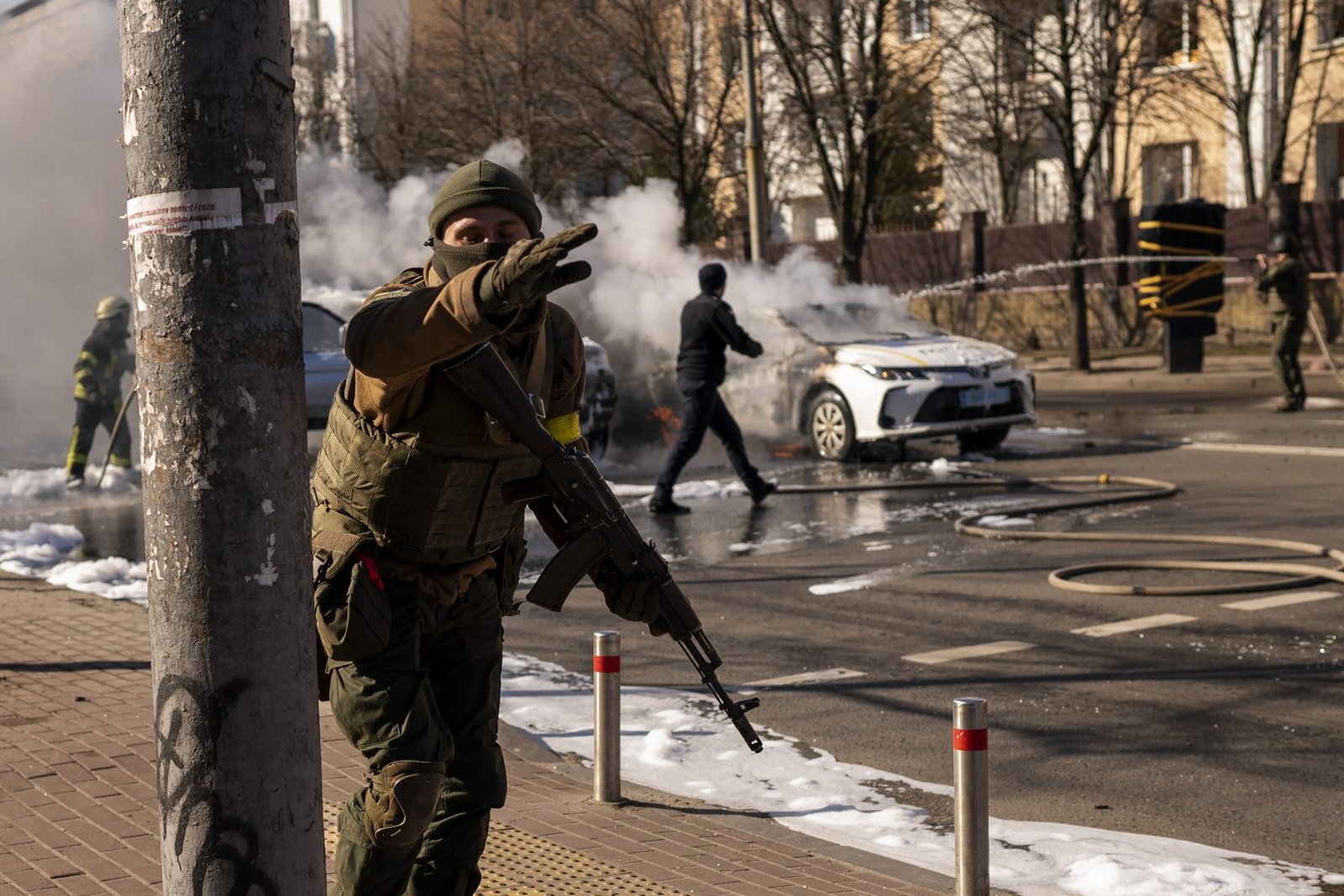
Russia-Ukraine war escalation: heavy fighting has been reported across multiple Ukrainian regions ahead of a 32-hour Easter ceasefire announcement, with both sides carrying out strikes that caused civilian casualties and infrastructure damage.
According to Daljoog News analysis the Russia-Ukraine war escalation highlights a familiar pattern in the conflict, where ceasefire declarations are often preceded by intensified military activity on both sides, raising doubts about immediate de-escalation prospects.
The latest Russia-Ukraine war escalation comes at a sensitive moment, as diplomatic efforts for prisoner exchanges continue while broader peace negotiations remain largely stalled under international mediation.
What Happened?
The Russia-Ukraine war escalation included a series of coordinated Russian strikes across Ukrainian territory before the temporary Easter truce came into effect. In Odesa, drone attacks reportedly damaged energy facilities, industrial sites, transport infrastructure, and residential buildings, with casualties reported among civilians.
In Kramatorsk, guided aerial bombs struck residential areas, injuring several people. Meanwhile, in Sumy, at least five civilians, including children, were injured after strikes hit homes and a kindergarten, causing significant structural damage.
On the Russian side, Ukraine also carried out counterattacks. In the Kursk region, a drone strike hit a fuel station in the city of Lgov, injuring civilians, including children. Additional drone attacks were reported in Russian-controlled areas of Belgorod and Donetsk, particularly in Yasynuvata, where multiple residential buildings were destroyed.
Russian investigators claimed that parts of foreign-made drones were recovered from the strike sites, suggesting continued international dimensions to battlefield technology.
Why This Matters
The Russia-Ukraine war escalation underscores how fragile temporary ceasefires remain in the ongoing conflict. Even when short truces are announced, military operations often continue or intensify before enforcement begins.
Civilian infrastructure remains a primary target in several regions, raising humanitarian concerns as residential buildings, schools, and energy systems continue to suffer repeated damage. This deepens the long-term recovery burden for affected cities.
At the same time, prisoner exchanges remain one of the few consistent diplomatic channels between Moscow and Kyiv. The scale of the latest exchange suggests that, despite battlefield escalation, limited cooperation mechanisms are still functioning.
What Analysts or Officials Are Saying
Military observers note that the Russia-Ukraine war escalation ahead of ceasefires is not unusual, as both sides often attempt to gain tactical advantage before temporary pauses in fighting take effect.
Ukrainian officials have repeatedly emphasized the need for stronger international pressure to ensure compliance with ceasefire terms and to protect civilian areas from repeated strikes.
Russian authorities, meanwhile, continue to frame Ukrainian drone operations as evidence of foreign involvement in the conflict, particularly pointing to recovered components of externally manufactured drones.
International mediators, including representatives involved in prisoner exchange negotiations, have described the latest swap of 175 prisoners from each side as a rare but significant diplomatic achievement, alongside the release of several civilian detainees facilitated through UAE mediation.
Daljoog News Analysis
The Russia-Ukraine war escalation ahead of a declared ceasefire reflects a broader reality of the conflict: symbolic diplomatic timelines often struggle to align with operational battlefield logic.
While ceasefires are intended to create humanitarian breathing space, both sides appear to use the hours leading up to them to strengthen positions or deliver final strikes, making immediate calm difficult to achieve.
The prisoner exchange, however, stands out as a critical reminder that even amid escalation, structured negotiation channels remain active. These exchanges, though limited in scope, represent one of the few measurable diplomatic successes in an otherwise frozen peace process.
The continued absence of breakthrough progress in broader US-mediated talks suggests that while tactical cooperation exists, strategic resolution remains distant.
What Happens Next
Following the Russia-Ukraine war escalation, attention will turn to whether the 32-hour Easter truce is respected on the ground and whether hostilities reduce meaningfully during the period.
Future developments will likely depend on whether prisoner exchanges can continue at a similar scale and whether international mediators can revive broader negotiation frameworks.
However, with both sides continuing drone and missile operations deep into each other’s territory, the risk of renewed escalation remains high even after short ceasefire windows.