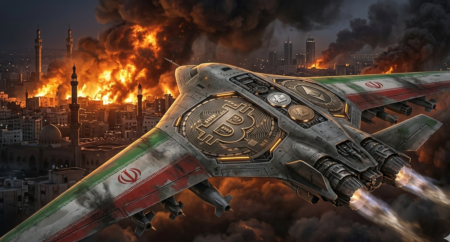
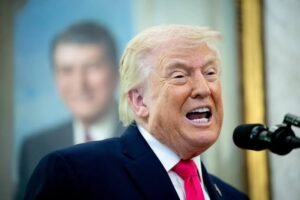


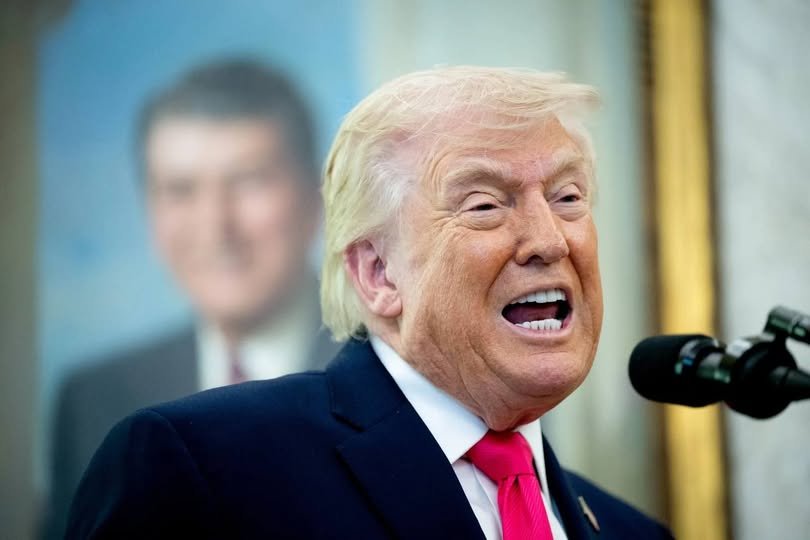
U.S. President Donald Trump has openly stated his intention to bring Iran’s oil sector under control, marking a sharp shift from indirect diplomatic signals to direct strategic messaging.
According to Daljoog News analysis, the statement signals a more aggressive posture toward Iran, linking energy dominance with broader geopolitical leverage at a time of rising regional instability.
The remarks come as tensions across the Middle East intensify and global oil prices surge, placing Iran’s energy infrastructure at the center of both economic and military calculations.
What Happened?
In an interview with the Financial Times, Trump said controlling Iran’s oil industry is a primary objective. He pointed to Venezuela as a precedent, referencing past efforts to influence control over its energy sector during political transitions.
The statement represents a notable escalation in rhetoric, moving beyond traditional diplomatic framing toward explicit economic targeting.
Attention has also turned to Kharg Island, Iran’s main oil export hub. Analysts say any attempt to control or disrupt this location would directly impact the country’s economic lifeline.
At the same time, reports indicate increased U.S. military readiness in the region. This includes deployments involving marine units and elements of the 82nd Airborne Division, signaling that preparations may extend beyond rhetoric.
Trump also revealed that indirect talks with Iran are ongoing, reportedly facilitated by Pakistan. He set a deadline of April 6, warning that failure to reach an agreement could lead to renewed strikes targeting energy infrastructure.
Why This Matters
Targeting Iran’s oil sector carries significant global consequences. Iran remains a key player in energy markets, and any disruption to its exports could further drive up oil prices.
Brent crude has already surged to around $116 per barrel within a month, reflecting market anxiety over supply disruptions and geopolitical risks.
A move to control or attack oil infrastructure would not only affect Iran’s economy but could also trigger wider regional conflict. Energy routes and production hubs across the Middle East could become vulnerable, amplifying global uncertainty.
The situation also raises concerns about the use of economic assets as strategic targets, a trend that blurs the line between military action and economic warfare.
What Analysts or Officials Are Saying
Analysts warn that any direct action against Iran’s oil infrastructure could provoke a strong response, potentially drawing multiple regional actors into a broader conflict.
Some experts view Trump’s remarks as a negotiating tactic designed to pressure Iran into concessions ahead of the stated deadline. Others see it as a genuine indication of policy direction.
Security observers note that targeting critical infrastructure like Kharg Island would be a high-risk move, as it could escalate tensions rapidly and disrupt global energy supply chains.
Officials familiar with regional diplomacy suggest that backchannel talks remain active, indicating that both confrontation and negotiation are unfolding simultaneously.
Daljoog News Analysis
Trump’s explicit focus on Iran’s oil sector reflects a strategy that prioritizes economic leverage as a tool of geopolitical influence.
Daljoog News analysis suggests that this approach carries both strategic logic and significant risk. Controlling or disrupting energy assets can weaken an adversary quickly, but it also increases the likelihood of retaliation and prolonged instability.
The dual track of military readiness and diplomatic engagement indicates a high-stakes balancing act. While negotiations may offer a path to de-escalation, the presence of deadlines and military deployments raises the pressure on all sides.
This moment highlights how energy security has become deeply intertwined with geopolitical conflict. Control over oil is no longer just an economic issue but a central element of power projection in global politics.
What Happens Next
The coming days will be critical as the April 6 deadline approaches. Any progress in negotiations could ease tensions, while failure may lead to escalatory actions.
Observers will closely monitor U.S. military movements and Iranian responses, particularly around key infrastructure sites.
Global markets are also expected to react quickly to any developments, especially in oil pricing and supply forecasts.