

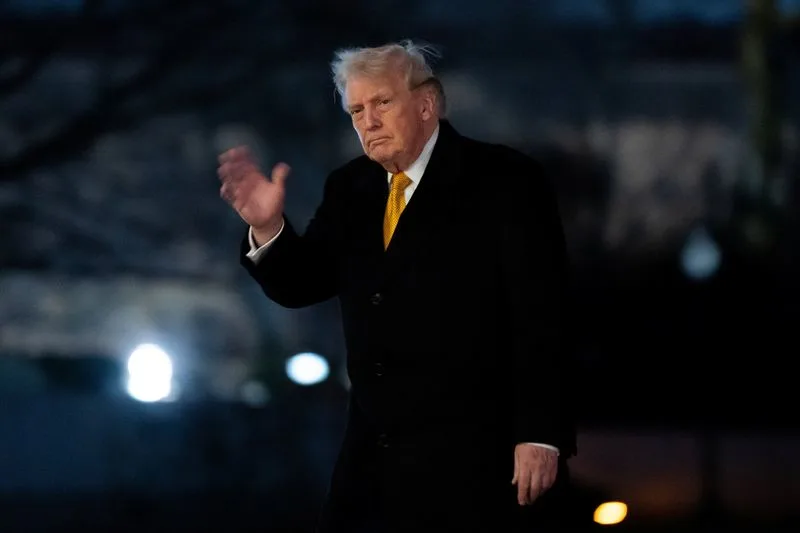
U.S. President Donald Trump has warned India that tariffs could increase if the country continues purchasing Russian oil.
Speaking to reporters aboard Air Force One on Sunday, Trump said Indian Prime Minister Narendra Modi “is a good guy” but emphasized that India needs to act to satisfy U.S. demands. “They do trade, and we can raise tariffs on them very quickly,” Trump added.
The statement comes after the U.S. doubled import tariffs on Indian goods to 50% last year in response to India’s heavy purchases of Russian crude. Despite the high tariffs, India’s exports to the United States rose sharply in November 2025.
Indian officials have maintained a firm stance on trade demands from Washington. While India’s imports of Russian oil have declined recently, the government has limited flexibility on other issues, such as agricultural products, according to trade data.
To manage oil imports, India is asking refiners to report weekly on purchases from Russia and the United States. Sources familiar with the matter told Reuters that Indian officials expect Russian crude imports to drop below 1 million barrels per day. This move is part of New Delhi’s effort to negotiate a trade deal with the U.S.
Trump and Modi have spoken on the phone at least three times since the tariffs were imposed, but no agreement has been reached. Trade talks between the two countries remain inconclusive.
Last month, India’s Commerce Secretary Rajesh Agrawal met with U.S. Deputy Trade Representative Rick Switzer in Delhi. The discussion focused on bilateral trade and economic ties, with both sides exploring ways to reduce tensions and improve cooperation.
The potential for higher tariffs underscores the ongoing friction between the world’s two largest democracies over energy and trade policies. Analysts say that while India seeks to balance energy needs with international relations, the U.S. is using tariffs as leverage to limit Russian oil purchases.
The trade dispute reflects broader geopolitical concerns. The U.S. has expressed objections to countries buying Russian energy following sanctions imposed on Moscow after its military actions in Eastern Europe. India, meanwhile, has emphasized energy security and cost management as priorities for its economy.
Observers note that future negotiations will likely focus on finding a compromise between tariff relief and reduced Russian oil imports. Both nations have strong economic ties, and the outcome of these talks could influence global trade patterns and energy markets.
For now, Trump’s warning signals that the United States is prepared to escalate economic pressure if India does not align with Washington’s policy goals on Russian oil. The coming weeks may determine whether tariffs will rise again or if a deal can be reached to maintain stable trade relations.