


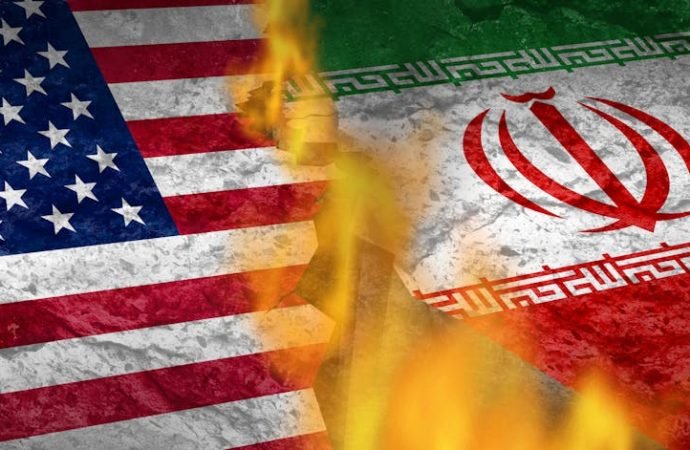
Tensions between the United States and Iran have reached new heights, with the Persian Gulf increasingly taking on the character of a potential battlefield. Military analysts warn that any U.S. attempt to seize strategic islands could become one of the most complex operations in modern history.
According to Daljoog News analysis, the scenario reflects both a military and political dilemma: while the islands hold critical strategic value, any misstep could trigger a humanitarian or economic crisis far beyond the immediate region.
The moment is particularly sensitive as regional shipping routes and global energy supplies hang in the balance, raising the stakes for Washington, Tehran, and neighboring countries alike.
What Happened?
U.S. military planners are reportedly considering operations targeting three strategic islands in the Persian Gulf: Kharg, Abu Musa, and Qeshm. Kharg handles roughly 90% of Iran’s oil exports, Abu Musa has long been a point of geopolitical tension, and Qeshm houses an extensive tunnel network for drones and missiles controlling the Strait of Hormuz.
Analysts suggest that a direct amphibious assault would be nearly impossible due to Iran’s control of maritime approaches. Instead, U.S. forces would likely rely on air insertion via aircraft like the V-22 Osprey or Black Hawk helicopters. The 82nd Airborne Division would form the core of such an operation, emphasizing speed and precision.
Preparations would likely include electronic warfare to disable Iranian radar systems and secure airspace before any ground assault. Despite this, Iranian defenses are expected to deploy decentralized “mosaic” strategies, allowing each unit to operate independently, launch sudden drone or missile attacks, and avoid giving U.S. forces any opportunity for conventional engagement.
Why This Matters
Control of these islands is not only symbolic but also directly impacts global energy flows. Any disruption to shipping in the Strait of Hormuz could send oil prices soaring and trigger economic ripple effects worldwide.
Additionally, sustaining an operation in such a contested region poses enormous logistical challenges. Supplying troops with food, fuel, and ammunition over air or sea routes exposes them to attacks from drones, missiles, or small boats. Analysts compare the logistical difficulties to World War II operations such as Market Garden, where initial insertion was easier than maintaining supplies under fire.
Beyond military considerations, the operation carries geopolitical risks. Regional actors such as Saudi Arabia, the UAE, and Yemen’s Houthis could alter the balance by enabling or targeting U.S. forces, potentially broadening the conflict across the Red Sea and Persian Gulf.
What Analysts or Officials Are Saying
Experts caution that overconfidence could result in disaster. Analysts point to Qeshm Island’s mountainous terrain and tunnel systems as areas where Iranian forces could conduct effective guerrilla operations. This could slow or stall U.S. advances and create significant casualties.
Former U.S. military officers note that while air insertion can bypass some defenses, the islands’ entrenched and decentralized Iranian units may neutralize conventional strategies. Each unit’s autonomy in responding to attacks would make coordinated U.S. advances extremely challenging.
Some observers also highlight that regional energy markets are highly sensitive. Even minor skirmishes or attacks on oil infrastructure could trigger price spikes, affecting not just the Middle East but the global economy.
Daljoog News Analysis
The Persian Gulf islands represent a high-risk, high-reward scenario for U.S. forces. While seizing control could limit Iran’s strategic reach and secure oil export routes, the operation is fraught with unpredictable variables—from guerrilla tactics to missile strikes and logistical vulnerabilities.
Iran’s decentralized defense model ensures that even if U.S. forces secure key positions, sustaining them will be difficult. Meanwhile, the involvement of regional powers and non-state actors could turn a localized operation into a wider regional conflict.
This scenario underscores a central lesson in military history: superior firepower alone does not guarantee success. Strategic patience, intelligence, and contingency planning are critical, especially when operations intersect with densely populated regions and sensitive infrastructure.
What Happens Next
The immediate focus will likely be on intelligence gathering, electronic warfare preparation, and regional diplomatic maneuvering. Any U.S. operation would require rapid execution under extreme risk.
Iran is expected to remain highly defensive, employing both conventional and unconventional tactics to counteract U.S. advances. Guerrilla-style attacks, drone strikes, and missile deployments could severely disrupt supply lines.
Global oil markets and neighboring nations will be closely monitoring the situation. Even minor incidents could trigger a cascade of economic and strategic responses.
Ultimately, while military planners weigh potential gains against significant risks, the Persian Gulf islands may determine the broader trajectory of U.S.-Iran tensions—and by extension, regional stability in the Middle East.