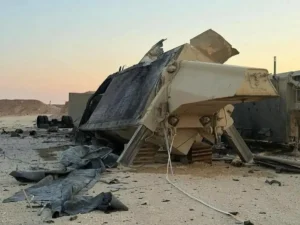

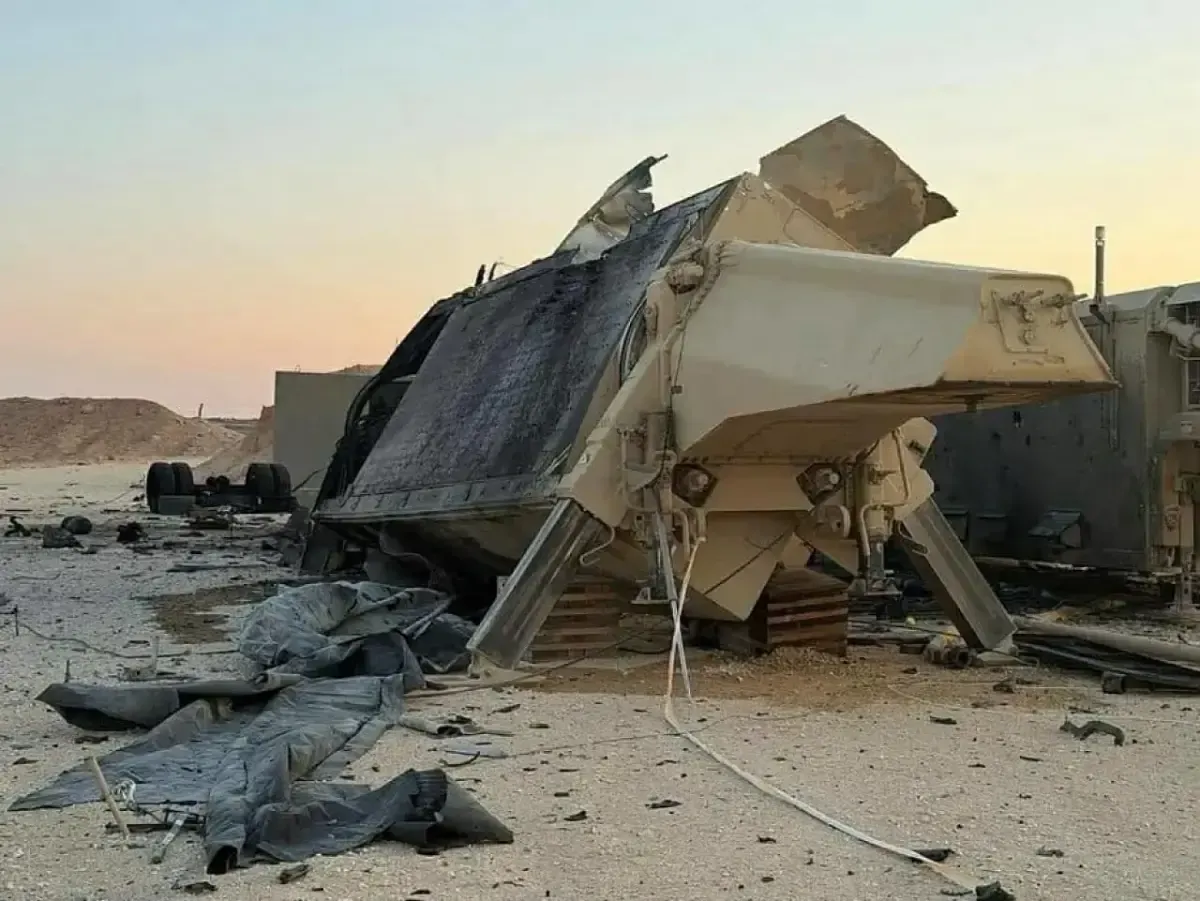
Satellite images reveal that Iran has successfully destroyed a $300 million U.S. radar system in Jordan, marking what analysts consider one of Tehran’s most significant achievements in the ongoing Middle East conflict. The strike comes amid a series of missile and drone attacks targeting American and allied defense systems across the region.
According to Daljoog News analysis, Iran’s focus on advanced U.S. missile defense radars illustrates a strategic shift toward undermining American military capabilities without engaging in direct full-scale confrontations.
The timing is notable as these attacks coincide with Iran’s broader campaign against U.S. and allied positions in the Gulf, Saudi Arabia, and the UAE, signaling an escalation in both reach and sophistication.
What Happened?
The satellite images show extensive damage to a U.S. Terminal High Altitude Area Defense (THAAD) radar stationed in Jordan. Each THAAD battery is valued at around $1 billion, with the radar itself costing $300 million. Designed primarily to intercept ballistic missiles, THAAD systems are a cornerstone of U.S. missile defense strategy in the Middle East.
Iran reportedly targeted other THAAD radars as well, including sites in the UAE and Saudi Arabia. While the exact damage to these systems is unclear, the strike on Jordan’s radar demonstrates Tehran’s ability to identify and neutralize high-value targets.
A typical THAAD battery requires about 90 personnel, six truck-mounted launchers, and 48 interceptors, with each interceptor costing approximately $13 million. The destruction of a radar can severely limit the system’s operational effectiveness, giving Iran a tactical advantage in the region.
Additional satellite monitoring and regional intelligence indicate that Iran’s missile and drone campaigns have forced U.S. defenses to operate under constant pressure, testing the resilience of advanced systems across multiple locations. More updates are available on the Daljoog News.
Why This Matters
The destruction of a U.S. radar in Jordan is a significant strategic milestone for Iran. THAAD systems form a critical layer of American missile defense in the Middle East, protecting allies and key infrastructure from ballistic threats.
Damaging or disabling these systems allows Iran to increase the effectiveness of its missile and drone campaigns, potentially exposing U.S. forces and allied nations to greater operational risk. It also demonstrates Tehran’s ability to plan and execute precision attacks against highly protected military assets.
The broader implications include heightened regional tension, increased risk for Gulf allies, and potential disruptions in U.S. defense posture. Analysts warn that repeated attacks on THAAD sites could force Washington to rethink deployments and escalate countermeasures, further raising the stakes. Updates on these developments are available through the.
What Analysts or Officials Are Saying
Defense analysts note that Iran’s strategy leverages asymmetric tactics to counterbalance its technological gap with the U.S. While Tehran cannot match U.S. military power head-to-head, targeting missile defense radars offers a way to shift the operational balance in its favor.
Daljoog reports that missile strikes against THAAD sites in the UAE and Saudi Arabia may have partially damaged radar functions, though confirmation is pending. Experts suggest that even partial degradation can limit intercept capabilities and put allied forces at risk.
U.S. officials are said to be assessing the damage while considering the implications for regional defense strategies. Some voices in Washington warn that repeated attacks on high-value assets could escalate tensions dramatically, potentially triggering retaliatory measures.
Daljoog News Analysis
Iran’s strike on the Jordan radar represents more than a tactical victory; it is a demonstration of evolving warfare strategies in the Middle East. By focusing on key technological assets rather than conventional forces, Tehran signals that it can impose strategic pressure on superior military powers.
The success also serves a psychological and geopolitical purpose, showing regional and global audiences that Iran can penetrate even the most fortified American systems. This may influence both allies and adversaries, shaping diplomatic negotiations and military planning.
However, the move carries risks. Escalating attacks on U.S. and allied defenses could provoke counterstrikes or trigger a broader regional conflict. The fragile balance of deterrence may be tested further as both sides respond to evolving threats.
What Happens Next
In the immediate term, U.S. forces are likely to assess damage, reinforce remaining THAAD systems, and review deployment strategies across the Middle East.
Iran may continue targeting advanced defense infrastructure in the Gulf, using drones and missiles to test U.S. response and operational resilience. Regional allies will be forced to evaluate their security measures in light of these developments.
Diplomatic efforts may intensify behind the scenes, but the public rhetoric from both Tehran and Washington suggests limited room for de-escalation. Analysts warn that any miscalculation could expand the conflict rapidly.
For now, Iran’s destruction of a $300 million radar in Jordan underscores the high stakes of the ongoing confrontation and highlights how technological assets are becoming central targets in modern Middle Eastern warfare.