



The U.S. aircraft carrier USS Abraham Lincoln unexpectedly withdrew from the Arabian Sea, raising questions about America’s posture in the Middle East. The move came amid rising tensions with Iran and the looming threat of advanced missile systems.
According to Daljoog News analysis, Washington’s decision reflects a growing recognition of Iran’s rapid-strike capabilities. The hypersonic missile Fattah, reportedly able to reach any target within two minutes, has shifted the strategic balance in the region.
This withdrawal occurred at a sensitive moment, as diplomatic signals and military deployments were converging. Experts note it signals a recalibration in U.S. military assertiveness, coinciding with statements from Iran’s Supreme Leader warning of a decisive response to any aggression.
What Happened?
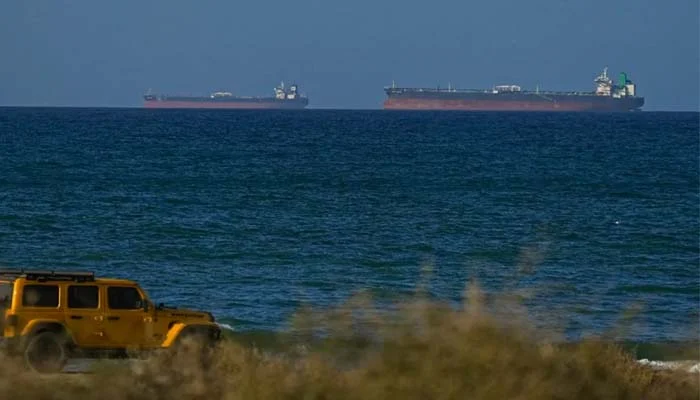
The USS Abraham Lincoln, a flagship of America’s naval power, was stationed in the Arabian Sea with apparent readiness for operations near Iran. Suddenly, the carrier retreated without public explanation, turning off its transponder to conceal its location.
The trigger, according to multiple sources, was the threat posed by Iran’s hypersonic missile, Fattah. This missile is claimed to strike targets within 120 seconds and can maneuver mid-flight to evade conventional radar and defense systems. Such capabilities dramatically reduce reaction time for even the most advanced military forces.
Pentagon officials reportedly monitored the missile’s test data closely. The combination of speed, agility, and stealth meant that conventional show-of-force tactics could leave the carrier vulnerable, prompting the precautionary withdrawal.
Why This Matters
The retreat raises important questions about U.S. military influence in the Middle East. Once a symbol of near-unmatched naval supremacy, the Abraham Lincoln’s withdrawal highlights a gap between political rhetoric and battlefield reality.
Daljoog News analysis suggests that Iran’s growing missile capabilities have created a deterrence effect, shifting the power dynamics in the region. The incident demonstrates that even the world’s strongest military is not invulnerable to technological advances.
Strategically, the move may also signal caution to allies and adversaries alike. U.S. forces may need to reconsider deployments and tactics in areas where Iran’s missile arsenal can reach in minutes.
What Analysts or Officials Are Saying
Military experts note that hypersonic missiles fundamentally change regional calculations. Unlike traditional ballistic missiles, they combine speed, unpredictability, and advanced targeting to reduce interception chances.
One defense analyst told Daljoog News that the Fattah missile’s claimed two-minute strike capability “forces even the most confident commanders to reconsider aggressive maneuvers.” Officials in Washington reportedly saw this as a test case for American deterrence limits.
Meanwhile, Tehran’s leadership has framed the missile as a strategic equalizer. Statements from Supreme Leader Ayatollah Ali Khamenei emphasized a swift and decisive response to any attack, signaling that deterrence is now mutual.
Daljoog News Analysis
The U.S. withdrawal is less a sign of weakness and more an acknowledgment of a shifting reality. Trump’s administration has often projected military bravado, yet technological leaps like Iran’s hypersonic program demand caution.
Daljoog News interprets the incident as a turning point: traditional displays of force may no longer guarantee strategic leverage in the Middle East. Iran’s ability to threaten high-value targets within minutes forces the U.S. to balance show-of-strength politics with pragmatic survival tactics.
This also reshapes narratives about control in the region. Where once Washington dictated terms, Tehran’s advanced capabilities now ensure it cannot be ignored in any military calculation.
What Happens Next
Observers expect heightened caution in U.S. deployments near Iran. Future carrier movements may rely more on stealth, electronic countermeasures, and long-range strike capabilities rather than visible shows of power.
Diplomatically, this incident could pressure both sides toward negotiation, as overt confrontation carries immediate risks. Regional allies will also be watching, adjusting their own military and strategic postures in response to the changed balance.
The situation underscores a new era in the Middle East: technological innovation, rather than sheer numbers, increasingly dictates strategic advantage.