


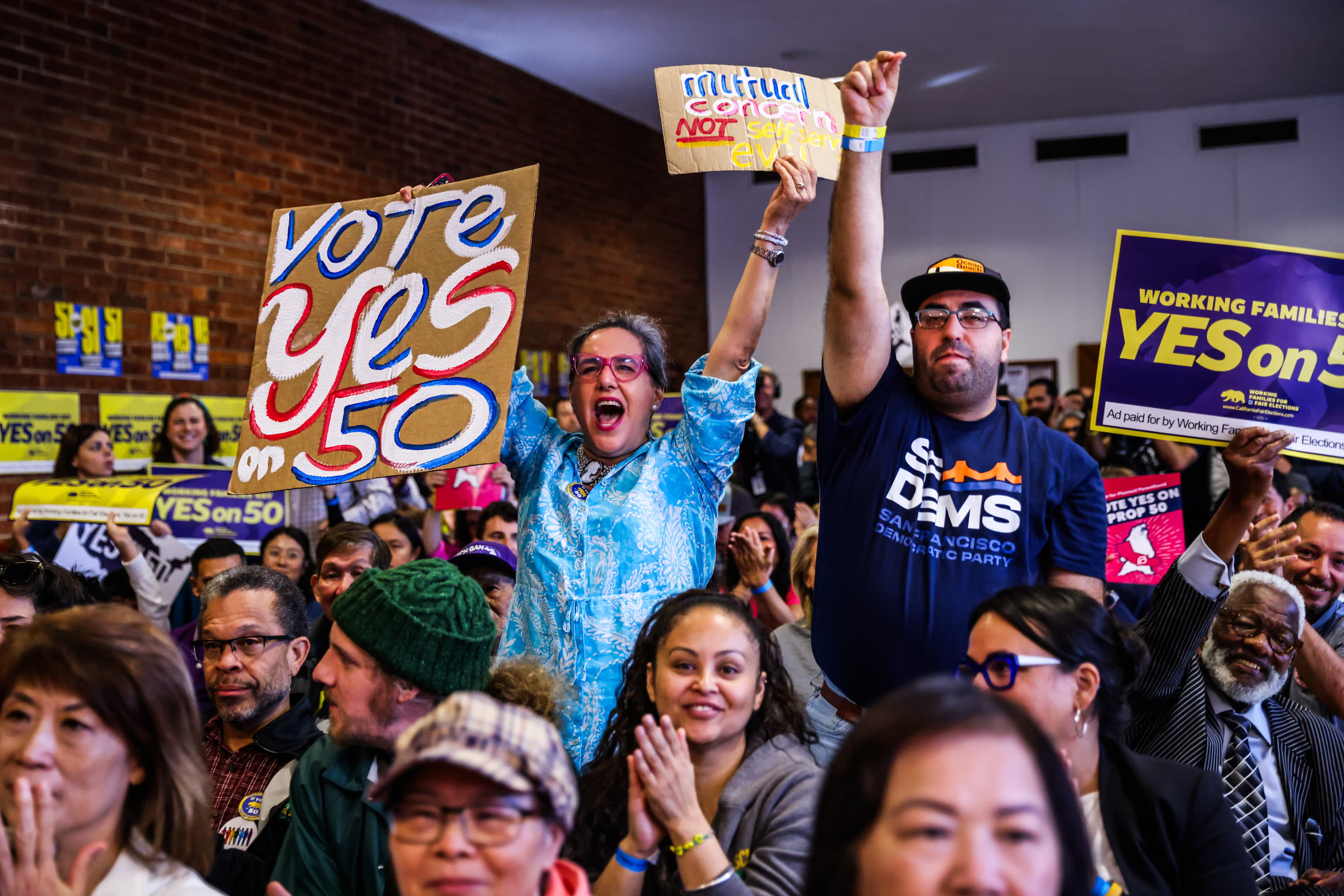
California voters have approved Proposition 50, a high-stakes redistricting measure that could reshape the balance of power in the U.S. House of Representatives. The measure allows Democrats to temporarily replace the independent redistricting commission’s maps with legislative-drawn maps, potentially helping the party flip up to five Republican-held seats.
The victory is a major strategic win for Democrats in a deep-blue state. The measure was framed by Governor Gavin Newsom and party leaders as a defense of American democracy against efforts by President Donald Trump to gerrymander districts in Republican-controlled states, including Texas. California’s new maps aim to counter those efforts and improve Democrats’ chances in closely contested districts.
Currently, Democrats hold 43 of California’s 52 House seats. Proposition 50 allows legislative-drawn maps to target the nine Republican-held districts, increasing the potential for Democrats to gain five seats. These gains could be decisive in the 2026 midterm elections, where control of the House may hinge on just a few critical districts. The majority will shape the final years of Trump’s second term, affecting policy, oversight, and potential investigations.
Historically, the president’s party loses ground in midterm elections. Polls suggest widespread disapproval of Trump’s performance in office, though Republicans maintain an advantage in redistricting efforts across the country. Several GOP-led states, including Missouri and North Carolina, have implemented maps favorable to Republicans. California’s Prop 50 is the first major Democratic response to these nationwide efforts.
The campaign for Prop 50 drew unprecedented attention and funding. Supporters raised nearly $170 million, more than twice the $84 million raised by opponents. Significant contributions came from small-dollar donors, Democratic super PACs, unions, and high-profile figures such as George Soros and Tom Steyer. Prominent Democrats, including Barack Obama and Alexandria Ocasio-Cortez, endorsed the measure, emphasizing its importance for fair representation.
Opponents, including some Republicans and former Governor Arnold Schwarzenegger, criticized the measure for overriding the state’s independent commission, though most did not actively campaign against it. President Trump repeatedly questioned California’s voting integrity, claiming without evidence that mail-in voting is “rigged,” and federal monitors were deployed in several counties, sparking voter concern and counter-observation from state officials.
Despite initial uncertainty, voter support surged in the final weeks. Polling indicated hesitancy among Californians to override the independent commission, but frustration with Trump and the perceived threat from gerrymandered Republican maps helped drive approval. Election day saw long lines at polling sites, highlighting strong voter engagement for this ballot measure.
Proposition 50 will be in effect for the 2026, 2028, and 2030 congressional elections. After that, California’s independent redistricting commission will resume drawing maps based on census data. Analysts say the new maps could reshape the political landscape in California and influence national policy, especially in swing states.
Voters like Charles Johnson, who cast his ballot at a Los Angeles church, expressed that the measure was a necessary response to Republican efforts to manipulate district boundaries. “It’s an attack on fairness,” he said. “We cannot allow one party to control the rules and dictate who gets represented.”
California Prop 50 marks a significant moment in the ongoing battle over redistricting and electoral fairness, potentially giving Democrats a strategic advantage in upcoming midterms and demonstrating the influence of state-level measures on national politics.