


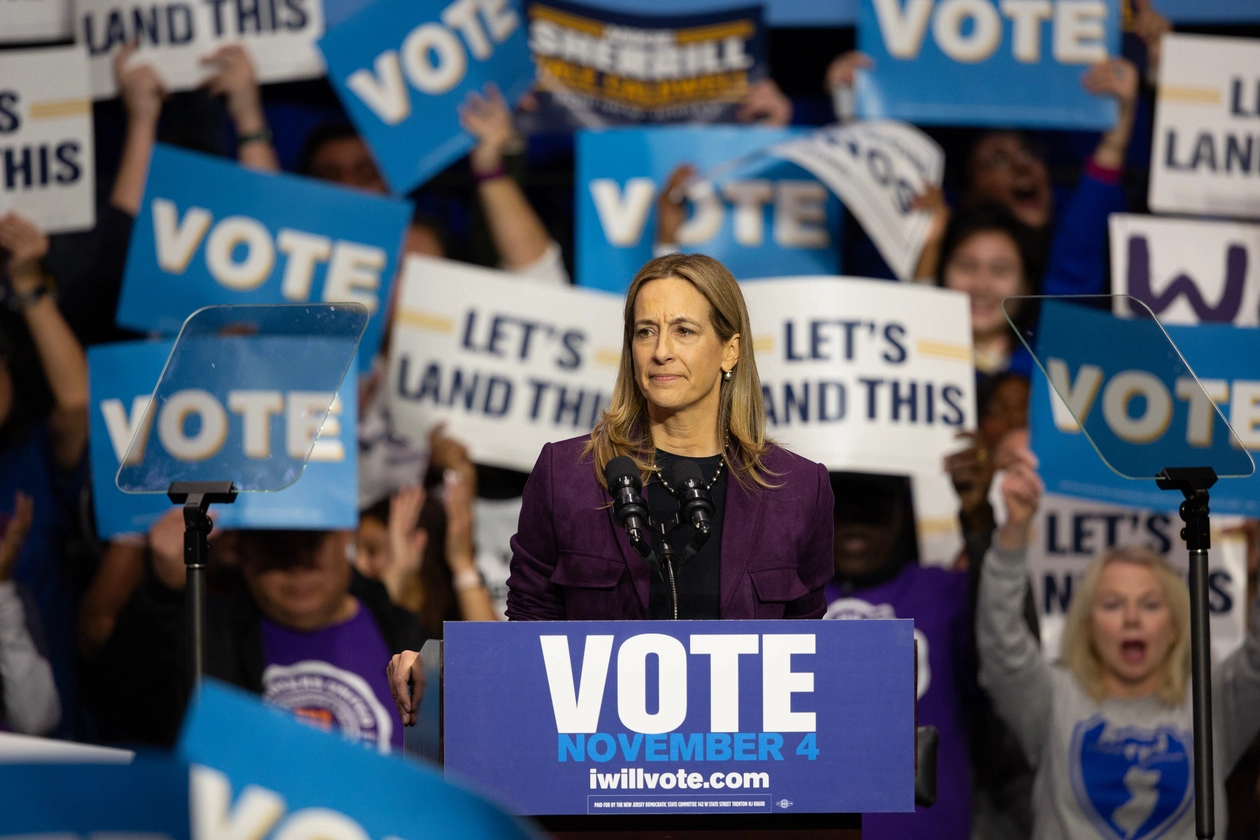
Mikie Sherrill has been elected the 57th governor of New Jersey, defeating Republican Jack Ciattarelli in a closely watched race that showcased Democratic resilience amid Donald Trump’s return to the White House. The Associated Press called the contest for Sherrill just two hours after polls closed on Tuesday.
Sherrill, 53, a congresswoman representing New Jersey’s 11th district, celebrated her victory in East Brunswick, telling cheering supporters, “Good government doesn’t just manage problems, it solves them.” Her win marks a significant achievement for the Democratic Party as it navigates a challenging political landscape during Trump’s second term.
The gubernatorial race was one of only two in the United States this year, drawing national attention as an early indicator for the 2026 midterm elections. Analysts viewed the election as a test of Trump’s influence and a gauge of how suburban voters are responding to his policies.
Sherrill’s path to victory began with a competitive Democratic primary in June, which pitted progressive candidates like Newark Mayor Ras Baraka against longtime party leaders such as former state Senate President Steve Sweeney. Voters ultimately chose Sherrill, a moderate candidate whose background includes work as a prosecutor and service as a Navy helicopter pilot. She first won her congressional seat in 2018, during the blue wave, representing a suburban district that values practical governance and bipartisan cooperation.
Her victory presents a contrast to other Democratic races, such as Zohran Mamdani’s upset win in New York City’s mayoral primary, showing that the party is pursuing multiple strategies to retain influence in both urban and suburban areas during the Trump era.
Ciattarelli, Sherrill’s Republican opponent, was running for governor for the second time. He had previously lost the nomination in 2017 to former Lieutenant Governor Kim Guadagno and narrowly lost to Governor Phil Murphy in 2021. This year, he received Trump’s endorsement and ran a campaign that balanced affordability concerns with conservative cultural messaging on gender identity and immigration.
Social issues played a role in the election. A Ciattarelli ally had suggested banning same-sex marriage in New Jersey, drawing scrutiny. While Ciattarelli reaffirmed support for marriage equality, critics noted his 2012 vote against a state bill legalizing same-sex marriage. Marriage equality in New Jersey was legalized by court ruling in 2013 and codified into law in 2022.
Affordability emerged as the central concern for voters, reflecting rising costs and economic pressures in the state. Polls leading up to the election showed razor-thin margins, and the campaign saw moments of controversy. Sherrill faced attacks including the leaking of her military records, while Ciattarelli threatened a defamation suit after she accused him of contributing to thousands of deaths linked to the opioid crisis.
Despite the drama, Sherrill’s message of practical governance and service resonated with voters. Leroy Jones, New Jersey Democratic Party chairman, noted the significance of her campaign branding: “A lot of people made fun of the helicopter. But guess what? It landed here today!” The helicopter symbolized her military background and commitment to leadership under pressure.
Sherrill’s victory ensures that New Jersey remains under Democratic leadership and sends a strong signal of party resilience as national politics continue to evolve. Her combination of moderate policies, bipartisan experience, and a focus on key issues such as affordability and public safety helped secure a decisive win.
As Mikie Sherrill governor prepares to take office, she faces the task of addressing the state’s economic challenges while maintaining Democratic influence in a politically divided nation. Her election highlights the importance of centrist candidates who can appeal across party lines in a highly polarized environment.