


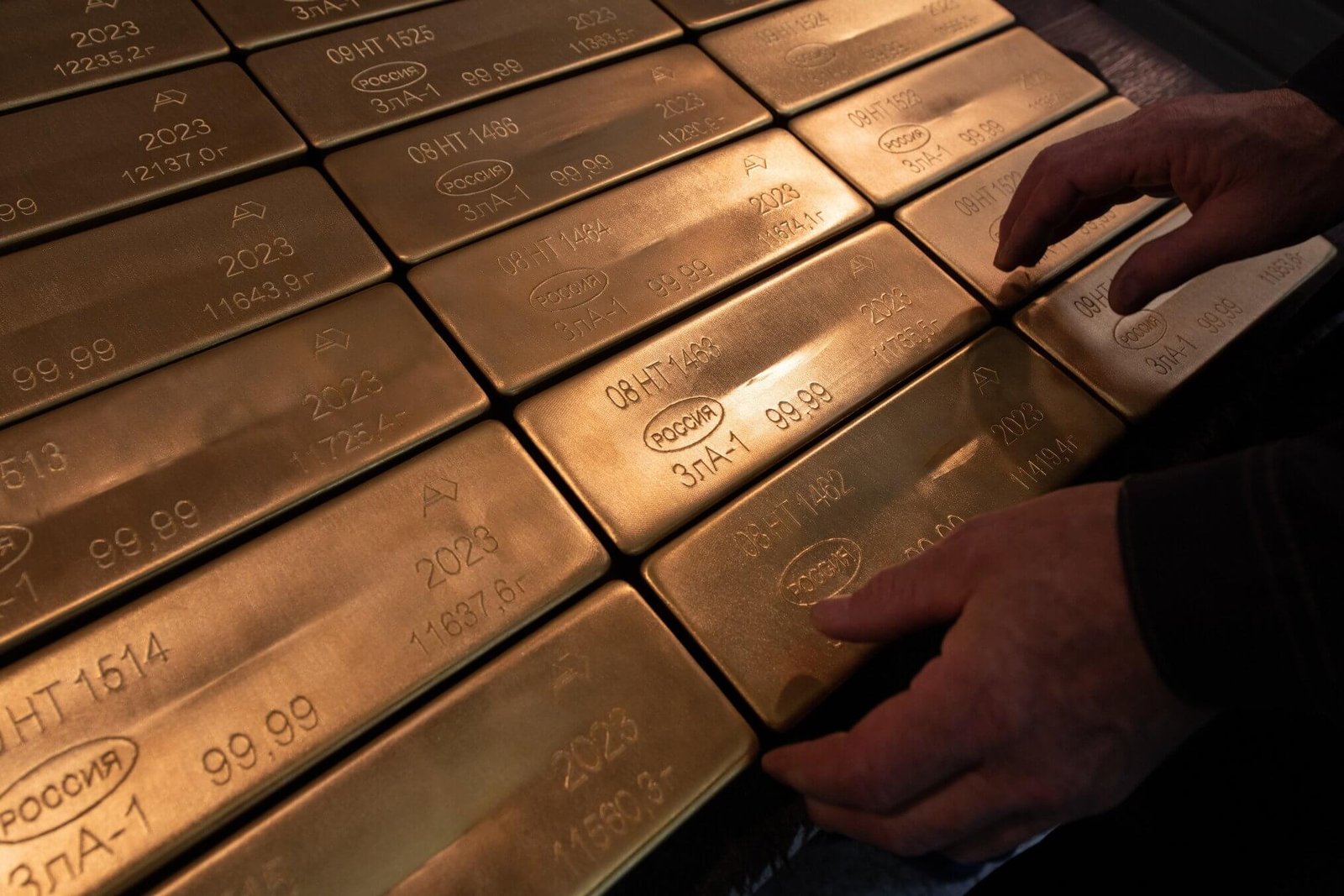
Russia’s gold reserves are facing a sharp decline after the country sold nearly 22,000 kilograms of gold within a few months, marking one of the most significant shifts in its reserve strategy in recent years. The move comes amid rising financial pressure linked to war spending and sanctions.
According to Daljoog News analysis, Russia’s gold reserves are now being used less as a long-term economic shield and more as a short-term tool to manage growing fiscal stress inside the state budget.
The timing is critical as Russia continues to face mounting costs from the Ukraine war, weakening energy revenues, and tightening international financial restrictions that are reshaping its economic decisions.
What Happened?
Russia has reportedly sold about 21.8 tons of gold from its central reserves since the start of the year, according to government-linked data. The most significant drop occurred in March, when more than six tons were offloaded.
Russia’s gold reserves reflect increasing pressure on the country’s finances during the ongoing war in Ukraine, which has now entered its fifth year. Military spending and sanctions have placed an ongoing strain on state finances.
By the end of March, Russia’s budget deficit reached an estimated $61.2 billion. Analysts link this gap to reduced energy export earnings, higher defense costs, and restricted access to Western financial markets.
Earlier in the year, when global gold prices surged to around $5,500 per ounce, Russia sold roughly 300,000 ounces of gold. This transaction generated approximately $1.68 billion in revenue for the state.
The shift marks a clear departure from Russia’s long-standing policy of steadily building its gold reserves as protection against global economic shocks.
Why This Matters
Russia’s gold reserves have traditionally been a key pillar of financial stability, especially during periods of Western sanctions and currency pressure. The rapid decline suggests that this safety buffer is now being actively used to manage immediate economic needs.
This development raises concerns about long-term fiscal resilience. While selling reserves can provide short-term liquidity, it reduces the country’s ability to respond to future financial shocks.
It also highlights the growing economic impact of prolonged geopolitical conflict. The combination of war costs and sanctions is forcing structural adjustments in how Russia manages its national assets.
What Analysts or Officials Are Saying
Economic analysts view the sale of gold as a practical response to liquidity pressure rather than a strategic shift in long-term policy. They suggest Russia is prioritizing short-term stability over reserve accumulation.
Some reports indicate that parts of Russia’s precious metal exports may be flowing toward China, reflecting deeper financial cooperation between the two countries amid Western restrictions.
At the same time, domestic demand for gold in Russia is rising. Citizens are increasingly turning to gold as a safe store of value amid the ruble’s continued weakness against major currencies.
Daljoog News Analysis
The decline in Russia’s gold reserves signals more than a routine financial adjustment. It reflects a deeper structural strain in the Russian economy under prolonged external pressure.
For decades, gold accumulation was a core part of Russia’s financial defense strategy. The current reversal shows that this strategy is being reshaped by necessity rather than long-term planning.
The speed and scale of the recent sales suggest urgent fiscal needs rather than gradual portfolio rebalancing. This adds weight to concerns about rising budget stress.
There is also a growing contrast between state action and public behavior. While the government sells gold to stabilize finances, citizens are increasingly buying gold to protect personal savings. This divergence reflects weakening confidence in currency stability.
What Happens Next
Russia’s future use of gold reserves will likely depend on how long current fiscal pressures continue. If war spending and sanctions remain unchanged, further reserve sales may follow.
Energy revenues will play a key role in determining whether Russia can slow down the depletion of its gold holdings. Any recovery in exports could reduce reliance on reserves.
Global markets will also watch Russia’s financial cooperation with China, especially in precious metals trade, which could reshape parts of the international gold supply chain.
For now, the drop in Russia’s gold reserves highlights a clear trend: financial flexibility is narrowing, and short-term economic survival is increasingly driving long-term asset decisions.