


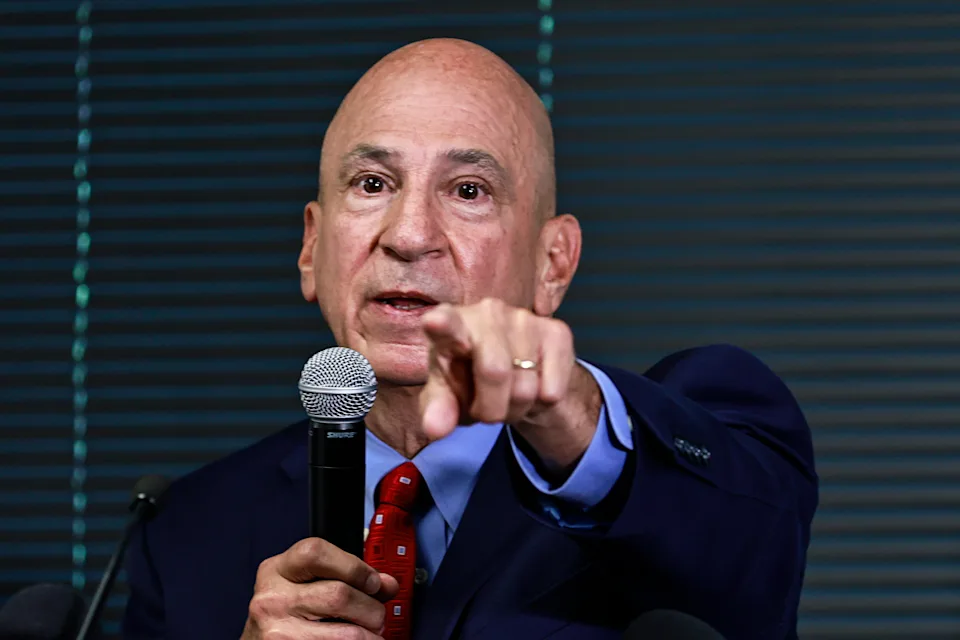
The Georgia election interference case involving President Donald Trump and 18 others is now under a new prosecutor, Pete Skandalakis, who must decide how to move forward with the complex indictment.
Fulton County District Attorney Fani Willis was removed from the case over an “appearance of impropriety” stemming from her romantic relationship with the special prosecutor she appointed. The Prosecuting Attorneys’ Council, a nonpartisan agency, stepped in to find a replacement. Unable to find another prosecutor willing to take the case, Council Executive Director Skandalakis appointed himself.
The indictment, returned by a grand jury in August 2023, uses Georgia’s anti-racketeering law to allege a broad conspiracy to overturn Trump’s narrow 2020 election loss to Joe Biden in the state.
Skandalakis, who has led the Council since January 2018, said he contacted several prosecutors about taking over, but all declined. A judge had warned that if no new prosecutor was appointed by Friday, the case could be dismissed. Skandalakis chose to assume responsibility, stating that he wanted to conduct a comprehensive review before deciding how to proceed.
He has only recently received the full investigative file from Willis’ office, including 101 boxes of documents and an eight-terabyte hard drive. Skandalakis said handling the case himself will allow him to fully understand the evidence and make informed decisions.
Before joining the Council, Skandalakis served for about 25 years as the elected Republican district attorney for Georgia’s Coweta Judicial Circuit. Legal experts familiar with his work say he shares a nonpartisan philosophy in handling sensitive cases. Former Gwinnett County DA Danny Porter, who has known Skandalakis for more than 40 years, said he expects a fair and transparent review based on law and facts.
Skandalakis has experience with high-profile cases. He reviewed the 2020 police shooting of Rayshard Brooks in Atlanta after Willis recused her office and ultimately decided not to pursue charges against the officers involved. He will now review the Georgia election case file to determine next steps. A status hearing is scheduled for December 1, when he must indicate whether he plans to seek a new indictment.
The process for a substitute prosecutor is demanding. Skandalakis will need to assess case organization, allocate resources, and possibly hire contract attorneys due to tight budgets and limited legislative funding. Experts say the size of the indictment makes managing it alone a “nearly impossible task.”
Skandalakis will also need to decide whether to continue the full scope of charges, pursue only some counts, or request dismissal. Porter suggested that the case in its current form may be “untryable” and could need to be slimmed down or divided into smaller cases.
The indictment includes multiple charges: the Jan. 2, 2021, phone call in which Trump asked Georgia Secretary of State Brad Raffensperger to “find” enough votes to win, attempts to submit false Republican electors, harassment of a Georgia election worker, and alleged tampering with election equipment in a rural county.
Four of the 19 defendants have pleaded guilty after plea deals. Trump and the remaining 14 have pleaded not guilty. Legal analysts note that any action against Trump could be complicated while he holds office, but other defendants do not have the same protections.
As Skandalakis begins his review, the case remains one of the most high-profile election-related prosecutions in recent US history, with decisions in the coming weeks likely shaping its trajectory and scope.