


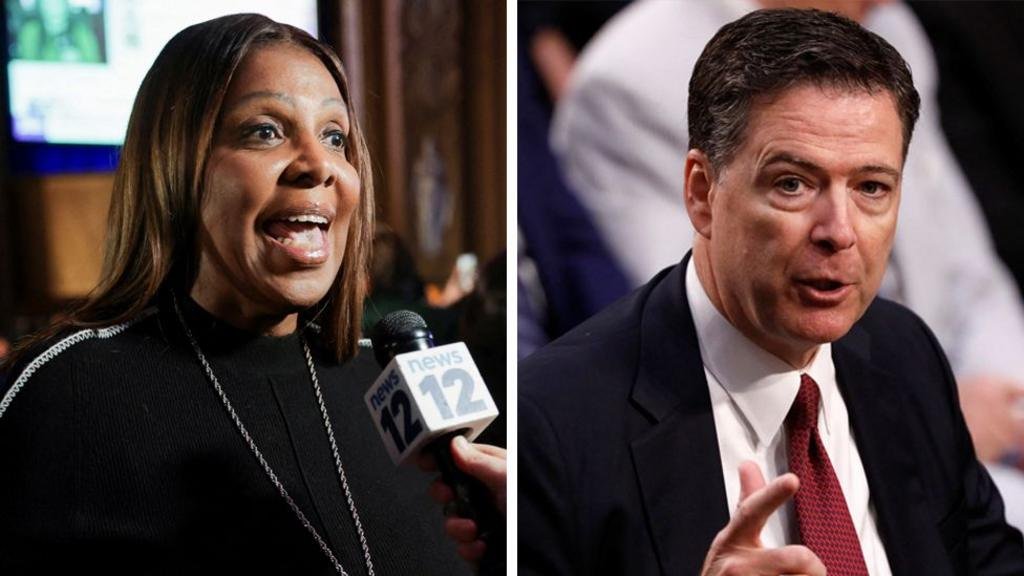
A federal judge on Monday dismissed prosecutions against former FBI Director James Comey and New York Attorney General Letitia James. The cases were brought by President Donald Trump’s team and represented early attempts at legal retribution against his political rivals.
US District Judge Cameron McGowan Currie ruled the cases invalid because interim US attorney Lindsey Halligan had been unlawfully appointed. The decision highlights the rushed and controversial nature of the prosecutions.
Halligan was installed after Trump removed the existing US attorney, who resisted pursuing these cases. Trump also reportedly asked then-Attorney General Pam Bondi to authorize the prosecutions. The rulings close the first two major cases Trump orchestrated against his political opponents, at least for now.
The dismissal is a major setback for Trump’s so-called retribution campaign. Analysts and legal experts have criticized the indictments as hastily constructed and politically motivated.
Judge Currie noted that Halligan had “no prior prosecutorial experience” and criticized Bondi for attempting to retroactively change her appointment. The judge said the administration had no legal authority to rewrite a past appointment.
Earlier developments raised additional concerns about the prosecutions. A magistrate judge criticized Halligan and the Justice Department for “a disturbing pattern of profound investigative missteps,” including possibly showing grand jury members privileged evidence or providing false instructions. Questions also arose over whether Halligan shared the final indictment with the full grand jury.
The Halligan rulings could have been dismissed for several reasons, but the unlawful appointment was the first issue resolved in court. Conservative legal scholars had predicted challenges with these indictments due to Halligan’s appointment.
Public opinion also poses political risks for Trump. A Marquette University Law School poll showed 58% of Americans believe the cases against Trump’s political opponents were unjustified, compared with 42% who disagreed. By contrast, a majority supported indictments against Trump himself. Many view the Comey and James cases as politically motivated rather than legally substantive.
The charges against Comey and James were relatively minor. Comey faced allegations of false statements to Congress, while James was accused of mortgage fraud involving only a few thousand dollars. Both cases lack the high-stakes implications of Trump’s own legal challenges, which involve attempts to overturn the 2020 election, classified documents, and actions tied to the January 6 Capitol riot.
The Halligan dismissal is part of a broader string of setbacks for the Justice Department under Trump. Recent rulings include a federal judge striking down a GOP-drawn congressional map in Texas, sudden dismissal of a high-profile prosecution of a woman accused of hitting a Border Patrol agent, and ongoing challenges to Trump’s tariff policies. Investigators are also probing the handling of mortgage-fraud investigations related to James and Senator Adam Schiff.
The key question now is whether Trump will pursue his retribution campaign further. White House press secretary Karoline Leavitt said the decisions would be appealed soon. Currie dismissed the cases “without prejudice,” meaning new indictments could be filed if properly appointed prosecutors are available.
However, legal hurdles remain. The Comey case faces a statute of limitations that expired on September 30. Securing a willing prosecutor and another grand jury to approve charges may be difficult, given the narrow approval in the original indictment.
Judge Currie’s reasoning drew an ironic parallel to a Trump-related case. She cited a ruling by US District Judge Aileen Cannon, who dismissed Trump’s classified documents case because special counsel Jack Smith was unlawfully appointed. Currie concluded that every action stemming from Halligan’s appointment was similarly invalid.
The dismissal underscores the challenges of politically motivated prosecutions. Trump’s efforts to pursue legal action against opponents now face serious legal and political obstacles, marking a significant early setback in his broader strategy of targeting his rivals.