



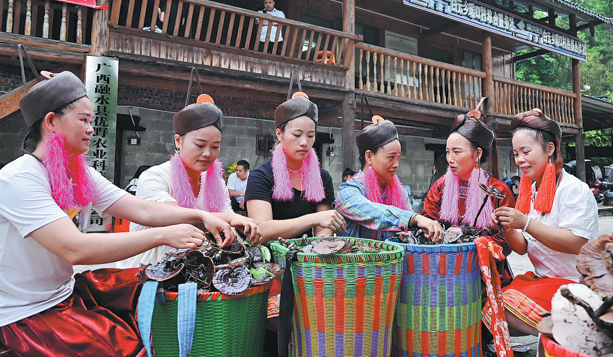
Guangxi Zhuang autonomous region has seen strong growth in its forest-based non-timber economy over the past decade. The region has worked to use its rich forest resources to boost local incomes and support rural development.
By the end of last year, the output value of Guangxi’s forest-based non-timber economy reached 138.8 billion yuan ($19.5 billion), up from 71.4 billion yuan in 2015, according to the regional forestry bureau. The growth has benefited more than 12 million forest farmers, with each seeing an average income increase of over 4,000 yuan per year.
Officials say 2011 was a turning point for the sector. That year marked the completion of reforms to the collective forest rights system. Afterward, local authorities made the forest-based non-timber economy a priority. This approach aimed to help forest farmers improve their livelihoods without relying on cutting down trees.
Guangxi’s progress has been supported by several targeted measures. Since 2016, the region has allocated 358 million yuan in special subsidies. These funds have attracted nearly 900 million yuan in investment into the non-timber forest economy.
In addition, Guangxi has introduced innovative financing models. Forest rights mortgage lending has helped forestry businesses overcome funding shortages. Authorities have also created a special mechanism for guaranteed lending, coordinated across financial regulators and agriculture and forestry departments.
Under this system, agricultural credit guarantee companies provide loan guarantees for enterprises recommended by forestry departments. This helps businesses access bank loans more easily. So far, the mechanism has enabled more than 150 million yuan in loans to be disbursed.
These efforts have encouraged the development of a wide range of non-timber forest products, from Ganoderma mushrooms to other forest resources. By linking financial support with forest management, Guangxi has successfully created a model that promotes economic growth while protecting forest ecosystems.
Officials say the region’s focus on forest-based non-timber industries is an important step toward sustainable rural development. By providing funding, technical guidance, and policy support, Guangxi is helping farmers increase income, create jobs, and strengthen local economies.
The combination of subsidies, loans, and financial innovation has made the forest economy more resilient. Farmers can now invest in production, processing, and marketing of non-timber forest products, improving their livelihoods while maintaining forest health.
Experts note that Guangxi’s approach offers lessons for other regions with rich forest resources. By linking land rights reform with targeted financial support, governments can promote rural prosperity without harming the environment.
The forestry bureau says it will continue expanding these programs. Authorities plan to increase loan support, encourage investment in non-timber forest enterprises, and strengthen the financial system that backs forest-based businesses.
With sustained support, Guangxi’s rural forestry sector is expected to continue growing. Millions of farmers are likely to see higher incomes, and the region’s forest resources will remain a source of economic opportunity for years to come.