


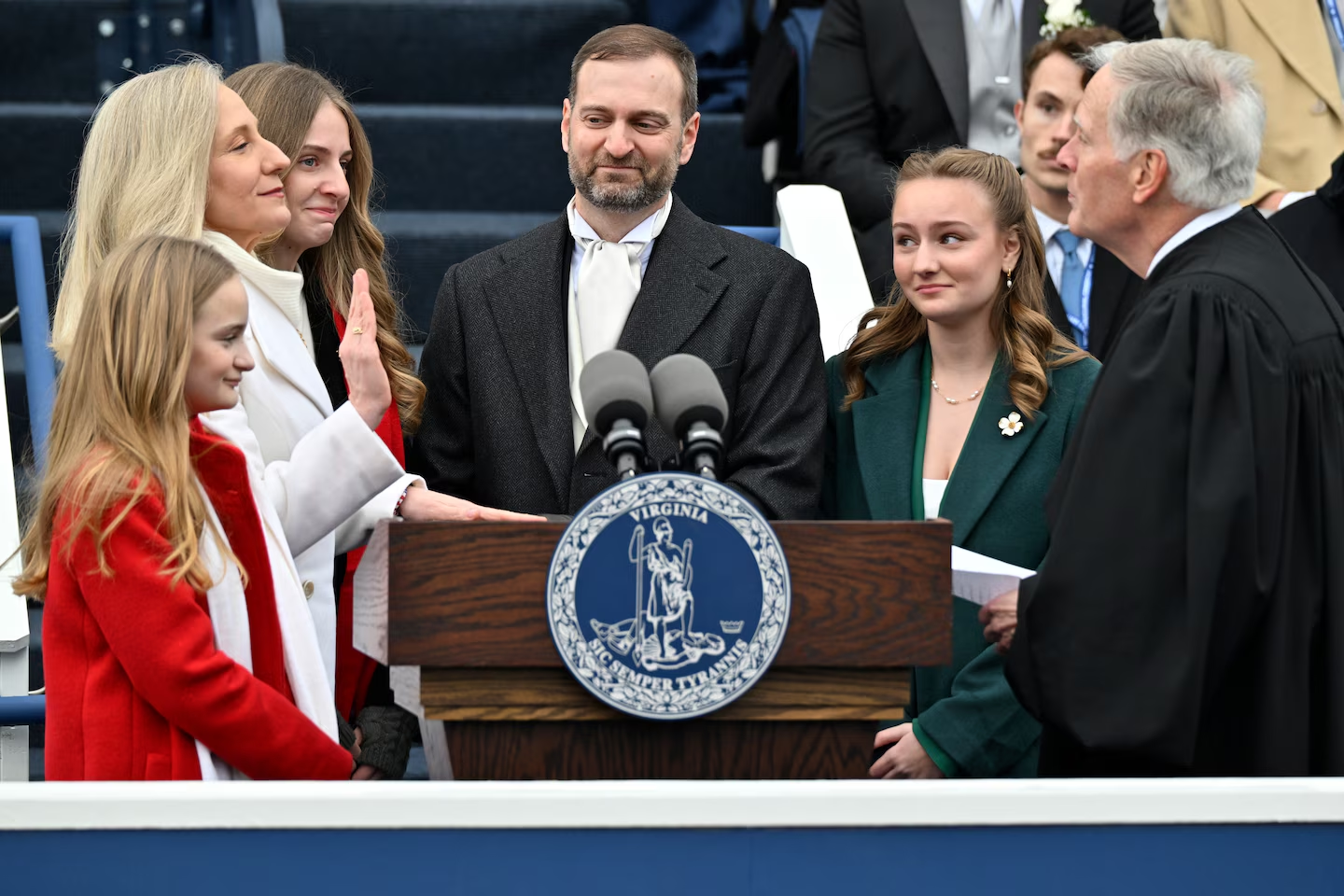
Abigail Davis Spanberger made history Saturday as Virginia’s 75th governor and the state’s first female leader. A former Democratic member of Congress and CIA operative, Spanberger took office at the state Capitol in Richmond, where suffragists once rallied for the right to vote.
“We will not agree on everything,” Spanberger said during her inauguration. “But we do not have to see eye-to-eye on every issue to stand shoulder-to-shoulder on others.”
Spanberger, 46, won last year’s election by 15 points. Her campaign focused on rising consumer costs, job insecurity, and limited access to health care, which she blamed on policies in Washington and the Republican administration under President Donald Trump. She also emphasized bipartisanship, earning a reputation for pragmatism in her three terms representing a conservative district in Congress.
Within hours of taking office, Spanberger signed 10 executive orders to set a tone of practical governance. One order rescinded her predecessor’s mandate that state law enforcement cooperate with federal immigration authorities. Other directives focused on lowering housing and health care costs, improving education, and promoting nondiscrimination in state hiring and recruitment.
Her inauguration symbolized both progress and inclusivity. Spanberger wore suffragist white as a crowd of about 5,000 cheered “Abby! Abby!” and “We love you, Abigail!” Former state senator Ghazala Hashmi was sworn in as Virginia’s first Muslim and first person of Indian descent to serve as lieutenant governor. Former state delegate Jay Jones became the state’s first Black attorney general, holding his young son during the ceremony.
The event highlighted a political shift in Virginia. Democrats now hold a 64-36 majority in the House of Delegates and a 21-19 majority in the state Senate. Party leaders pledged to focus on affordability and pragmatic policies, positioning the state and Spanberger as national examples ahead of the 2026 congressional midterm elections.
In her speech, Spanberger addressed economic concerns, gun violence, education, and immigration. She called for policies that serve everyday Virginians rather than “kings or aristocrats or oligarchs.” Her executive orders emphasized that state and local law enforcement should focus on crime and community policing rather than enforcing federal civil immigration laws.
Spanberger invoked historical leaders, including Patrick Henry, to stress unity. “United we stand, divided we fall,” she said, urging Virginians to work together to solve challenges. She also honored generations of women who fought for voting rights, including her own mother, who advocated for the Equal Rights Amendment in Virginia.
The governor emphasized the importance of family and public service. Her three daughters joined her to take the oath of office on her grandmother’s Bible, while her mother, Eileen Davis, who had worked hard to put herself through community college, witnessed the historic moment.
Spanberger’s early actions reflect a focus on unity and pragmatic solutions. She created an Economic Resiliency Task Force to review the impact of federal policies on housing, health care, and food assistance. Other orders target education oversight and empower her chief of staff to guide planning, hiring, and budgeting.
High-profile Democrats attended the inauguration, including D.C. Mayor Muriel Bowser, Maryland Governor Wes Moore, and House Minority Leader Hakeem Jeffries. Nearly all living former Virginia governors were present, including L. Douglas Wilder, the state’s first Black governor, celebrating his 95th birthday.
Spanberger’s election is seen as both a personal milestone and a historic moment for Virginia. Her victory builds on decades of women breaking barriers in state politics, highlighting a broader movement toward equality and inclusion.
The new governor pledged to unite Virginians, reduce living costs, strengthen communities, and ensure that state government reflects the diversity and needs of its residents. Her first day in office set the tone for a new era in Virginia leadership.