
Two former leaders of a Hong Kong pro-democracy group that organized decades-long vigils for the 1989 Tiananmen crackdown are set to stand trial under the city’s national security law. A third co-defendant is expected to plead guilty at Thursday’s hearing.
The case highlights the shrinking space for civil liberties in Hong Kong, which Beijing promised to maintain for 50 years after taking control from Britain in 1997. Officials said law enforcement actions were evidence-based and fully compliant with the law.
Chow Hang-tung, Lee Cheuk-yan, and Albert Ho, former leaders of the Hong Kong Alliance in Support of Patriotic Democratic Movements of China, were charged in September 2021 with incitement to subvert state power. Weeks later, the alliance voted to disband.
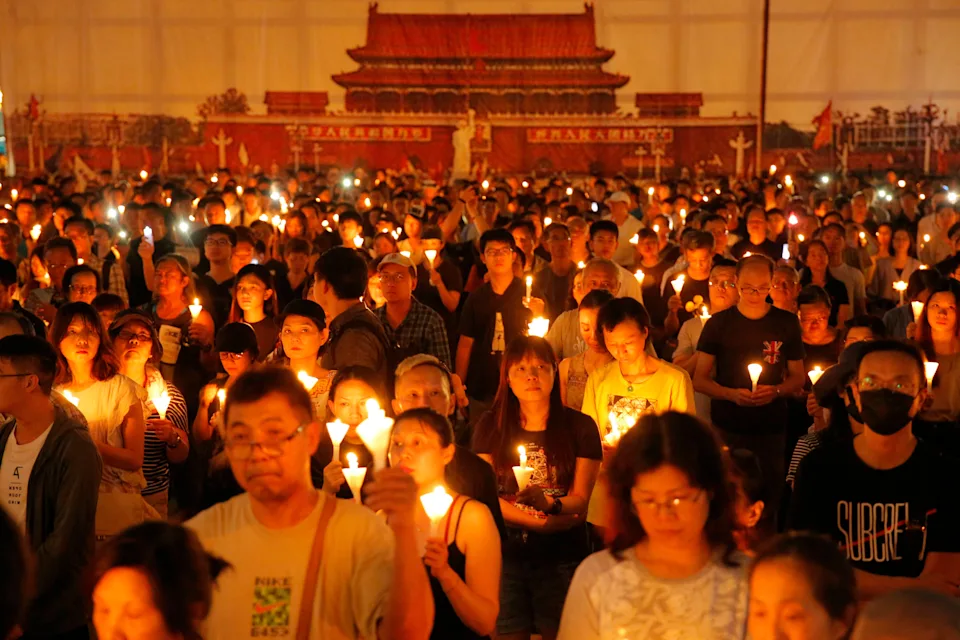
For three decades, the alliance held annual vigils commemorating the victims of the 1989 Tiananmen Square protests, which ended when Chinese troops opened fire on student-led demonstrations in Beijing. Tens of thousands once gathered each year in Hong Kong, until the COVID-19 pandemic halted public events.
Former alliance member Tang Ngok-kwan described the group as one dedicated to seeking justice. He said he felt a moral responsibility to honor those killed in 1989. Despite a rise in localism among young people, the last vigil in 2019 drew an estimated 180,000 participants, just days before months-long citywide protests erupted.
After the pandemic, the former vigil site was repurposed for cultural events, including food fairs, and some residents commemorating the crackdown nearby were detained.
The national security law has been used to disband dozens of civil society organizations in Hong Kong. High-profile cases include pro-democracy media mogul Jimmy Lai, convicted for conspiring with foreign forces and facing a potential life sentence.
In 2023, Chow, Tang, and another core member were convicted for refusing to provide authorities with information about the alliance and sentenced to 4½ months each. However, Hong Kong’s top court overturned these convictions in March 2025.
The upcoming trial, expected to last 75 days, charges Chow, Ho, and Lee with inciting others to organize or act through unlawful means to subvert state power. The charge carries a maximum prison term of 10 years. Ho may plead guilty to receive a reduced sentence, while Chow, a barrister, has defended herself and attempted to quash the indictment, though her request was rejected.
The prosecution plans to argue that the alliance’s calls to “bring one-party rule to an end” constitute a threat to state power. Chow continues to fight legal battles from prison, successfully overturning a prior conviction and challenging prison regulations, though one appeal regarding required clothing was rejected.
Tang said the trial represents the conclusion of the alliance’s mission, offering one final opportunity to express their beliefs. He noted that Chow and Lee have grown thinner in prison, with Lee adopting a philosophical outlook and Chow passionately defending her position.
Chow recently posted on social media that she remains hopeful about reuniting with her allies. “I still firmly believe that the human spirit endures. Together, we shall smile until the very end,” she wrote, signaling continued resilience despite mounting legal pressures.