


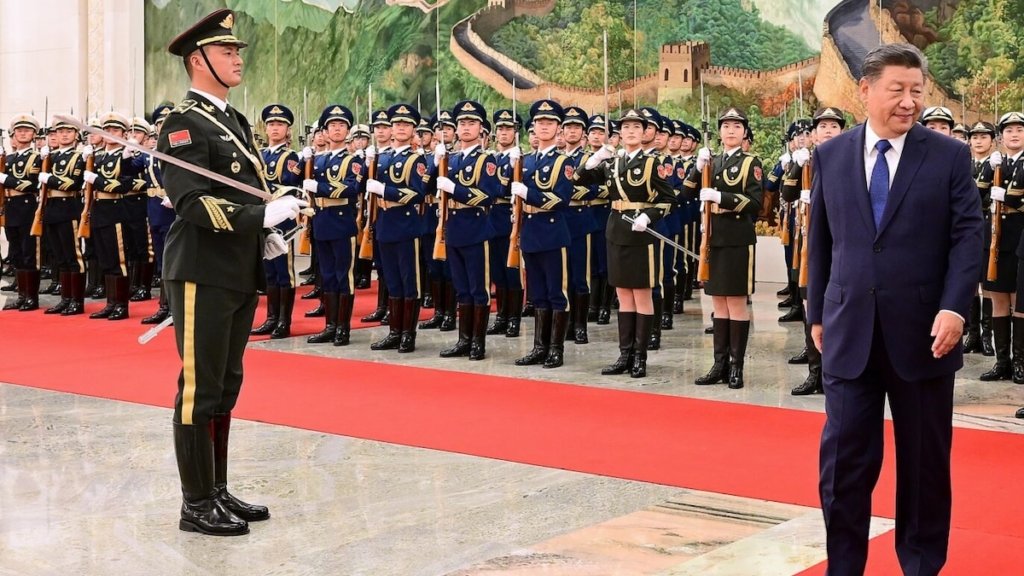
China’s rapid expansion of its nuclear capabilities is drawing renewed international attention. Despite diplomatic engagement with the UK, Beijing has remained largely silent on the reasons behind its growing arsenal. Analysts see this as a potential flashpoint for regional and global security.
According to Daljoog News analysis, the absence of clarity on China’s nuclear strategy creates a dangerous uncertainty. While world powers like the US and Russia modernize their arsenals, China’s pace of growth is among the fastest globally, raising strategic alarm in Washington and allied capitals.
The developments come amid heightened tensions over Taiwan and a broader push by China to assert itself as a dominant military power. Analysts warn that this period could redefine the balance of nuclear deterrence in the Indo-Pacific region.
What Happened?
Recent reports from the Stockholm International Peace Research Institute (SIPRI) indicate that China now maintains roughly 600 nuclear warheads, with an annual increase of about 100 units. If the current rate continues, China could match the intercontinental missile capabilities of the US or Russia by the end of this decade.
Despite repeated international calls, Beijing has refused to participate in multilateral arms control negotiations. Chinese officials argue that the US and Russia must first reduce their arsenals, while framing their own build-up as essential for “minimum national security.” Analysts note that the vagueness of this explanation adds to strategic uncertainty.
Meanwhile, US defense authorities warn that China’s military readiness is entering a critical “hair-trigger” phase. Tests of new missile silos in northern China and Pacific-oriented capabilities signal preparation for potential conflict scenarios, including Taiwan.
Why This Matters
China’s nuclear expansion has far-reaching implications. Strategic ambiguity increases the risk of miscalculation, particularly in a region already tense over Taiwan. Analysts stress that uncertainty about command structures and decision-making heightens the potential for inadvertent escalation.
Pentagon assessments suggest that China’s combined nuclear and conventional modernization could challenge US force projection in the Pacific. Additionally, leadership changes and loyalty purges within the People’s Liberation Army have raised questions about internal stability, making the decision-making chain for nuclear weapons less predictable.
What Analysts or Officials Are Saying
Experts describe the situation as a test of global nuclear norms. Analysts note that while the UK is pursuing closer diplomatic ties with China, it is simultaneously modernizing its own nuclear arsenal in collaboration with the US. This dual approach reflects the challenge of criticizing Beijing while maintaining national deterrence.
Washington officials have warned that failure to address China’s rapid nuclear expansion could normalize the use of nuclear arsenals as tools of geopolitical leverage rather than last-resort deterrents. This shift in strategic culture could make future crises in the Indo-Pacific significantly more dangerous.
Daljoog News Analysis
China’s approach highlights a complex paradox: the nation is strengthening its nuclear posture while limiting transparency. This ambiguity serves multiple purposes—it signals power projection to regional rivals, reinforces domestic control, and complicates diplomatic engagement.
However, the lack of clarity about decision-making and command structures introduces real risks. As analysts point out, the question is not just how many warheads exist, but who can authorize their use in a crisis. In this context, China’s nuclear expansion is less about immediate aggression and more about shaping the strategic conversation in Asia-Pacific, forcing other powers to respond.
What Happens Next
Observers expect China’s nuclear arsenal to continue growing throughout the decade. Diplomatic negotiations may remain stalled unless Beijing provides more clarity on command, control, and intent.
For the US and UK, the challenge lies in balancing deterrence with diplomacy. Continued modernization of Western arsenals alongside joint security measures may limit Beijing’s leverage, but the risk of strategic miscalculation remains high.
Experts warn that if these trends persist, nuclear weapons could increasingly become instruments of political bargaining rather than strictly a deterrent, transforming global security dynamics. The next few years will be critical in determining whether escalation can be avoided or if a new era of nuclear competition becomes reality.