

A suicide bombing at a Shiite mosque in Islamabad claimed by the Islamic State killed at least 31 people and injured 169 on Friday, marking the deadliest attack in Pakistan’s capital since the 2008 Marriott hotel bombing.
According to Daljoog News analysis, the attack highlights both the ongoing threat of extremist violence in Pakistan and the vulnerability of religious sites, particularly during Friday prayers when mosques are crowded.
The bombing occurs amid intensifying insurgencies in Pakistan’s northern and southern provinces, raising concerns over cross-border militant activity and the security forces’ ability to prevent mass-casualty incidents.
What Happened?
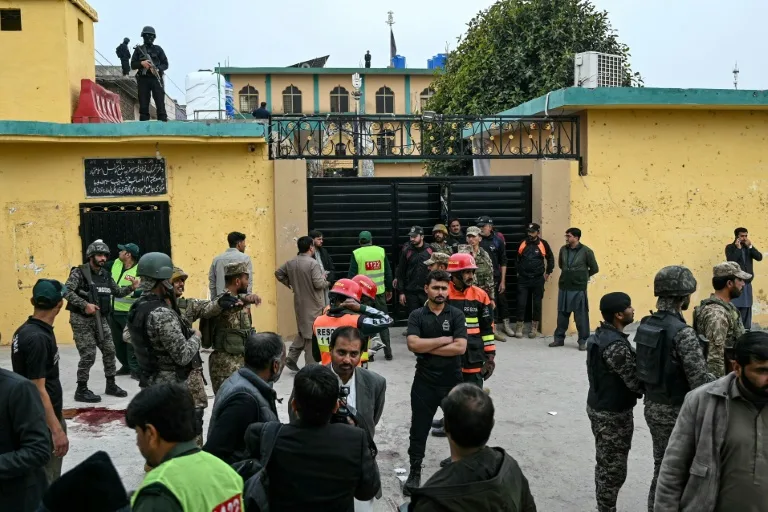
The explosion occurred at the Imam Bargah Qasr-e-Khadijatul Kubra mosque in Tarlai, on the outskirts of Islamabad, during Friday prayers. Security sources said the attacker was stopped at the mosque gate and detonated his explosives there.
Witnesses described the blast as “extremely powerful.” Worshippers reported hearing gunfire moments before the explosion, with some volunteers attempting to stop the attacker. One volunteer shot the bomber in the thigh, after which the explosives were triggered.
Emergency services rushed hundreds of victims to the Pakistan Institute of Medical Sciences hospital. Medics and bystanders carried wounded and bloodied victims from ambulances, cars, and private vehicles. Security forces sealed the area, and investigators documented debris, shoes, clothing, and blood near the mosque.
Islamic State claimed responsibility through jihadist channels monitored by the SITE Intelligence Group, stating one of its militants targeted the congregation and caused a large number of casualties.
Why This Matters
The attack underscores Pakistan’s ongoing security challenges. Shiites, comprising roughly 10–15% of Pakistan’s population, have long been targeted by extremist groups.
This bombing highlights vulnerabilities in urban centers like Islamabad, which had been relatively insulated from mass-casualty attacks in recent years. The incident also raises tensions over militant safe havens across the Afghan border, as Pakistan accuses Afghan-based insurgents of launching cross-border attacks.
The human toll is significant: over 500 casualties have been reported in the region in similar incidents this year, including attacks in Balochistan and Khyber Pakhtunkhwa, stressing local healthcare and emergency response capacities.
What Analysts or Officials Are Saying
Prime Minister Shehbaz Sharif vowed that those responsible would be identified and held accountable. Deputy Prime Minister Ishaq Dar described the attack as “a heinous crime against humanity and a blatant violation of Islamic principles.”
UN Secretary-General Antonio Guterres condemned the attack, saying assaults on civilians and places of worship are unacceptable. Analysts warn that repeated attacks on religious minorities could inflame sectarian tensions and undermine public confidence in security measures.
Security experts also note that Pakistan’s borders with Afghanistan remain volatile, allowing militants to exploit the terrain for staging attacks. Despite repeated denials from the Taliban government in Afghanistan, cross-border incidents continue to complicate regional diplomacy.
Daljoog News Analysis
This suicide attack represents both a tactical and symbolic strike by IS. Targeting a Shiite mosque during Friday prayers maximizes casualties and spreads fear within minority communities.
Daljoog News notes that while Pakistan’s security forces have made gains against insurgent groups in Balochistan and Khyber Pakhtunkhwa, urban centers remain vulnerable to coordinated attacks. The pattern of repeated assaults on religious gatherings suggests the need for targeted preventive measures and improved intelligence coordination.
The incident also highlights Pakistan’s fragile sectarian balance, where extremist groups exploit both religious tensions and geopolitical uncertainty to achieve political objectives.
What Happens Next
Authorities are expected to launch a full investigation into the blast, reviewing security protocols at religious sites nationwide. Increased police and military presence is likely at mosques and other public gatherings in Islamabad and major cities.
Security forces may intensify cross-border operations targeting militant bases in northern and southern provinces, while emergency response units are likely to expand capacity in anticipation of potential follow-up attacks.
For the international community, this incident underscores the continuing threat of IS and allied extremist groups, with implications for regional stability, sectarian relations, and counterterrorism cooperation in South Asia.