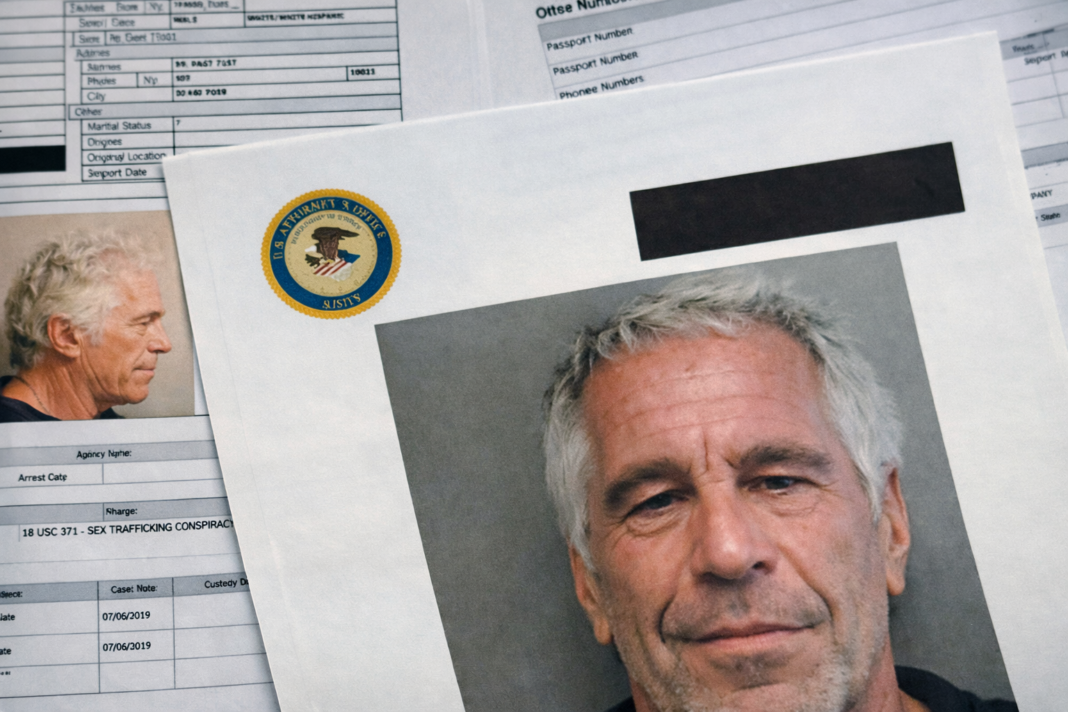




Speculation has resurfaced online claiming a hidden link between Jeffrey Epstein and Satoshi Nakamoto, the anonymous creator of Bitcoin.
According to Daljoog News analysis, the theory is driven less by evidence and more by Epstein’s documented interest in cryptocurrency-related businesses, combined with the enduring mystery surrounding Bitcoin’s origins.
The timing of renewed attention matters. As Bitcoin continues to influence global finance, questions about its early backers and ideological roots have taken on greater political and economic significance.
What Happened?
The idea connecting Epstein to Bitcoin gained traction after records showed his involvement in several crypto-related investments.
Epstein invested approximately $3 million in the cryptocurrency exchange Coinbase in 2014 through his investment firm. By 2018, after selling roughly half of that stake, reports suggest the investment returned about $15 million.
He also invested in Blockstream, a company focused on Bitcoin infrastructure. His initial contribution was modest, around $500, before increasing to roughly $500,000. Following later controversy and concerns over reputational risk, Blockstream moved to withdraw Epstein’s shares.
Separate records indicate that Epstein donated funds to the Bitcoin Foundation during periods of financial strain. Between 2002 and 2017, contributions reportedly totaled about $550,000, with some of that money supporting developer salaries, including well-known Bitcoin figures.
These connections established Epstein as a financial participant in the broader cryptocurrency ecosystem, though not as a technical contributor.
Why This Matters
Bitcoin’s origins remain one of the most debated mysteries in modern technology.
Satoshi Nakamoto vanished from public communication more than a decade ago, leaving behind a system now valued in the trillions of dollars. Any claim tying a real-world figure to that identity draws immediate attention.
Epstein’s name amplifies that attention. His global notoriety, wealth, and access to elite networks make him an easy candidate for speculation, especially in online spaces where distrust of institutions and hidden power structures runs deep.
However, confusing financial interest with authorship risks distorts the historical record. Many wealthy investors backed Bitcoin-related projects without ever contributing to its creation.
What Analysts or Officials Are Saying
Independent fact-checkers and blockchain historians have consistently rejected claims that Epstein was Satoshi Nakamoto.
Experts note that there is no technical evidence linking Epstein to Bitcoin’s original code, cryptographic design, or early communications. Satoshi’s writings, programming style, and operational behavior point to a developer or group deeply embedded in cryptography circles, not a financier operating through intermediaries.
Some reports highlight that Epstein’s personal documents allegedly contained the name “Satoshi” on a guest list. Analysts caution that the name alone proves nothing, as it could reference a nickname, a third party, or something entirely unrelated to Bitcoin.
Institutions connected to early Bitcoin development have also stated that Epstein had no role in shaping the protocol itself.
Daljoog News Analysis
The Epstein-Satoshi theory reflects a broader pattern in conspiracy-driven narratives.
When a powerful figure intersects with a secretive technology, speculation fills the gaps left by incomplete information. Epstein’s documented interest in technology and finance makes the theory feel plausible on the surface, but plausibility is not proof.
Bitcoin’s creation predates most of Epstein’s known crypto investments. More importantly, Satoshi’s disappearance, ideological consistency, and technical precision do not align with Epstein’s public profile or known activities.
This episode also highlights how Bitcoin’s mythos continues to evolve. As adoption grows, so does the desire to reframe its origins through political or moral lenses. That impulse can obscure rather than clarify the truth.
What Happens Next
The identity of Satoshi Nakamoto is likely to remain unresolved unless verifiable cryptographic proof emerges.
Claims tying Epstein to Bitcoin’s creation will probably continue to circulate, especially during periods of heightened public interest in either subject. Without new evidence, these theories are expected to remain speculative rather than factual.
For now, the record shows that Epstein was an investor with an interest in emerging technology, not the architect of Bitcoin itself.