


A peaceful anti-Olympics protest in Milan escalated into clashes with police on Saturday night, coinciding with investigations into suspected sabotage of railway lines in northern Italy.
According to Daljoog News analysis, the violent outbreak highlights growing tensions over the environmental, economic, and social impact of the Winter Olympics, while authorities face potential threats to critical infrastructure.
The incidents occurred as the Milano-Cortina 2026 Winter Olympics officially opened, raising concerns about security risks surrounding major international sporting events.
What Happened?
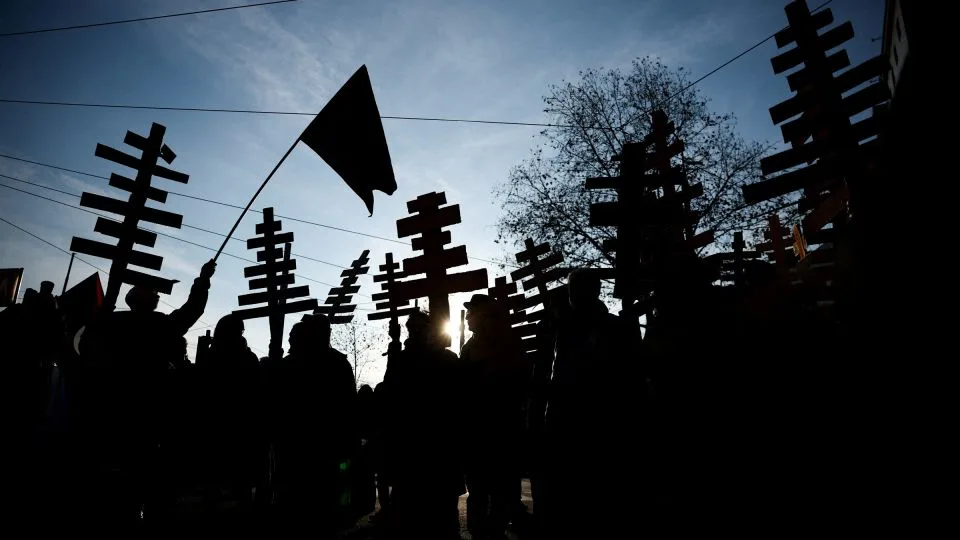
Thousands of demonstrators marched through Milan on Saturday, organized by the Unsustainable Olympics Committee. Groups included grassroots sports activists, environmental organizations, housing activists, pro-Palestine networks, students, unions, and transfeminist collectives.
The protest began peacefully at Piazza Medaglie d’Oro, with participants singing, dancing, and holding signs. However, clashes began near Piazzale Corvetto when a smaller group of protesters threw fireworks and smoke bombs at police. Authorities responded with water cannons and tear gas. Some police vans were also targeted.
Earlier in the march, demonstrators passed near the Olympic Village, protected by a heavy police cordon. Firecrackers and smoke bombs were launched toward the athlete accommodations, but they did not reach the buildings.
Not all protesters engaged in violence; many remained in the main square. Demonstrators expressed opposition to the Olympics’ environmental footprint, the economic burden on local communities, and what they described as social harm from the Games.
Railway Sabotage in Bologna
Separately, railway networks in northern Italy experienced major disruptions, raising fears of deliberate attacks. In Bologna, investigators discovered a rudimentary explosive device on a track switch, severed electrical cables on a high-speed line, and a fire at an electrical cabin in Pesaro.
Italian Transport Minister Matteo Salvini condemned the incidents as “acts of delinquency,” noting that if confirmed as premeditated, they reflect hostility timed with the Olympic opening. Authorities have not ruled out anarchist involvement, drawing parallels to sabotage attacks on France’s rail network during the 2024 Paris Olympics.
Why This Matters
The events underscore the intersection of protest movements and security threats during international events. Milan-Cortina 2026 represents a high-profile global stage, and incidents of violence or infrastructure attacks could have both political and economic consequences.
The railway sabotage poses risks to northern Italy’s transportation network, which is vital for both domestic travel and international connections. Disruptions could delay thousands of travelers and affect the logistics of Olympic operations.
Meanwhile, the anti-Olympics protests reflect broader public dissatisfaction with large-scale sporting events, especially concerning environmental damage, urban displacement, and perceived economic inequities.
What Analysts or Officials Are Saying
Security analysts note that protests targeting Olympic events are not uncommon, but escalation into clashes and suspected infrastructure sabotage raises the stakes. Observers highlight that authorities must balance crowd control with protecting critical infrastructure without escalating tensions further.
The Transport Minister emphasized that any deliberate attack on railway systems during a major international event constitutes both criminal and national security concerns. Officials are reviewing all incidents for potential links to activist networks or extremist actors.
Daljoog News Analysis
Saturday’s events illustrate the dual challenges facing Italy: managing high-profile global events while mitigating domestic dissent and security threats.
The protests demonstrate that opposition to the Olympics extends beyond environmental concerns, encompassing social and political grievances. At the same time, railway disruptions highlight vulnerabilities in critical infrastructure, potentially exploitable by extremists or politically motivated actors.
The combination of violent demonstrations and suspected sabotage could prompt authorities to strengthen security measures across Milan and northern Italy, affecting both the Games and public perception.
What Happens Next
Investigators will continue probing the railway incidents to determine whether they were coordinated acts of sabotage. Police are also reviewing video footage and digital evidence from the protest to identify those responsible for violence.
Authorities are expected to increase security at Olympic venues, transportation hubs, and other strategic locations. The response will likely shape how Italy manages protests and infrastructure protection for the remainder of the Winter Games.