


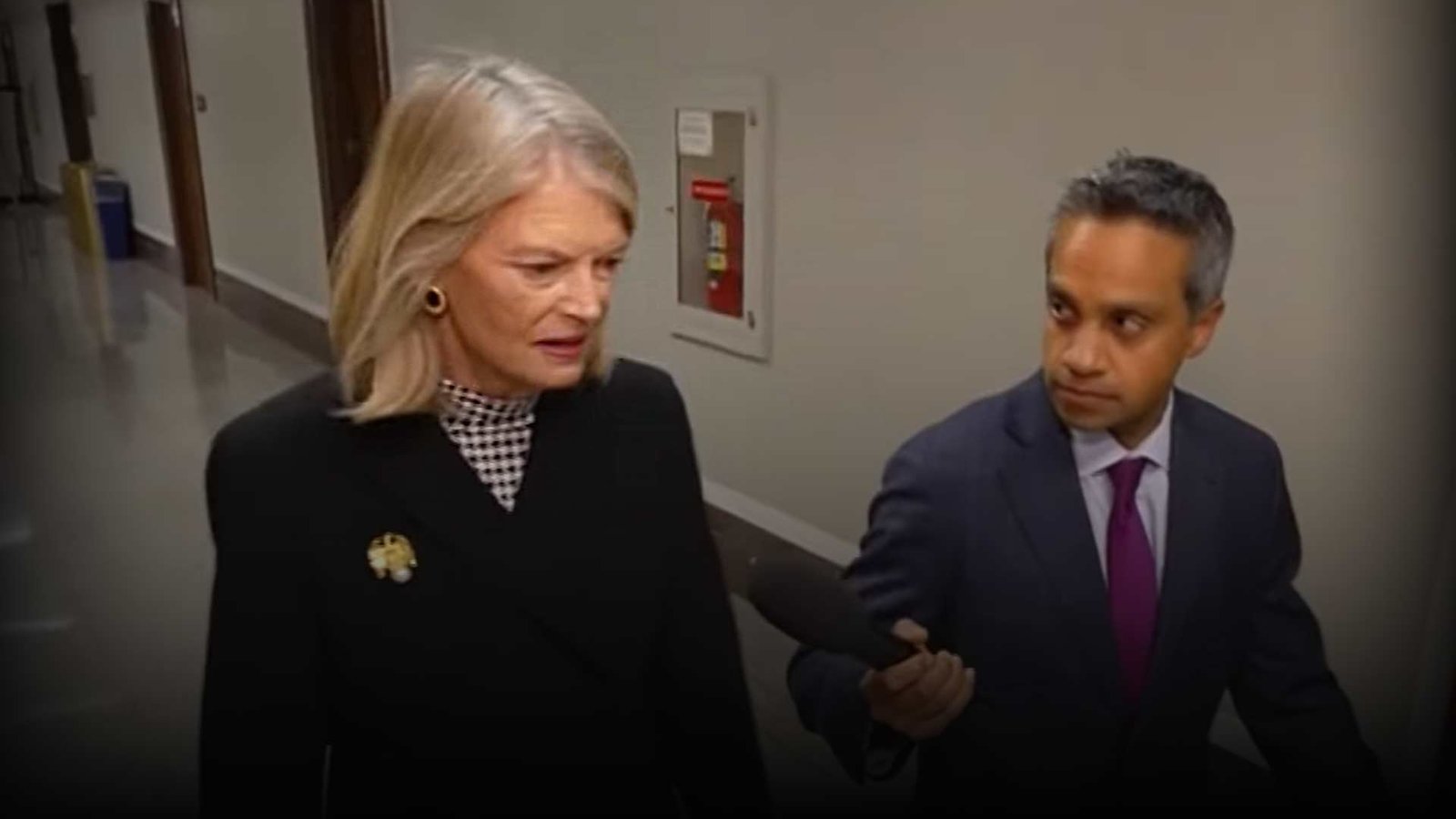
U.S. Senator Lisa Murkowski has made it clear she is not preparing to leave Washington to run for governor of Alaska, despite repeated encouragement from supporters back home.
According to Daljoog News analysis, Murkowski’s comments reflect a strategic calculation about where she believes she holds the most influence, not just for Alaska but also within a closely divided U.S. Senate.
Her decision comes as Alaska begins to look toward the next gubernatorial race, with formal candidate filings opening ahead of a June 1 deadline set by state election authorities.
What Happened?
During a Feb. 8 interview with ForbesTV, Murkowski addressed recurring questions about whether she would consider a run for Alaska governor. The state’s senior senator acknowledged that fellow Alaskans have urged her to seek the post but said she does not intend to give up her Senate seat.
Murkowski emphasized that returning to Alaska to work directly on state-level challenges is something she has considered. However, she quickly underscored that she sees her current position in the U.S. Senate as uniquely important.
At 68, Murkowski is one of the longest-serving members of Alaska’s congressional delegation. She has represented the state in the Senate for 24 years, first assuming office in 2002 after her father, then-Sen. Frank Murkowski vacated the seat to run for governor.
That transition marked a pivotal moment in Alaska politics. Frank Murkowski won the governor’s race that year, while his daughter began what would become one of the most independent and durable Senate careers in modern Republican politics.
Murkowski’s current Senate term runs through 2028. Under Alaska law, candidates seeking the governorship must file a declaration of candidacy with the Alaska Division of Elections by June 1, placing a clear timeline on speculation about her political future.
Why This Matters
Murkowski’s decision not to pursue the governorship reshapes the early political landscape in Alaska. As one of the state’s most recognizable political figures, her entry into the race would have immediately altered the balance for other potential candidates.
At the national level, her continued presence in the Senate carries weight. Murkowski is currently the second-most senior Republican woman in the chamber. Seniority plays a key role in committee assignments, legislative negotiations, and the ability to influence federal spending decisions that directly affect Alaska.
Alaska often relies heavily on federal support for infrastructure, energy development, defense installations, and rural services. Murkowski has consistently argued that senior senators are better positioned to protect those interests than state executives who operate with more limited reach.
Her choice also reflects the reality that the U.S. Senate remains narrowly divided, increasing the influence of lawmakers willing to cross party lines. Murkowski has built a reputation as one of the most independent Republicans in Congress, a role that would be difficult to replicate from a governor’s office.
Readers can follow broader political developments via the [Daljoog News Homepage], the [Category Page], and ongoing coverage in a [Related Daljoog News Article].
What Analysts or Officials Are Saying
Political observers in Alaska view Murkowski’s remarks as deliberate rather than exploratory. Analysts note that she did not leave the door open to a late decision, a common tactic among politicians weighing major races.
Instead, she framed the choice as one already made, pointing to the importance of continuity in Washington. Several state-level officials have privately acknowledged that Murkowski’s Senate role often gives Alaska direct access to negotiations that governors must lobby for from the outside.
Election experts also point to her history as evidence that Murkowski is more comfortable navigating complex national dynamics than running executive campaigns at home. Her past elections were rarely straightforward, yet she consistently demonstrated resilience and voter recognition.
Her 2010 reelection remains one of the most unusual Senate races in modern U.S. history. After losing the Republican primary to Tea Party-backed candidate Joe Miller, Murkowski launched a write-in campaign and defeated Miller in the general election. That victory cemented her reputation as a political survivor with a loyal, cross-partisan base.
Some Alaska Republicans have expressed disappointment, believing Murkowski could bring stability to state leadership. Others see her Senate tenure as more valuable, especially amid ongoing debates in Washington over energy policy, Arctic development, and federal land management.
Daljoog News Analysis
Murkowski’s preference for Washington over Juneau highlights a broader shift in how power is exercised in modern American politics. For a state like Alaska, distance from the capital makes senior representation in Congress disproportionately important.
From an editorial standpoint, Murkowski appears to be choosing leverage over symbolism. The governor’s office carries visibility and executive authority, but it lacks the direct influence over federal budgets and national policy that a senior Senate seat provides.
Her decision also suggests a realistic assessment of political risk. A gubernatorial race would expose her to Alaska’s increasingly volatile state politics, where energy policy, cost-of-living pressures, and rural access issues have intensified voter dissatisfaction.
Remaining in the Senate allows Murkowski to continue shaping national debates while avoiding a potentially bruising state-level contest. It also preserves her role as a swing vote in key legislative moments, a position that has amplified her influence beyond Alaska’s population size.
This balancing act between state loyalty and national relevance defines Murkowski’s career. Her latest comments reinforce that she believes Alaska gains more from her staying exactly where she is.
What Happens Next
With Murkowski effectively removing herself from the gubernatorial conversation, attention will shift to other potential candidates ahead of the June 1 filing deadline.
State political parties are expected to accelerate recruitment efforts, particularly among figures who may have been waiting to see whether Murkowski entered the race. Her absence opens space for new alliances and contested primaries.
In Washington, Murkowski is likely to continue leveraging her seniority on issues critical to Alaska, including energy development, defense funding, fisheries, and infrastructure investment.
Her term running through 2028 means she will remain a fixture in national politics for several more years.
For now, Murkowski has sent a clear message: her work in the U.S. Senate is unfinished, and Alaska’s interests, in her view, are best served from Washington rather than the governor’s mansion in Juneau.