


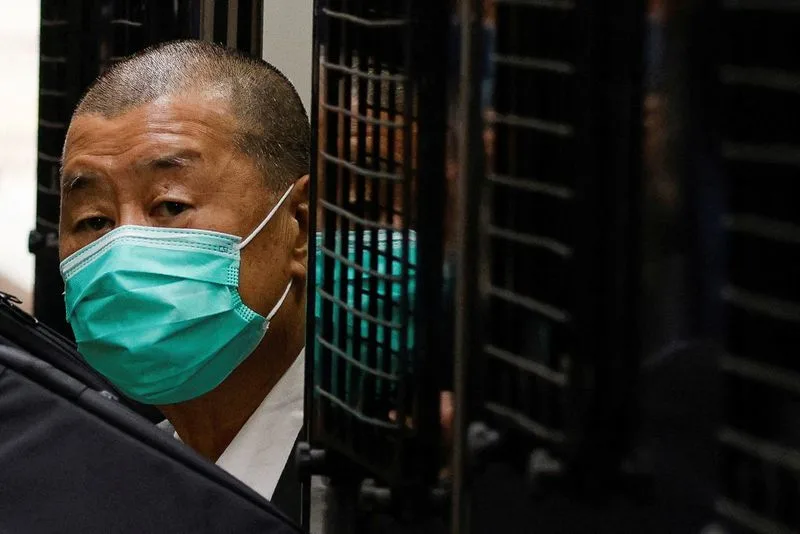
Hong Kong media magnate Jimmy Lai has been sentenced to 20 years in prison for national security violations, concluding one of the city’s most high-profile trials. The charges include conspiracy to collude with foreign forces and publishing seditious materials.
According to Daljoog News analysis, the sentence highlights the increasing reach of Hong Kong’s national security law and the ongoing pressure on independent journalism in the city. Lai’s conviction represents both a legal and symbolic moment for Beijing’s authority in the former British colony.
The ruling comes after nearly five years of legal battles that began with Lai’s arrest in August 2020. As the founder of the now-closed Apple Daily newspaper, he has long been a vocal critic of the Chinese Communist Party, and his sentencing marks a decisive moment in Hong Kong’s post-protest crackdown era.
What Happened?
On Monday, Hong Kong’s courts handed down a 20-year sentence to Jimmy Lai, 78, a British citizen and prominent media figure. He was convicted on two counts of conspiring with foreign forces and one count of publishing seditious material. The court placed Lai within the maximum penalty range for serious offenses, noting that he was the “mastermind” behind the conspiracies.
Lai, who has consistently denied the charges, appeared in court wearing a white jacket, hands clasped in a praying gesture. He acknowledged supporters in the courtroom with a smile and a wave. Authorities deployed a heavy security presence, including sniffer dogs, armored vehicles, and dozens of officers, while supporters queued for days to attend the hearing.
The case also affects six former Apple Daily staffers, one activist, and a paralegal, all facing sentences for related offenses. Health concerns have added urgency to calls for Lai’s release; he reportedly suffers from heart palpitations and high blood pressure.
Why This Matters
Lai’s sentencing is a watershed moment in Hong Kong’s post-2019 political landscape. It underscores Beijing’s willingness to impose the strictest punishments on figures seen as challenging its authority, particularly those advocating for press freedom. Observers warn that this ruling signals a shrinking space for independent journalism and political dissent in the city.
Internationally, the sentence has drawn sharp criticism, highlighting the tension between global democratic norms and China’s approach to governance in Hong Kong. The severity of the ruling has prompted renewed discussions among foreign governments about diplomatic strategies and potential pressure points to protect rights in the city.
The trial also comes amid growing concern over the treatment of elderly or ill prisoners, raising questions about human rights obligations and the broader humanitarian implications of long-term sentences for political figures.
What Analysts or Officials Are Saying
Human rights organizations have described the ruling as “cruel and unjust,” emphasizing the risks to Lai’s health and the broader chilling effect on press freedom. The Committee to Protect Journalists labeled the trial a “final blow to freedom of the press in Hong Kong,” while Human Rights Watch warned that the sentence could be life-threatening given Lai’s age and medical conditions.
Western leaders have raised Lai’s case in high-level diplomatic meetings. British Prime Minister Keir Starmer reportedly brought up Lai during talks with Xi Jinping, joined by China’s Foreign Minister Wang Yi and the UK’s national security adviser. U.S. President Donald Trump also discussed the situation with Xi during meetings last year.
Meanwhile, Beijing maintains that the trial was fair and that all defendants were treated equally under the national security law, asserting that the law has restored order in the city after the 2019 protests.
Daljoog News Analysis
Lai’s 20-year sentence is more than a legal punishment; it is a signal from Beijing about the limits of political dissent in Hong Kong. For years, Lai and Apple Daily stood at the intersection of journalism and activism, and his incarceration marks a turning point for the media landscape.
This ruling will likely deter outspoken criticism of Chinese policies in Hong Kong, creating an environment where self-censorship becomes a survival tactic for journalists and activists. It also positions international actors with a choice: escalate diplomatic pressure, negotiate quietly, or risk tacit acceptance of Beijing’s approach.
At the same time, the case demonstrates the symbolic power of the national security law. While Lai’s trial was conducted in Hong Kong courts, the messaging resonates globally, signaling that even high-profile figures with international citizenship are vulnerable under these legal frameworks.
What Happens Next
Jimmy Lai is expected to appeal the sentence, though the process may be lengthy and challenging under current legal structures. Western diplomats are reportedly assessing avenues for negotiation, which could include consular advocacy or leveraging trade and diplomatic channels.
Attention will also turn to the sentencing of the other former Apple Daily staffers and activists. The outcome may influence both local media operations and the willingness of civil society organizations to speak out against Beijing’s policies.
For international observers, the case will serve as a litmus test for global influence over Hong Kong affairs. Continued advocacy and scrutiny may be critical in shaping both the legal trajectory for Lai and the broader landscape of press freedom in the region.
The world will be watching closely as Hong Kong enters a phase where legal authority and political control are tightly intertwined, and where the implications of this trial will likely echo for years to come.