


Close Menu
Daljoog News
    What's Hot
    Shinhan Bank AI Hack Exposes Data

    Shinhan Bank AI Hack Exposes Data

    October 3, 2026
    Saudi Arabia Aids Yemen Houthis

    Saudi Arabia Aids Yemen Houthis

    October 3, 2026
    Hollywood Queer Film Festival Draws Crowds

    Hollywood Queer Film Festival Draws Crowds

    October 3, 2026
    Facebook X (Twitter) Instagram
    Saturday, October 3
    Daljoog News
    Facebook X (Twitter) YouTube Instagram
    • Home
    • General
    • World
    • Business
    • Technology
    • Politics
    • Finance
    • Health
    • Lifestyle
    • Sports
    • Travel
    Daljoog News
    Home»Business»US Judge Dismisses Buffalo Wild Wings Lawsuit
    Business

    US Judge Dismisses Buffalo Wild Wings Lawsuit

    Andrew RogersBy Andrew RogersFebruary 18, 2026No Comments4 Mins Read
    Facebook Twitter Pinterest LinkedIn Tumblr Email
    Follow Us
    Google News
    US Judge Dismisses Buffalo Wild Wings Lawsuit
    US Judge Dismisses Buffalo Wild Wings Lawsuit
    Share
    Facebook Twitter LinkedIn Pinterest Email

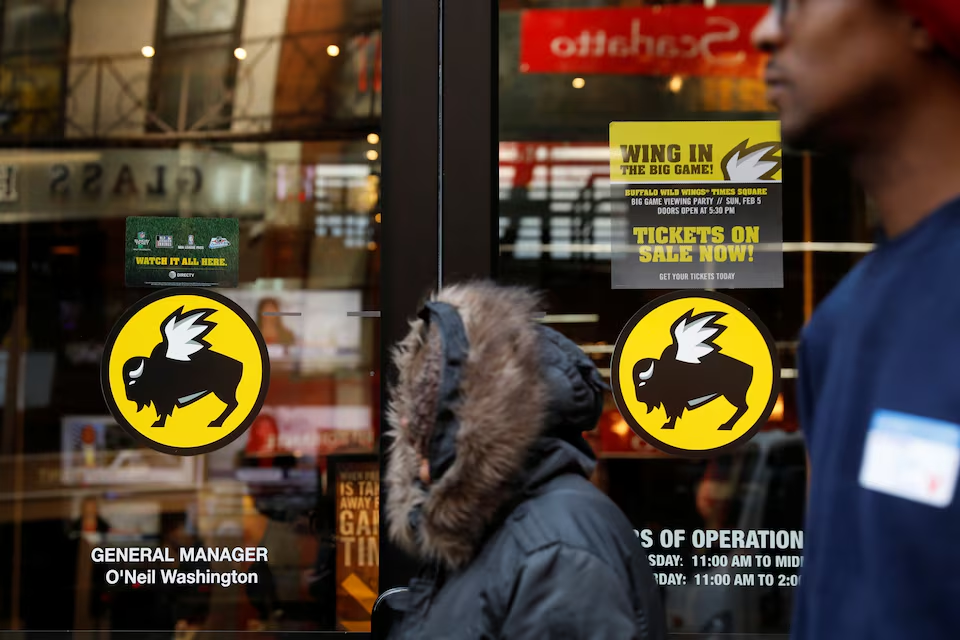
    A federal judge in Chicago has dismissed a consumer lawsuit accusing Buffalo Wild Wings of misleading customers by selling “boneless wings” that are not actual deboned chicken wings.

    According to Daljoog News analysis, the ruling reinforces a growing judicial reluctance to entertain food-labeling lawsuits that hinge on literal interpretations rather than consumer common sense.

    The decision, issued Tuesday in federal court, stops—for now—a proposed class action filed in 2023 by Illinois resident Aimen Halim, who claimed he was deceived into buying what he later described as a chicken nugget marketed as a wing.

    What Happened?

    John Tharp Jr., a judge in the U.S. District Court for the Northern District of Illinois, dismissed the complaint in a sharply worded opinion.

    Halim argued that Buffalo Wild Wings falsely advertised its boneless wings because they are not actual chicken wings with bones removed. Instead, the product is made from breast meat and prepared in a style similar to nuggets.

    The lawsuit alleged violations of the Illinois Consumer Fraud and Deceptive Business Practices Act and sought class action status.

    Judge Tharp concluded that reasonable consumers understand that “boneless wings” are a common food term rather than a literal anatomical description.

    In his ruling, he indicated that Halim failed to present sufficient factual allegations to show deception under consumer protection standards.

    Although the court dismissed the case, Tharp allowed the plaintiff until March 20 to amend his complaint and attempt to add new supporting facts.

    Why This Matters

    Food-labeling lawsuits have surged in recent years, often targeting terms like “natural,” “vanilla,” or “smoked.” Courts increasingly evaluate whether an average buyer would actually be misled.

    This ruling suggests that judges may apply a practical lens when assessing claims over menu descriptions.

    The restaurant industry has long used shorthand culinary terms that describe preparation style rather than literal ingredients. “Boneless wings” have appeared on menus nationwide for decades.

    If courts required strict literal interpretation of menu language, restaurants could face waves of litigation over familiar food terms.

    The case also underscores the limits of consumer fraud statutes when plaintiffs rely primarily on semantic arguments rather than demonstrable economic harm.

    What Analysts or Officials Are Saying

    Legal analysts note that courts generally rely on the “reasonable consumer” standard in deceptive marketing claims.

    Under that framework, plaintiffs must show that a significant portion of ordinary buyers would likely be misled.

    In this instance, the judge found that consumers understand boneless wings to be a style of chicken dish rather than a promise that wing meat was used.

    Industry observers say the ruling aligns with prior cases where courts rejected claims based on exaggerated literal readings of product names.

    Consumer advocates, however, argue that companies should maintain transparency and avoid ambiguous terminology.

    The balance between marketing language and consumer expectation remains a recurring legal battleground.

    Daljoog News Analysis

    This case illustrates a broader tension in American consumer law: how far should courts go in policing everyday language?

    “Boneless wings” is arguably a culinary category, not a biological claim. The judge’s tone suggests impatience with lawsuits that stretch statutory language to test semantic boundaries.

    At the same time, consumer protection laws exist to curb genuinely deceptive practices. When courts dismiss cases early, they signal that not every labeling dispute meets that threshold.

    The ruling may deter similar suits targeting menu wording without clear evidence of widespread confusion.

    Yet the judge’s decision to allow amendment leaves a narrow opening. If the plaintiff can demonstrate measurable consumer misunderstanding or economic harm, the case could reemerge.

    For now, the decision favors a pragmatic reading of marketing language over literal parsing.

    What Happens Next

    The plaintiff has until March 20 to file an amended complaint with additional factual support.

    If no amendment is filed, the case will effectively close at the district court level.

    Should Halim submit a revised complaint, the judge will determine whether it satisfies federal pleading standards.

    Regardless of the outcome, the ruling may influence future litigation involving food labeling and advertising language.


    Share. Facebook Twitter Pinterest LinkedIn Tumblr Email
    Andrew Rogers
    Andrew Rogers
    • Website
    • Facebook

    Andrew Rogers is a seasoned journalist and news analyst specializing in global affairs, politics, and finance. With a passion for investigative reporting, he delivers accurate, insightful stories that inform and engage readers worldwide.

    Related Posts

    Oil Market Watches Houthi Attacks Closely

    Oil Market Watches Houthi Attacks Closely

    October 3, 2026
    Oil Prices Resume Rising This Week

    Oil Prices Resume Rising This Week

    October 2, 2026
    Wall Street Closes Mixed Third Quarter

    Wall Street Closes Mixed Third Quarter

    September 30, 2026

    Comments are closed.

    Our Picks
    Oil Market Watches Houthi Attacks Closely

    Oil Market Watches Houthi Attacks Closely

    October 3, 2026
    Oil Prices Resume Rising This Week

    Oil Prices Resume Rising This Week

    October 2, 2026
    Wall Street Closes Mixed Third Quarter

    Wall Street Closes Mixed Third Quarter

    September 30, 2026
    Consumer Goods Brace For New Tariffs

    Consumer Goods Brace For New Tariffs

    September 29, 2026
    Stay In Touch
    • Facebook
    • Twitter
    • Instagram
    • YouTube
    Don't Miss
    Netanyahu Pardon Protest Sparks Public Anger

    Netanyahu Pardon Protest Sparks Public Anger

    Politics December 1, 2025

    Large crowds gathered outside the home of the Israeli president in Tel Aviv after the…

    French authorities are investigating after thieves steal Renoir paintings estimated at approximately nine million euros in total value from the Musee Renoir in Cagnes-sur-Mer, a coastal town in the Alpes-Maritimes region of southern France. The stolen works, created by renowned Impressionist painter Pierre-Auguste Renoir, represent a significant loss to the museum's collection, which is specifically dedicated to showcasing the artist's work and legacy at the historic property where he spent his final years. Investigators are working to determine how the thieves gained access to the museum and successfully removed the valuable artworks, with authorities examining security footage and physical evidence at the scene to establish a timeline and method used during the apparent theft. This incident adds to a concerning pattern of high profile art thefts affecting museums across Europe in recent years, with valuable artworks increasingly targeted by organized criminal networks that specialize in stealing and often attempting to sell stolen art through underground channels. Art theft experts note that stolen artworks of this caliber and recognition present significant challenges for criminals attempting to sell them, given their well documented provenance and distinctive appearance that makes legitimate resale through normal art market channels extremely difficult. Some stolen artworks eventually resurface years or even decades later, sometimes recovered through law enforcement investigations or occasionally offered back through intermediaries, though many high profile art thefts throughout history have never been fully resolved with recovered stolen items. French cultural heritage officials have expressed significant concern about this theft, given the museum's importance in preserving and showcasing Renoir's artistic legacy at a location with direct historical connection to the artist's life and creative work during his later years. International art crime databases will likely be updated with details about the stolen works, helping alert galleries, auction houses, and law enforcement agencies worldwide to watch for any attempts to sell or transport these specific paintings through legitimate or underground art market channels. Museum security experts note that this incident may prompt broader reviews of security measures at similar smaller, specialized museums that may have more limited security resources compared to major national institutions, despite housing artworks of comparable significant value and cultural importance. Insurance considerations will likely factor into the museum's response to this theft, with specialized art insurance policies typically covering significant losses, though such coverage does not replace the cultural and historical value lost when significant artworks are removed from public access and study. As this investigation continues, French authorities remain hopeful about eventually recovering the stolen paintings, though art theft cases of this nature often prove challenging to resolve quickly. The cultural loss extends beyond financial value, depriving the public of access to significant works from an influential artistic legacy.

    Thieves Steal Renoir Paintings Worth Millions

    September 9, 2026
    Munich Police Investigate Arson At Defense Firm

    Munich Police Investigate Arson At Defense Firm

    September 5, 2026
    San Francisco

    San Francisco City Guide: History, Culture & Innovation

    July 12, 2025
    About Us

    Daljoog News is a trusted news platform that brings you the latest global and local updates with accuracy and fairness. We are committed to clear and unbiased reporting, covering topics like politics, business, technology, science, and culture and more. Using the latest technology and expert journalism, we provide reliable coverage of important stories. Stay informed, inspired, and empowered with Daljoog News—your source for breaking news, the latest updates, and videos that matter.

    Email Us: info@daljoognews.com

    Our Picks
    Oil Market Watches Houthi Attacks Closely

    Oil Market Watches Houthi Attacks Closely

    October 3, 2026
    Oil Prices Resume Rising This Week

    Oil Prices Resume Rising This Week

    October 2, 2026
    Wall Street Closes Mixed Third Quarter

    Wall Street Closes Mixed Third Quarter

    September 30, 2026
    Latest News
    Shinhan Bank AI Hack Exposes Data

    Shinhan Bank AI Hack Exposes Data

    October 3, 2026
    Saudi Arabia Aids Yemen Houthis

    Saudi Arabia Aids Yemen Houthis

    October 3, 2026
    Hollywood Queer Film Festival Draws Crowds

    Hollywood Queer Film Festival Draws Crowds

    October 3, 2026
    Facebook X (Twitter) RSS YouTube Instagram
    • Home
    • About Us
    • Contact Us
    • Our Authors
    • Privacy Policy
    • Terms & Conditions
    • Sitemap
    © 2026 DaljoogNews.com

    Type above and press Enter to search. Press Esc to cancel.