

Texas Gov. Greg Abbott has ordered a surge of state law enforcement personnel to the Texas-Mexico border following a wave of cartel violence triggered by the reported killing of a major Mexican drug kingpin.
Abbott directed the Texas Department of Public Safety to expand public safety and homeland security operations statewide, citing concerns that unrest in Mexico could spill over into Texas communities.
According to Daljoog News analysis, the move underscores how instability inside Mexico can rapidly influence security posture decisions in U.S. border states, particularly when high-profile cartel leaders are involved.
The deployment follows violent reprisals across multiple Mexican states after the death of Nemesio Oseguera Cervantes, widely known as “El Mencho,” the alleged head of the Jalisco New Generation Cartel.
What Happened?
Governor Abbott announced Monday that Texas would increase the presence of Texas Highway Patrol troopers, Texas Rangers, the Criminal Investigations Division, and the Special Operations Group along the border.
The state is also boosting its Tactical Marine Unit and Aircraft Operations Division to strengthen surveillance and enforcement capabilities.
Additionally, Abbott activated personnel from the state’s Homeland Security Division and the Texas Fusion Center to monitor social media and intelligence reports around the clock.
The governor framed the action as a precautionary response to escalating cartel violence in Mexico.
Mexican authorities reported that at least 25 members of the Mexican National Guard and more than two dozen suspected criminals died following the operation that killed Oseguera Cervantes.
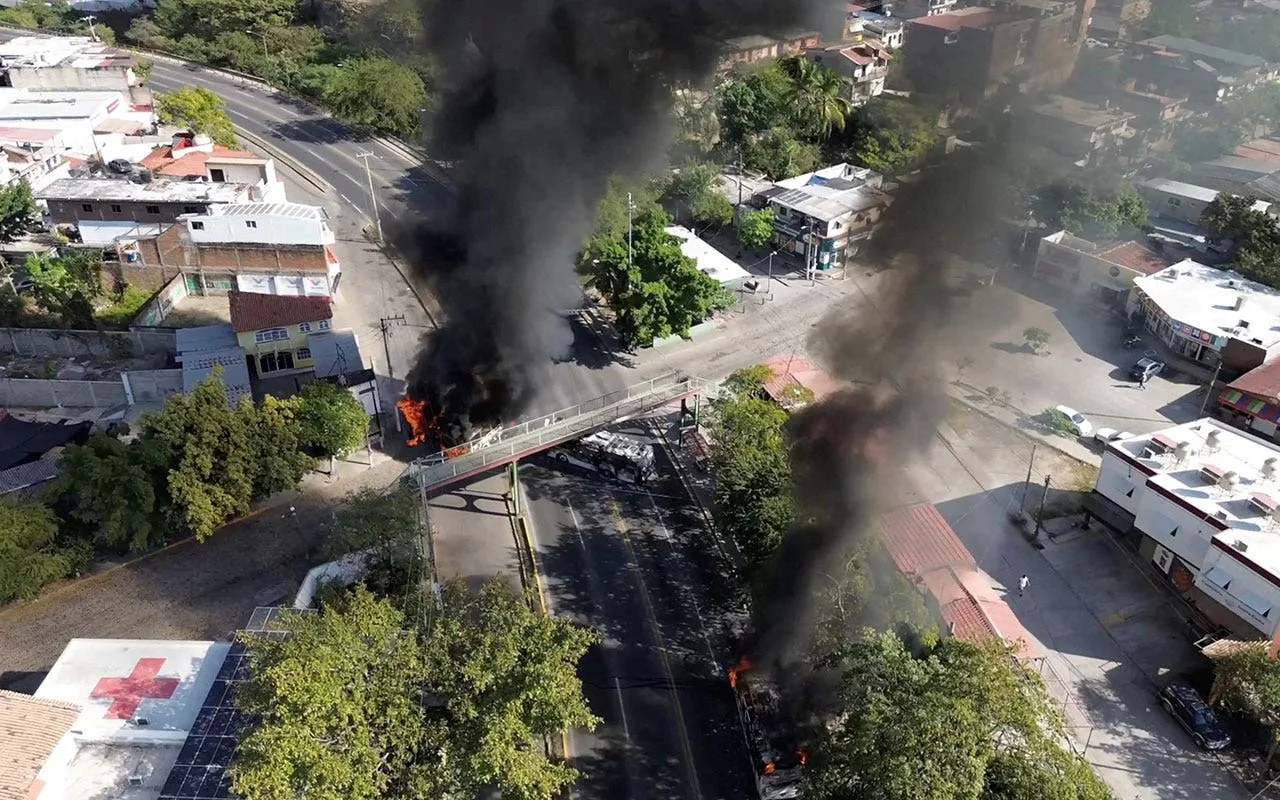
In response, cartel operatives reportedly set vehicles ablaze, erected roadblocks, and disrupted traffic in several regions, including tourist-heavy areas such as Puerto Vallarta.
Some American tourists described scenes of chaos, including burning cars and blocked highways. Airlines reportedly canceled flights while local authorities issued shelter-in-place advisories.
Abbott urged Texans in Mexico who require immediate assistance to contact the U.S. State Department or the Texas Fusion Center.
State officials confirmed that Texas is coordinating with the Federal Bureau of Investigation and the U.S. State Department as the situation evolves.
Why This Matters
Texas shares more than 1,200 miles of border with Mexico, making it particularly sensitive to sudden shifts in cartel dynamics.
When a cartel leader of El Mencho’s stature is killed, power vacuums often trigger internal conflicts or retaliatory violence.
Such instability can increase trafficking attempts, weapons smuggling, and organized criminal movement near border corridors.
Abbott’s decision reflects long-standing concerns among Texas officials that cartel conflicts pose not just a foreign policy issue but a domestic security threat.
The timing also matters politically. Border security remains a central issue in Texas state governance and national debate.
Any perception of instability south of the border can amplify calls for heightened enforcement and expanded state-level action.
What Analysts or Officials Are Saying
Abbott described Mexican drug cartels as a significant threat to public safety and national security.
He emphasized that Texas would use every available tool to prevent criminal activity from crossing into the state.
Security analysts note that cartel leadership decapitation strategies often lead to short-term spikes in violence. Rival factions may compete for control, and existing networks can fragment unpredictably.
Some experts caution, however, that not all surges in violence directly translate into cross-border spillover.
Federal law enforcement officials have not publicly indicated any confirmed cartel incursions into Texas linked to this incident.
Still, coordination between state and federal agencies signals heightened vigilance.
Policy observers say Abbott’s response aligns with Texas’s broader border enforcement strategy, which has increasingly relied on state resources in parallel with federal operations.
Daljoog News Analysis
Abbott’s deployment order reflects both operational caution and political calculation.
On a security level, increasing patrols during periods of cartel upheaval is a defensive measure designed to deter opportunistic cross-border activity.
Cartel retaliation inside Mexico often includes symbolic displays of power, such as highway blockades and arson. Those tactics aim to project strength and destabilize local authorities.
Texas leaders appear intent on preventing any similar disruption on U.S. soil.
Yet the broader pattern deserves scrutiny.
History shows that the removal of a cartel kingpin rarely dismantles the organization permanently. Instead, it can fragment leadership and temporarily intensify violence.
If the Jalisco New Generation Cartel splinters or reorganizes, border enforcement agencies may face shifting trafficking routes rather than a sustained decline in criminal activity.
The state’s decision to activate intelligence monitoring units also highlights the growing role of digital surveillance in modern security strategy.
Monitoring online chatter can provide early warning signs, but it also raises questions about civil liberties and oversight.
Ultimately, the surge demonstrates how quickly cross-border events can trigger state-level mobilization.
What Happens Next
Texas law enforcement will maintain heightened patrols in the coming days as officials assess whether violence in Mexico stabilizes.
Mexican authorities are expected to continue operations aimed at restoring order and preventing further retaliatory attacks.
Federal agencies in the United States will likely monitor intelligence closely for signs of cartel realignment or cross-border activity.
If violence subsides, Texas may scale back some deployments. If instability continues, extended operations could follow.
Travel advisories and airline schedules may also fluctuate depending on security conditions in affected Mexican regions.
For now, Abbott’s directive signals that Texas is preparing for potential fallout rather than waiting for confirmed spillover.
Daljoog News will continue tracking developments along the border and across Mexico as authorities respond to one of the most significant cartel disruptions in recent years.