



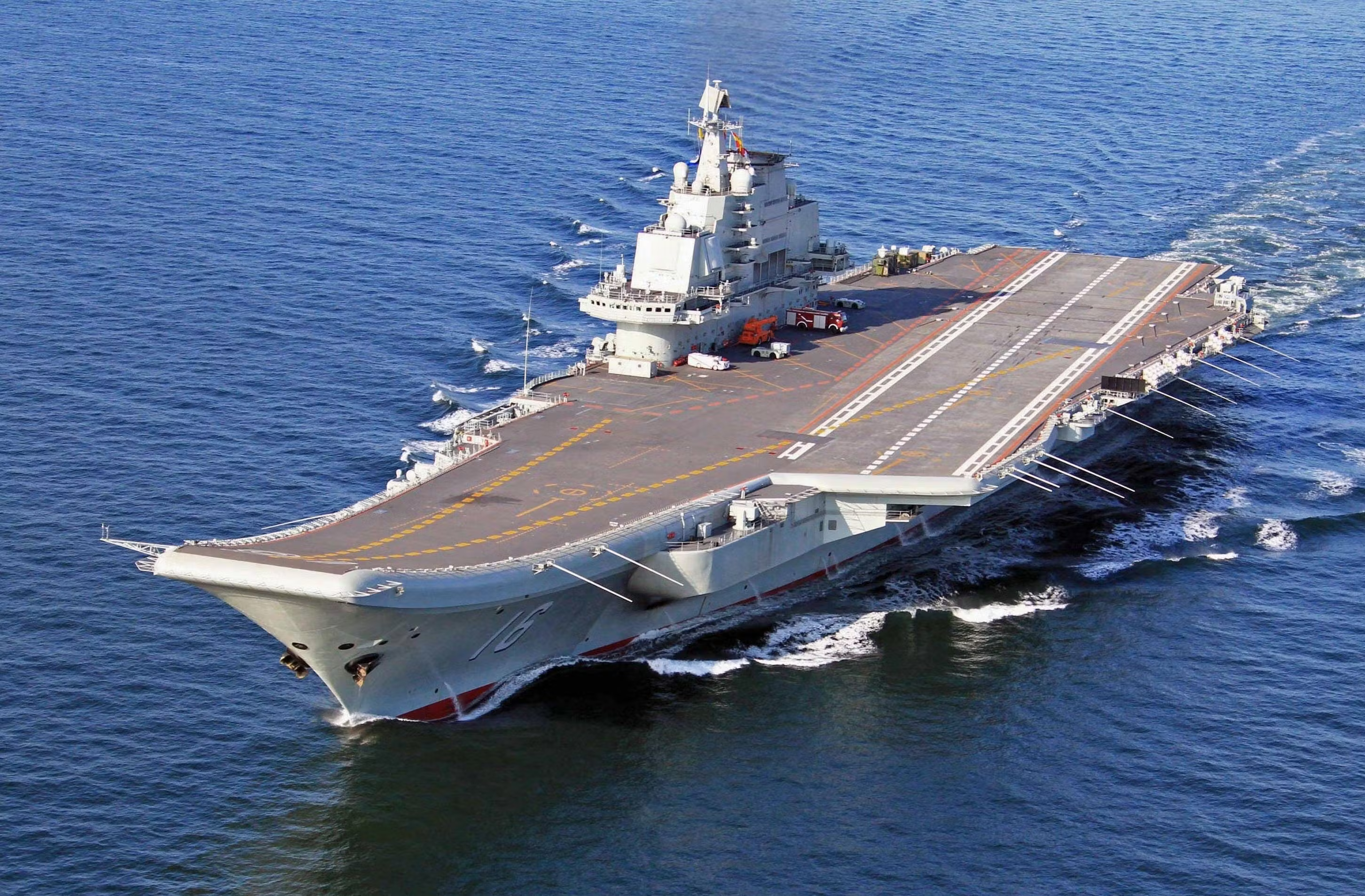
The aircraft carrier Shandong marks a significant milestone in China’s naval modernization as the country’s first domestically built carrier. Operated by the People’s Liberation Army Navy (PLAN), the Shandong represents a major leap forward in China’s efforts to develop a powerful blue-water navy capable of projecting military strength far beyond its coastal waters. Construction of the carrier began in 2013 at the Jiangnan Shipyard in Shanghai. It was launched in 2017 and officially commissioned into service in December 2019. The Shandong is based on the design of China’s first aircraft carrier, the Liaoning, which itself was a refurbished Soviet-era vessel purchased from Ukraine. While similar in many respects, the Shandong incorporates a number of design improvements and modernizations that set it apart from its predecessor.
One of the most notable features of the aircraft carrier Shandong is its ski-jump style flight deck, which enables aircraft to take off with the help of an upward curved ramp at the front of the ship. This contrasts with the steam or electromagnetic catapult systems used by American aircraft carriers. The ski-jump system limits the maximum takeoff weight of aircraft but allows for simpler and less costly carrier design and operation. The Shandong measures approximately 315 meters in length and has an estimated displacement of around 70,000 tons, making it a formidable presence on the seas. Improvements over the Liaoning include a larger flight deck, enhanced electronic systems, and upgraded living quarters for the crew, reflecting China’s growing experience in carrier design and naval operations.
The primary air wing operating from the aircraft carrier Shandong consists of Shenyang J-15 fighter jets, a Chinese carrier-based version of the Russian Su-33. These multirole fighters are capable of air superiority, ground attack, and maritime strike missions. In addition to the J-15 fighters, the Shandong also carries various helicopters used for anti-submarine warfare, early warning, and search and rescue operations. The combination of these aircraft significantly enhances China’s ability to maintain air control and conduct a range of military operations over long distances. The presence of the Shandong allows China to conduct extensive naval exercises and patrols far from its own shores, particularly in areas such as the South China Sea, Taiwan Strait, and near Japan’s exclusive economic zone.
Strategically, the aircraft carrier Shandong plays a crucial role in China’s ambition to expand its naval reach beyond what is traditionally called the “first and second island chains” in the Pacific Ocean. These island chains are key geographic markers that include territories such as Japan, Taiwan, and the U.S. territory of Guam. By deploying the Shandong and its air wing, China aims to project power into these contested regions and beyond, signaling its determination to assert territorial claims and defend its interests. The carrier’s activities have raised concerns among neighboring countries and international observers, leading to diplomatic protests and calls for caution amid rising tensions.
Since its commissioning, the Shandong has been active in various military drills and patrol missions. These operations include takeoffs and landings of fighter jets and helicopters aimed at testing joint combat readiness and strengthening naval capabilities. The carrier has been spotted operating near sensitive areas, including Japan’s exclusive economic zone and the waters around Taiwan, areas where China’s military ambitions are closely watched. The presence of the Shandong alongside other Chinese naval assets such as the Liaoning underscores China’s growing naval power and its ability to conduct sustained operations far from its home waters.
The development of the aircraft carrier Shandong signals a broader trend of China investing heavily in modernizing its military and expanding its maritime influence. This reflects a strategic shift from a primarily defensive posture to a more assertive approach in regional and global security affairs. The Shandong and its future sister carriers are expected to enhance China’s capacity for sea control, power projection, and joint operations with other branches of its armed forces. This expansion of carrier capabilities is part of China’s long-term plan to establish itself as a leading maritime power capable of rivaling the navies of established powers such as the United States.
The aircraft carrier Shandong’s progress has also demonstrated China’s growing industrial and technological expertise in building complex naval vessels. Unlike the Liaoning, which required extensive refurbishment and modernization after acquisition, the Shandong was designed and built entirely within China, showcasing the country’s ability to undertake sophisticated military shipbuilding projects. As China continues to refine its carrier designs, future vessels may incorporate more advanced technologies such as electromagnetic catapults, stealth features, and greater aircraft capacity, further enhancing the PLAN’s operational capabilities.
Overall, the aircraft carrier Shandong stands as a symbol of China’s expanding naval ambitions and its evolving role on the global stage. Its continued operations and deployments are closely monitored by regional powers and international analysts who recognize the carrier’s significance in shaping the balance of power in the Indo-Pacific region.