

Close Menu
Daljoog News
    What's Hot
    Pretrial Hearing Set In Double Homicide Case

    Pretrial Hearing Set In Double Homicide Case

    September 15, 2026
    imgi 1 bf71d714 eae5 11e8 bfde 9434090d4df7 image hires 042526

    US And China Leaders Prepare For Washington Talks

    September 15, 2026
    Housekeepers Week Honors Hospitality Workers Now

    Housekeepers Week Honors Hospitality Workers Now

    September 15, 2026
    Facebook X (Twitter) Instagram
    Wednesday, September 16
    Daljoog News
    Facebook X (Twitter) YouTube Instagram
    • Home
    • General
    • World
    • Business
    • Technology
    • Politics
    • Finance
    • Health
    • Lifestyle
    • Sports
    • Travel
    Daljoog News
    Home»Politics»Six Seats, Big Ambitions: What’s Next for Bangladesh’s Student-Led NCP Party?
    Politics

    Six Seats, Big Ambitions: What’s Next for Bangladesh’s Student-Led NCP Party?

    Andrew RogersBy Andrew RogersFebruary 26, 2026No Comments5 Mins Read
    Facebook Twitter Pinterest LinkedIn Tumblr Email
    Follow Us
    Google News
    Six Seats, Big Ambitions: What’s Next for Bangladesh’s Student-Led NCP Party?
    Six Seats, Big Ambitions: What’s Next for Bangladesh’s Student-Led NCP Party?
    Share
    Facebook Twitter LinkedIn Pinterest Email

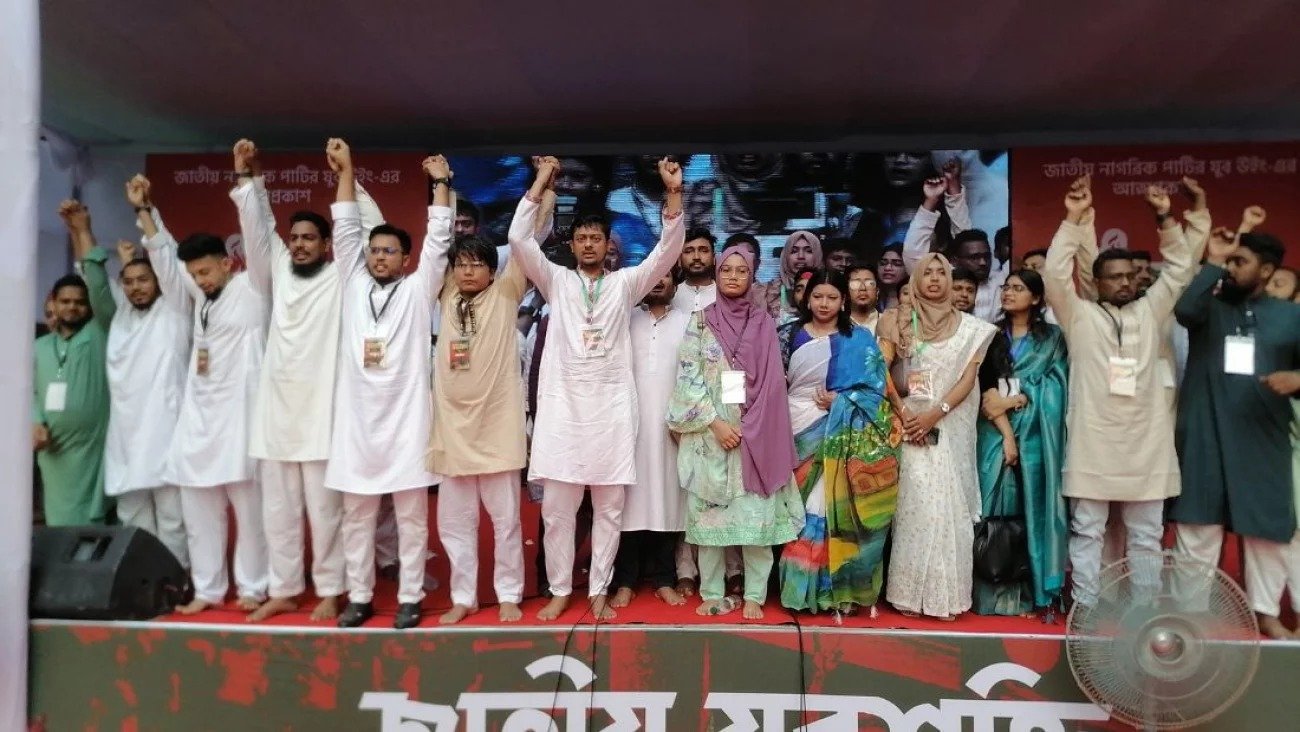
    Bangladesh’s National Citizen Party (NCP), born from the 2024 student uprising that ousted former leader Sheikh Hasina, secured six parliamentary seats in the February 12 elections. The new party contested 30 seats as part of a coalition with the Bangladesh Jamaat-e-Islami, while the Bangladesh Nationalist Party (BNP) led a landslide victory with 212 seats.

    According to Daljoog News analysis, the NCP’s entry into parliament marks a rare breakthrough for a political movement rooted in street protests rather than traditional party structures. While modest in numbers, the party’s presence in the legislature gives student leaders a platform to shape Bangladesh’s political discourse.

    The election comes at a pivotal moment for the country’s politics. The NCP now faces the dual challenge of consolidating its parliamentary role and building a credible, independent identity amidst alliance politics and internal disagreements.

    What Happened?

    The NCP formally launched in February 2025, promising to offer a generational alternative to Bangladesh’s established parties. The party rose from the student-led protests of 2024, which briefly united opposition forces and removed Sheikh Hasina from power. Leaders like Nahid Islam and Asif Mahmud quickly became public figures, representing youthful energy and demands for political reform.

    Despite this momentum, the NCP struggled to establish a nationwide organizational network. Opinion polls leading up to the election indicated single-digit support, forcing the party to negotiate an alliance with the Jamaat-e-Islami. Under this coalition, the NCP contested 30 of 300 parliamentary seats and ultimately won six. The Jamaat-led bloc captured 77 seats overall, while the BNP secured a commanding 212-seat majority.

    Several NCP leaders who rose during the 2024 uprising are now MPs, offering the movement a foothold in formal politics. Supporters view these six seats as a symbolic yet tangible step for a party barely a year old. Critics, however, highlight the difficulties of translating protest legitimacy into lasting political influence.

    Why This Matters

    The NCP’s parliamentary presence reflects a growing appetite among Bangladesh’s younger voters for alternatives to entrenched party politics. It also demonstrates how street movements can evolve into formal political actors, though not without compromise.

    Alliance politics complicate the NCP’s positioning. The decision to partner with Jamaat-e-Islami, a party historically linked to conservative social policies, sparked internal resignations and questions about the party’s ideological clarity. This tension highlights the risks young parties face when balancing pragmatism with principles.

    The broader context underscores generational frustration. Bangladesh’s political scene has long been dominated by the Awami League and BNP, leaving limited space for emerging voices. The NCP’s modest gains may signal the first cracks in this duopoly, particularly if it can consolidate its grassroots base and navigate local elections independently.

    What Analysts or Officials Are Saying

    NCP officials frame the results positively. Spokesman Asif Mahmud emphasized that securing six seats in an 11-month-old party represents a significant achievement. He also noted that the alliance with Jamaat was tactical, not ideological, and that the NCP plans to contest future local elections independently.

    Critics remain skeptical. Former party member Anik Roy argued that the coalition effectively tethered the NCP to Jamaat, limiting its potential to emerge as a truly independent force. Political scientists note that internal divisions and lack of organizational depth may hinder long-term growth, particularly if the party cannot clarify its centrist identity.

    Geopolitical analysts point out that the transition from protest movement to formal political entity often exposes structural weaknesses. In the NCP’s case, operating within a coalition may dilute its agenda, leaving it vulnerable to being perceived as a junior partner rather than a third force.

    Daljoog News Analysis

    The NCP’s rise illustrates both opportunity and constraint. Its six-seat victory is less about immediate power and more about establishing credibility and experience within parliament. For student-led movements, the challenge lies in institutionalizing energy from the streets while avoiding co-option by older, established parties.

    The alliance with Jamaat underscores a broader strategic dilemma: compromise may be necessary for survival, but it risks alienating the very base that fueled the 2024 uprising. If the NCP can leverage its parliamentary presence to develop localized networks and clarify policy positions, it may carve out space as Bangladesh’s credible third option.

    At the same time, political analysts caution that young parties often face high attrition, and internal cohesion will be critical. Lessons from other emerging political movements suggest that ideological clarity and grassroots engagement are essential to translating symbolic victories into long-term influence.

    What Happens Next

    Looking ahead, the NCP aims to contest local government elections independently, testing its ability to build direct connections with voters. Its six parliamentarians provide a framework for policy advocacy and institutional learning, but questions remain about alliances, ideology, and organizational capacity.

    Observers will watch whether the party can expand its influence without relying on larger partners and whether it can maintain the momentum of the 2024 uprising while navigating Bangladesh’s complex political terrain. The coming election cycles will be decisive in determining whether the NCP can move from a symbolic breakthrough to a sustained political force.
    Share. Facebook Twitter Pinterest LinkedIn Tumblr Email
    Andrew Rogers
    Andrew Rogers
    • Website
    • Facebook

    Andrew Rogers is a seasoned journalist and news analyst specializing in global affairs, politics, and finance. With a passion for investigative reporting, he delivers accurate, insightful stories that inform and engage readers worldwide.

    Related Posts

    Algeria Cuts Diplomatic Ties With The UAE

    Algeria Cuts Diplomatic Ties With The UAE

    September 15, 2026
    Yemens Government Bans All Iranian Goods

    Yemens Government Bans All Iranian Goods

    September 14, 2026
    EU Approves 7.1 Billion Dollars For Ukraine

    EU Approves 7.1 Billion Dollars For Ukraine

    September 13, 2026

    Comments are closed.

    Our Picks
    Algeria Cuts Diplomatic Ties With The UAE

    Algeria Cuts Diplomatic Ties With The UAE

    September 15, 2026
    Yemens Government Bans All Iranian Goods

    Yemens Government Bans All Iranian Goods

    September 14, 2026
    EU Approves 7.1 Billion Dollars For Ukraine

    EU Approves 7.1 Billion Dollars For Ukraine

    September 13, 2026
    Earths Hottest August Fuels Climate Debate

    Earths Hottest August Fuels Climate Debate

    September 12, 2026
    Stay In Touch
    • Facebook
    • Twitter
    • Instagram
    • YouTube
    Don't Miss
    Kenya Human Rights Commission

    Kenya Human Rights Commission Protecting Civil Liberties in Kenya

    General June 1, 2025

    The Kenya Human Rights Commission (KHRC) is a leading organization dedicated to promoting and protecting…

    Azerbaijan Tourism Growth 2025

    Azerbaijan Tourism Growth 2025

    June 26, 2025
    Germany's eastern state of Saxony Anhalt heads to the polls this week, with the Saxony Anhalt election AfD gains narrative dominating coverage as the far right Alternative for Germany party hopes to build on recent momentum partly fueled by public fatigue over the ongoing war in Ukraine. The election arrives at a particularly tense moment in German politics, coinciding with a diplomatic dispute between Berlin and Moscow over an alleged Russian backed drone attack on an airport in the eastern part of the country. That controversy has become intertwined with the campaign's broader political dynamics. The Alternative for Germany's lead candidate for the state has campaigned heavily on themes of war weariness and skepticism toward continued German support for Ukraine, arguments that appear to be resonating with a segment of voters increasingly frustrated by the economic costs associated with the ongoing conflict. Chancellor Friedrich Merz's governing coalition has faced mounting criticism over its handling of both the war and broader economic challenges, including factory closures and rising living costs that opposition parties have used to argue the current government has failed to adequately protect German interests. The far right party's leader has directly criticized the chancellor's approach, accusing him of prioritizing international politics over domestic concerns and suggesting his government has lost meaningful connection with everyday voters struggling with economic pressures across the country. Allies of the chancellor have pushed back forcefully against these characterizations, with one prominent supporter accusing the far right party's leadership of effectively serving Russian interests by amplifying narratives that could weaken Western unity and support for Ukraine at a critical moment in the conflict. Polling ahead of the election suggests the Alternative for Germany could make significant gains compared to previous results in the state, though most political analysts do not expect the party to secure enough support to lead a governing coalition given ongoing resistance from mainstream parties to cooperate with it. This election is being closely watched as a broader indicator of political sentiment across eastern Germany, a region that has historically shown stronger support for the far right party compared to western parts of the country, partly reflecting distinct economic and social conditions in the formerly communist east. International observers have noted the election's significance beyond domestic German politics, given its potential implications for continued Western unity on Ukraine policy. Any significant far right gains could be interpreted as a warning sign for mainstream parties navigating similar political pressures elsewhere in Europe. The broader dispute over the alleged Russian drone attack has added additional complexity to the campaign's final days, with the far right party's rhetoric around the incident drawing sharp criticism from government officials who argue it reflects a troubling willingness to dismiss legitimate security concerns. As voters prepare to cast their ballots, the outcome will offer important insight into how deeply war fatigue and economic frustration have penetrated German political sentiment. Regardless of the final results, this election is likely to shape ongoing debates about Germany's role in supporting Ukraine through the challenging months ahead

    Saxony Anhalt Election Looms Amid AfD Gains

    September 3, 2026
    Consumer Financial Protection Bureau

    Consumer Financial Protection Bureau: Key Consumer Safeguards

    July 12, 2025
    About Us

    Daljoog News is a trusted news platform that brings you the latest global and local updates with accuracy and fairness. We are committed to clear and unbiased reporting, covering topics like politics, business, technology, science, and culture and more. Using the latest technology and expert journalism, we provide reliable coverage of important stories. Stay informed, inspired, and empowered with Daljoog News—your source for breaking news, the latest updates, and videos that matter.

    Email Us: info@daljoognews.com

    Our Picks
    Dell Stock Surges Nearly 350 Percent This Year

    Dell Stock Surges Nearly 350 Percent This Year

    September 15, 2026
    Oracle Ellison Scraps Plan To Sell Stock

    Oracle Ellison Scraps Plan To Sell Stock

    September 14, 2026
    Wall Street Eyes Fed Decision After Volatile Week

    Wall Street Eyes Fed Decision After Volatile Week

    September 13, 2026
    Latest News
    Pretrial Hearing Set In Double Homicide Case

    Pretrial Hearing Set In Double Homicide Case

    September 15, 2026
    imgi 1 bf71d714 eae5 11e8 bfde 9434090d4df7 image hires 042526

    US And China Leaders Prepare For Washington Talks

    September 15, 2026
    Housekeepers Week Honors Hospitality Workers Now

    Housekeepers Week Honors Hospitality Workers Now

    September 15, 2026
    Facebook X (Twitter) RSS YouTube Instagram
    • Home
    • About Us
    • Contact Us
    • Our Authors
    • Privacy Policy
    • Terms & Conditions
    • Sitemap
    © 2026 DaljoogNews.com

    Type above and press Enter to search. Press Esc to cancel.