

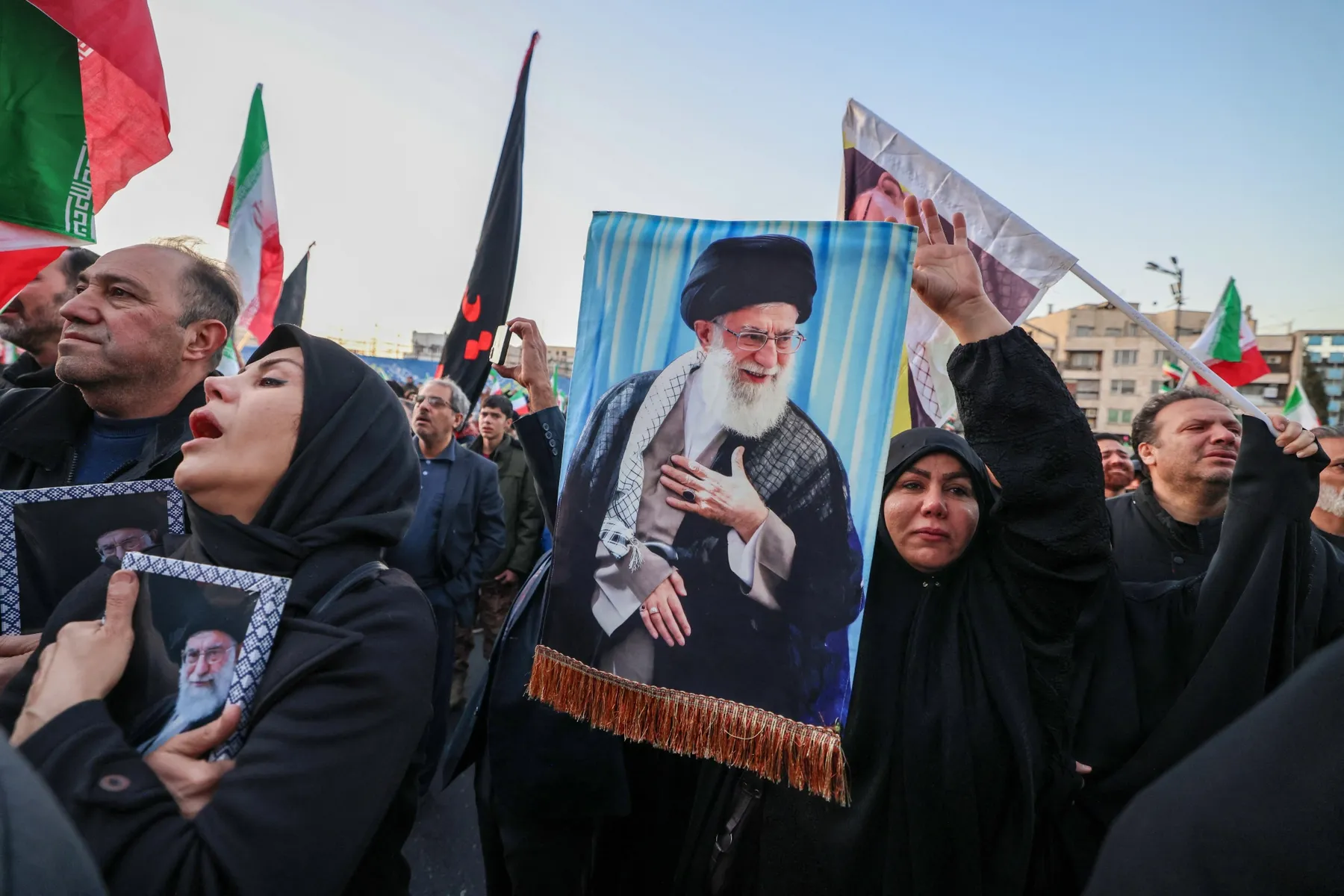
Iran woke to a morning heavy with grief as news spread of Supreme Leader Ayatollah Ali Khamenei’s death. Across Tehran, Isfahan, Mashhad, Qom, and other major cities, crowds flooded the streets holding his portraits and waving Iranian flags, their sorrow visible in every tear-streaked face.
According to Daljoog News analysis, the public outpouring reflects both emotional attachment to Khamenei and the weight of his 36-year rule over the Islamic Republic. This mourning represents a turning point, combining national grief with simmering political and social undercurrents.
The Iranian government announced a 40-day state mourning period, while Monday will mark Khamenei’s funeral at Tehran University. Week-long holidays have also been declared to allow citizens to pay tribute.
What Happened?
Immediately after the announcement, Tehran’s streets filled with thousands of mourners, some collapsing in sorrow while others ran with images of the Supreme Leader. In Isfahan, the city witnessed a massive gathering of citizens, their grief mirrored in every street.
In Mashhad, mourners raised flags atop the grand dome of the Imam Reza Shrine, with wails and chants echoing through the city. In Qom, grief transformed into anger against perceived foreign adversaries, with protestors chanting against the United States and Israel.
Birjand also saw large crowds rallying with Iranian flags, declaring resolve to continue the struggle Khamenei had emphasized during his leadership. Citizens expressed a commitment to avenge the nation against perceived aggressors, merging mourning with calls for action.
Why This Matters
Khamenei’s death ends an era that spanned more than three decades, leaving a vacuum in both the emotional and political life of Iran. His passing will test the resilience of Iran’s leadership, potentially reshaping internal power structures.
The massive public gatherings underscore Khamenei’s symbolic significance. The mixture of grief and nationalist rhetoric could shape Iran’s domestic cohesion and influence its responses to ongoing regional tensions, particularly with the U.S. and Israel.
What Analysts or Officials Are Saying
Analysts note that state-managed mourning rallies serve dual purposes: honoring the leader while signaling political continuity and resilience to external adversaries.
Experts suggest that the emotional intensity on the streets may strengthen the next leadership transition if managed carefully, but also warn that factional divides could emerge amid public demonstrations and heightened nationalist sentiment.
Daljoog News Analysis
The scale of mourning shows how deeply Khamenei’s leadership has penetrated Iranian society. While grief dominates, the chants and protests against external powers indicate that political messaging will continue to be central to maintaining public order.
The reaction also illustrates Iran’s balancing act: honoring a decades-long leader while preparing the country for potential changes in governance and strategic posture.
What Happens Next
Iran will hold Khamenei’s funeral at Tehran University on Monday, followed by the 40-day official mourning period. Authorities have declared week-long holidays to facilitate public participation.
In the coming days, managing succession, controlling demonstrations, and addressing public sentiment will be key challenges. How Iran navigates these issues could determine both internal stability and its regional posture.