

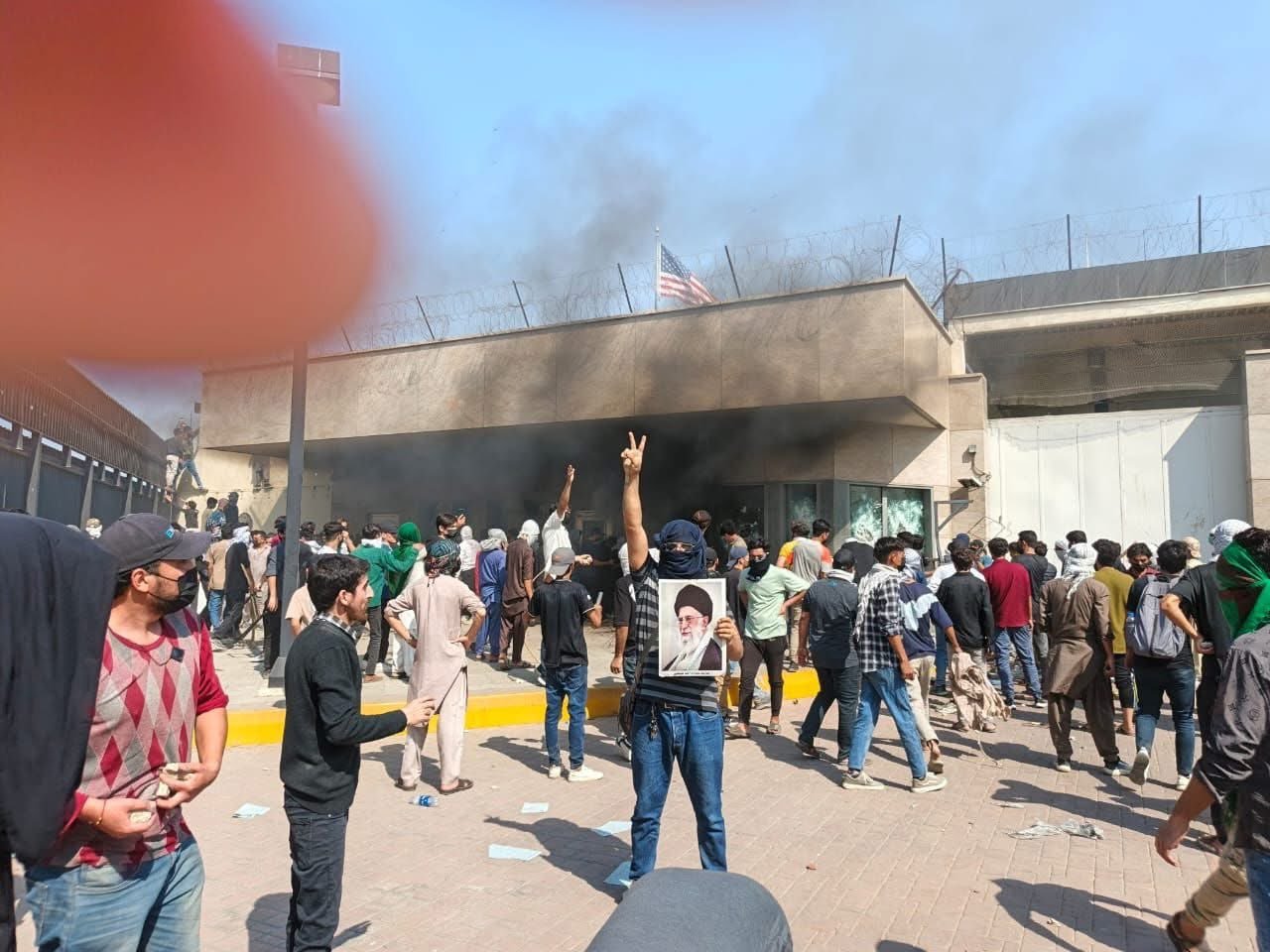
Violent protests broke out outside the United States consulate in Karachi after news spread of the death of Iranian Supreme Leader Ali Khamenei. Demonstrators set fires, damaged property, and clashed with security forces.
According to Daljoog News analysis, the unrest reflects how rapidly tensions tied to Iran’s leadership crisis are spilling beyond its borders, drawing in regional powers and exposing diplomatic flashpoints.
The violence unfolded as anger over Iran’s escalating conflict with the United States and Israel reverberated across South Asia, raising concerns about wider instability.
What Happened?
Hundreds of protesters gathered Sunday on Mai Kolachi Road near the US consulate in Karachi. Witnesses reported that parts of the perimeter were set ablaze as crowds attempted to breach security barriers.
Police responded with tear gas and baton charges to disperse demonstrators. Gunfire was also reported during the clashes.
Karachi’s civil surgeon confirmed that at least six bodies were received at local hospitals, while other reports indicated the death toll could be higher. Several people were injured.
Sindh Interior Minister Zia-ul-Hassan Lanjar requested an immediate report from Karachi’s additional inspector general following the incident. In a public statement, he said authorities would not allow anyone to take the law into their own hands and ordered enhanced protection for sensitive installations.
Traffic was halted along key routes, including sections of Mai Kolachi Road. Law enforcement redirected vehicles to alternate roads while additional police units secured nearby areas such as Jinnah Bridge and I.I. Chundrigar Road.
Protests were also reported in Lahore and Islamabad, though authorities said those gatherings remained largely controlled.
Why This Matters
The attack on a US diplomatic facility in Pakistan signals a dangerous widening of the crisis.
Pakistan has long balanced complex ties with both Washington and Tehran. Violent unrest targeting a US mission risks straining diplomatic relations and raising security concerns for foreign personnel.
The episode also underscores the emotional intensity surrounding Khamenei’s death. Demonstrations linked to the crisis have surfaced in multiple countries, but violence against diplomatic property marks a serious escalation.
Under international law, host governments are responsible for protecting foreign embassies and consulates. Any perceived failure could carry diplomatic consequences.
Beyond Pakistan, protests were reported in Indian-administered Kashmir. Thousands of Shia Muslims gathered in Srinagar, carrying black, red, and yellow flags while chanting anti-US and anti-Israel slogans.
These developments highlight how regional tensions can quickly mobilize communities far from the original flashpoint.
What Analysts or Officials Are Saying
Security analysts warn that diplomatic missions often become symbolic targets during geopolitical crises. Even if protests begin peacefully, they can escalate rapidly when emotions run high.
Pakistani officials have stressed that they are working to restore order and prevent further violence. Authorities increased security around other diplomatic sites following the Karachi clashes.
Regional observers note that Pakistan’s leadership faces a delicate challenge. It must contain domestic unrest while avoiding deeper diplomatic fallout with Washington.
In India, local officials closely monitored demonstrations in Kashmir to prevent escalation. Law enforcement presence was increased in sensitive areas.
Daljoog News Analysis
The Karachi violence reveals how the Iran crisis is reshaping regional security calculations.
Diplomatic compounds represent more than buildings. They symbolize international relationships. When crowds attack such facilities, the message extends beyond immediate anger.
Pakistan’s swift move to reinforce security suggests officials understand the stakes. A prolonged breakdown in order could complicate foreign relations and economic cooperation.
At the same time, the protests demonstrate how events in Tehran and Jerusalem resonate emotionally across Muslim-majority regions. Political narratives spread quickly, particularly during moments of uncertainty and conflict.
If tensions between Iran, the United States, and Israel continue to intensify, further unrest in third countries cannot be ruled out.
What Happens Next
Authorities in Karachi are expected to maintain heightened security around diplomatic facilities in the coming days. Investigations into the clashes and reported fatalities are likely.
Diplomatic engagement between Washington and Islamabad may also intensify to address security concerns.
The broader regional picture remains uncertain. Continued military exchanges involving Iran could trigger additional protests across South Asia and beyond.
For now, the violence in Karachi stands as a stark reminder that geopolitical crises rarely remain confined to national borders.