

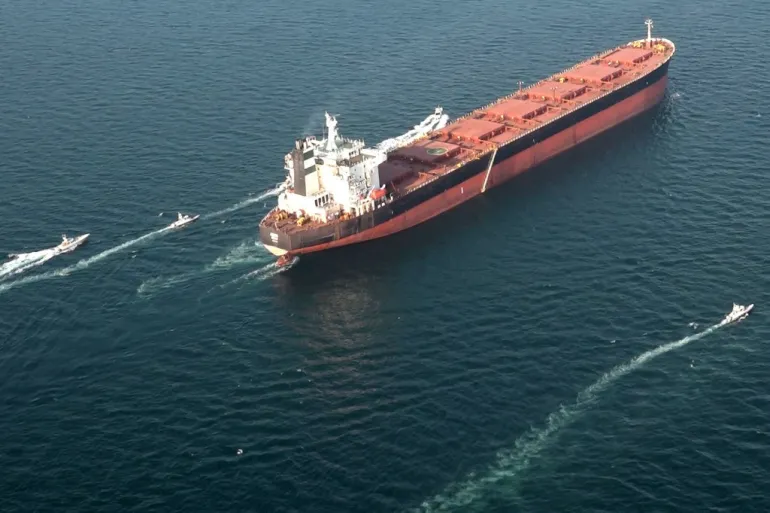
Hormuz Strait crisis has escalated sharply within a 24-hour window, creating fresh uncertainty over one of the world’s most critical oil shipping routes. Reports indicate shifting positions from Iran alongside continued maritime pressure involving US naval forces in the region.
According to Daljoog News analysis… the Hormuz Strait crisis reflects a dangerous overlap of military signaling, energy security concerns, and diplomatic confusion that is now affecting global markets.
The Strait of Hormuz is a strategic chokepoint for global oil supply, and even limited disruption has historically triggered price volatility and political pressure across major economies. The current instability has intensified fears of a wider regional confrontation.
WHAT HAPPENED? Hormuz Strait crisis
The Hormuz Strait crisis intensified after conflicting signals emerged regarding access and control over the shipping route. Iran announced a reopening framework while simultaneously reinstating military-related restrictions in certain operational zones.
At the same time, US naval forces continued maritime monitoring and maintained a visible security posture in the region, effectively sustaining pressure on shipping activity. This dual-layered situation created confusion among commercial operators and regional stakeholders.
European leaders quickly entered discussions over maritime stability, with diplomatic consultations focusing on whether coordinated international action is needed to ensure uninterrupted passage through the Strait.
Amid these developments, a separate political moment gained unexpected attention. A viral video featuring French President Emmanuel Macron and Italian Prime Minister Giorgia Meloni circulated widely on social media. The footage, recorded during a diplomatic gathering, showed a brief and informal exchange that triggered online debate about leadership dynamics and personal chemistry among European officials.
The clip gained traction at the same time as the geopolitical tensions, amplifying public interest in both the diplomatic meeting and the broader Hormuz Strait crisis context.
WHY THIS MATTERS Hormuz Strait crisis
The Hormuz Strait crisis carries immediate implications for global energy security. Nearly a significant portion of the world’s seaborne oil trade passes through this narrow passage, making it highly sensitive to political or military disruption.
Any uncertainty in the region directly impacts global oil prices, shipping insurance costs, and supply chain stability. Energy-importing economies are particularly vulnerable to sudden fluctuations triggered by even partial blockages or heightened military alerts.
Beyond economics, the situation raises concerns about escalation between regional powers and external military actors. The overlap of Iranian policy shifts and US naval presence increases the risk of miscalculation, which could rapidly expand tensions.
WHAT ANALYSTS OR OFFICIALS ARE SAYING Hormuz Strait crisis
Security analysts describe the Hormuz Strait crisis as a “high-risk ambiguity zone,” where unclear signals from multiple actors increase the probability of accidental escalation.
Diplomatic sources in Europe emphasize that maintaining freedom of navigation remains a priority, and coordinated dialogue is being considered to avoid disruption of maritime traffic.
Officials involved in maritime security note that commercial shipping companies are already adjusting routes and insurance strategies in response to perceived instability.
Political observers also highlight that viral media moments involving European leaders, while unrelated operationally, often shape public perception during sensitive geopolitical events, increasing scrutiny of leadership coordination.
DALJOOG NEWS ANALYSIS Hormuz Strait crisis
The Hormuz Strait crisis is not just a regional flashpoint but a structural reminder of how energy routes are deeply tied to global political stability. The current situation demonstrates how quickly maritime security can become entangled with broader diplomatic rivalries.
What stands out is the simultaneous presence of military signaling, fragmented policy communication, and heightened media amplification. This combination increases volatility even without full-scale conflict.
The viral Macron–Meloni video illustrates another dimension of modern geopolitics: public attention often shifts between serious strategic developments and symbolic or personality-driven narratives. While the clip itself has no operational relevance, it reflects how leaders are increasingly viewed through both political and media lenses.
From a strategic standpoint, the key concern is escalation control. When multiple actors operate with overlapping military presence and unclear diplomatic messaging, the risk of misinterpretation rises significantly. That alone can trigger rapid market and security reactions.
WHAT HAPPENS NEXT Hormuz Strait crisis
The Hormuz Strait crisis is expected to remain under close international monitoring as diplomatic consultations continue between European governments, regional powers, and US defense channels.
Further clarification from Iran regarding maritime policy could determine whether tensions stabilize or escalate further. Similarly, adjustments in naval posture from external forces will be closely watched for de-escalation signals.
Energy markets are likely to remain volatile in the short term, with shipping companies and insurers already factoring in higher geopolitical risk premiums.