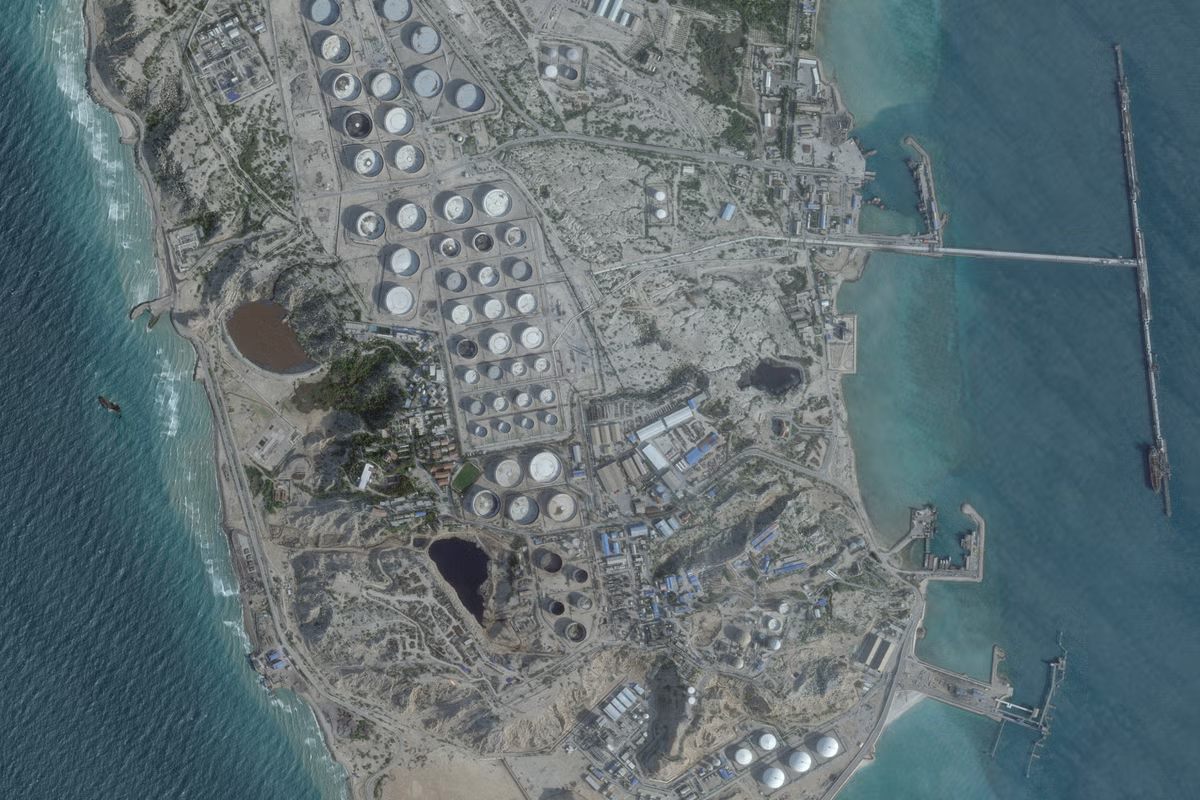



The United States is deploying a wide range of advanced military weapons in its ongoing war against Iran, operating across air, sea, and land. Since the campaign began on February 28, American forces have carried out sustained strikes on hundreds of locations, targeting military, nuclear, and strategic facilities.
According to Daljoog News analysis, the scale and diversity of weapons systems being used reflect a strategy designed to overwhelm Iran’s defensive network quickly and decisively. The operation combines stealth bombers, fifth-generation fighter jets, drones, and long-range missile platforms.
With more than 500 reported strike locations across Iran, the conflict has evolved into a multi-domain military campaign involving some of Washington’s most sophisticated hardware.
What Happened?
U.S. Central Command has confirmed the use of multiple aircraft models and weapons systems during operations over Iran. Among them are the B-1B Lancer and the B-2 Spirit, both capable of delivering heavy payloads against fortified targets.
The B-2, known for its stealth capabilities, has reportedly been used to strike sensitive nuclear and military facilities. These bombers can carry precision-guided munitions designed to penetrate hardened structures.
In addition, fighter aircraft such as the F-35 Lightning II, F-22 Raptor, and F-15 Eagle have been deployed for air superiority missions and precision strikes.
Unmanned systems are also playing a major role. The MQ-9 Reaper drone has conducted surveillance and strike operations. Reports indicate that a newer drone platform has also been introduced in this conflict, expanding reconnaissance and targeting capabilities.
From land-based positions, U.S. forces have used the HIMARS rocket system to hit strategic targets. At sea, naval vessels have launched Tomahawk cruise missiles toward inland objectives.
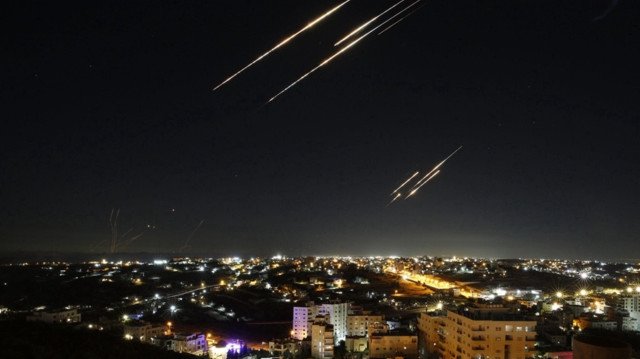
To defend against Iranian retaliation, Washington has deployed the Patriot missile system and counter-drone technologies to intercept incoming threats.
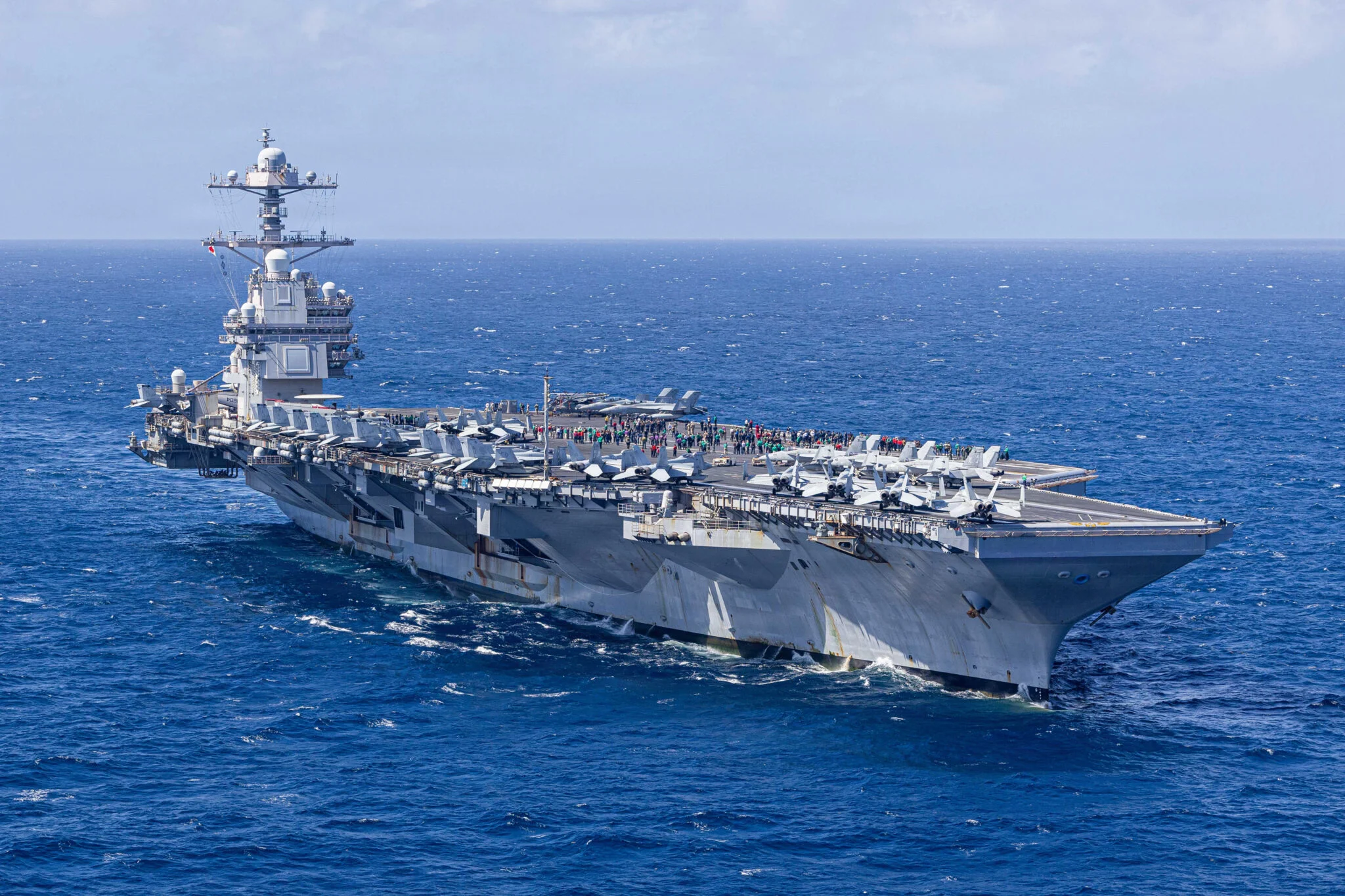
Before the outbreak of hostilities, the U.S. assembled major naval assets near the region, including the USS Gerald R. Ford and the USS Abraham Lincoln carrier strike groups. Maritime patrol aircraft such as the P-8 Poseidon are supporting naval surveillance and submarine tracking operations.
Aerial refueling and logistics aircraft are sustaining round-the-clock operations.
Why This Matters
The weapons deployed reveal both capability and intent.
By using stealth bombers and advanced fighters, the United States signals a determination to degrade Iran’s air defenses and command infrastructure rapidly. Precision-guided munitions suggest a focus on strategic military targets rather than indiscriminate bombing, although damage reports from inside Iran indicate significant destruction.
The presence of carrier strike groups ensures sustained operational reach. Aircraft carriers provide mobility and flexibility, allowing the U.S. to launch strikes without relying entirely on regional airbases.
Drone warfare adds another layer. Unmanned systems reduce pilot risk and enable continuous surveillance, allowing faster targeting decisions.
However, the use of high-end systems also raises costs. Sustained deployment of stealth bombers and carrier groups requires extensive logistical support and financial resources.
What Analysts or Officials Are Saying
U.S. defense officials describe the campaign as designed to neutralize Iran’s military capacity quickly. They argue that combining airpower, naval strikes, and land-based rocket systems creates operational pressure from multiple directions.
Military analysts note that the B-2 Spirit’s involvement indicates priority targets such as underground facilities. Its stealth profile allows penetration into heavily defended airspace.
Security experts also point out that deploying advanced fighters like the F-22 and F-35 ensures air dominance, limiting Iran’s ability to respond with conventional aircraft.
At the same time, analysts warn that sophisticated hardware does not guarantee rapid political success. Airpower can weaken infrastructure, but long-term outcomes depend on broader strategic decisions.
Daljoog News Analysis
The diversity of U.S. weapons in this conflict underscores the seriousness of Washington’s objectives.
This is not a limited symbolic strike. It is a coordinated, multi-platform campaign designed to disrupt Iran’s military ecosystem from top to bottom.
Yet history shows that overwhelming force does not always produce quick resolution. Advanced bombers and cruise missiles can dismantle installations, but they do not automatically eliminate resistance networks or political resolve.
The deployment of carrier strike groups and air defense systems suggests preparation for prolonged engagement rather than a short operation.
Daljoog News assesses that the use of high-profile platforms such as the B-2 Spirit serves both military and psychological purposes. It demonstrates technological superiority while signaling that escalation thresholds have shifted.
However, each additional system introduced into the theater increases the complexity of the conflict. The more assets involved, the harder it becomes to manage unintended escalation.
For continuing updates, readers can visit the [Daljoog News Homepage], follow developments on the [Category Page], and explore context in a [Related Daljoog News Article].
What Happens Next
The trajectory now depends on two key variables: the effectiveness of U.S. strikes and the scale of Iranian retaliation.
If Iran’s air defenses and command centers continue to degrade, Washington may claim strategic success and reduce operational tempo. If retaliatory attacks intensify, additional systems could be deployed.
There is also the question of sustainability. Maintaining stealth bomber missions, drone patrols and naval operations at this scale requires extensive coordination and supply chains.
For now, the battlefield reflects the most advanced elements of American military technology. Whether that technological advantage translates into lasting stability remains uncertain — and the coming weeks will test both strategy and endurance.