


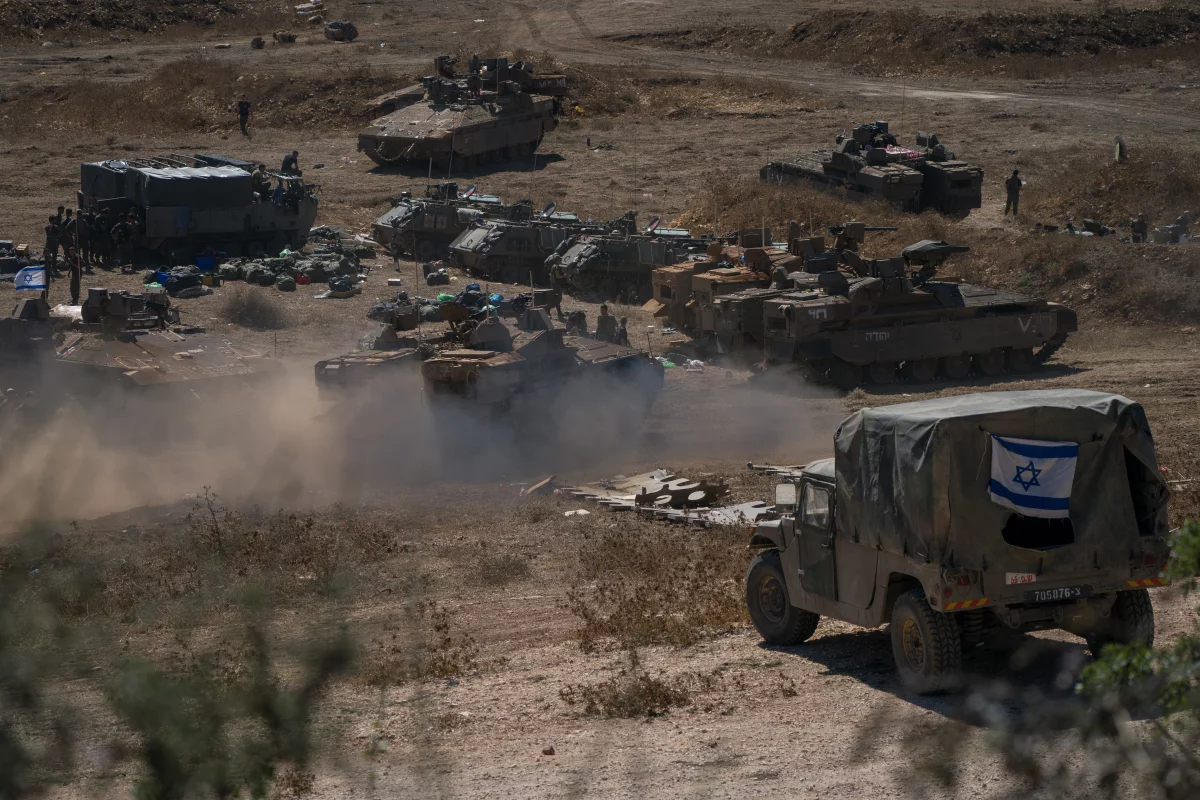
Lebanon’s Hezbollah has claimed a significant success against Israeli forces, destroying at least one Merkava tank during a ground operation near the country’s northern border. The engagement marks a rare operational victory for the resistance group after months of Israeli airstrikes that had largely constrained its activity.
According to Daljoog News analysis, the incident signals Hezbollah’s continued ability to organize targeted counterattacks despite sustained Israeli pressure. The destruction of high-value armored vehicles demonstrates both tactical planning and readiness to exploit vulnerabilities in Israel’s advance.
The clash comes amid heightened tensions in the broader Middle East, including Iranian-backed operations in the Gulf and rising instability along Lebanon’s border. Analysts warn that localized victories like this can have disproportionate political and psychological effects.
What Happened?
On March 3, Hezbollah fighters positioned near Kafarkela ambushed an Israeli ground convoy. Around 3:00 PM local time, a shoulder-launched anti-tank missile struck a Merkava tank.
As additional Israeli tanks attempted to respond or protect the initial target, they too became vulnerable. Reports indicate that at least three Merkava tanks were destroyed in the encounter, although Hezbollah claims the total reached five.
The engagement occurred after days of Israeli airstrikes intended to suppress Hezbollah’s operational capacity in southern Lebanon. Israel had deployed ground forces along the border with the intent to neutralize the group entirely.
This is one of the first significant ground setbacks for Israel in months, highlighting Hezbollah’s continued access to anti-tank weaponry and its ability to exploit terrain for tactical advantage.
Why This Matters
Merkava tanks are Israel’s most advanced armored platforms, designed to withstand anti-tank projectiles. Their destruction represents both material and symbolic loss.
For Israel, the setback underscores the risks of ground operations in contested terrain where resistance groups can exploit ambush points. The psychological impact on troops and the political narrative around military invincibility is also considerable.
Hezbollah’s operation may embolden other regional groups, particularly those supported by Iran, and signal that even advanced military equipment is vulnerable in asymmetric warfare.
What Analysts or Officials Are Saying
Defense analysts suggest that Hezbollah’s success reflects careful intelligence gathering and timing. By waiting for Israeli forces to move into predictable corridors, fighters maximized the effectiveness of anti-tank missiles.
Regional observers note that the engagement could affect Israeli tactical decisions moving forward, possibly limiting large-scale ground incursions near Lebanon.
Meanwhile, other Iranian-backed groups, including the Houthis in Yemen, have issued warnings of expanded engagement if broader regional conflicts intensify. U.S. defense sources also acknowledge that Iran’s Revolutionary Guard has continued targeting THAAD missile defense systems in the Gulf, reducing American air defense capabilities.
European and Middle Eastern officials continue urging restraint to prevent a wider regional escalation.
Daljoog News Analysis
The destruction of Israeli tanks in Lebanon illustrates a broader trend in Middle Eastern conflicts: high-tech equipment is vulnerable without strong intelligence and situational awareness. Hezbollah’s victory combines tactical patience with local terrain knowledge, offering lessons for asymmetric warfare globally.
This incident also shows the intertwining of regional conflicts. Successes on one front, such as Lebanon, may inspire coordinated actions by other Iranian-backed or allied groups across the Gulf and Arabian Peninsula.
For Israel, the setback may prompt reassessment of risk calculations in both ground and air operations. It also demonstrates that political and psychological dimensions remain as critical as battlefield outcomes.
What Happens Next
Israel is likely to reinforce armor and adjust ground movement strategies to minimize vulnerability to anti-tank attacks. Increased aerial surveillance and intelligence operations are expected to prevent further ambushes.
Hezbollah may continue to monitor Israeli movements and execute selective strikes while avoiding large-scale confrontations.
The incident may also influence regional diplomacy, with Gulf states, Europe, and the U.S. closely watching for escalatory cycles. Analysts warn that a series of tactical victories for resistance groups could embolden asymmetric operations elsewhere.