


Iran has launched a major military offensive named “True Promise 4,” targeting U.S. bases and naval vessels across the Persian Gulf. According to Iranian Revolutionary Guard Corps (IRGC) reports, the operation has resulted in over 650 American casualties within the first two days.
According to Daljoog News analysis, the operation signals a significant escalation in Tehran’s asymmetric warfare strategy. By coordinating missile and drone strikes against high-value U.S. targets, Iran is demonstrating both tactical precision and the ability to challenge American naval dominance in the region.
The timing and intensity of the operation come after weeks of heightened tensions in the Gulf, including repeated U.S. and Israeli strikes on Iranian positions. “True Promise 4” appears designed not only as retaliation but as a strategic effort to reshape power dynamics across the Persian Gulf and adjoining waters.
What Happened?
Over the past two days, the IRGC has launched a series of coordinated missile and drone attacks targeting U.S. military facilities and vessels in the Gulf and adjacent waters. Multiple strikes hit the U.S. Fifth Fleet headquarters in Bahrain and other naval installations, inflicting what Iranian officials claim are substantial casualties.
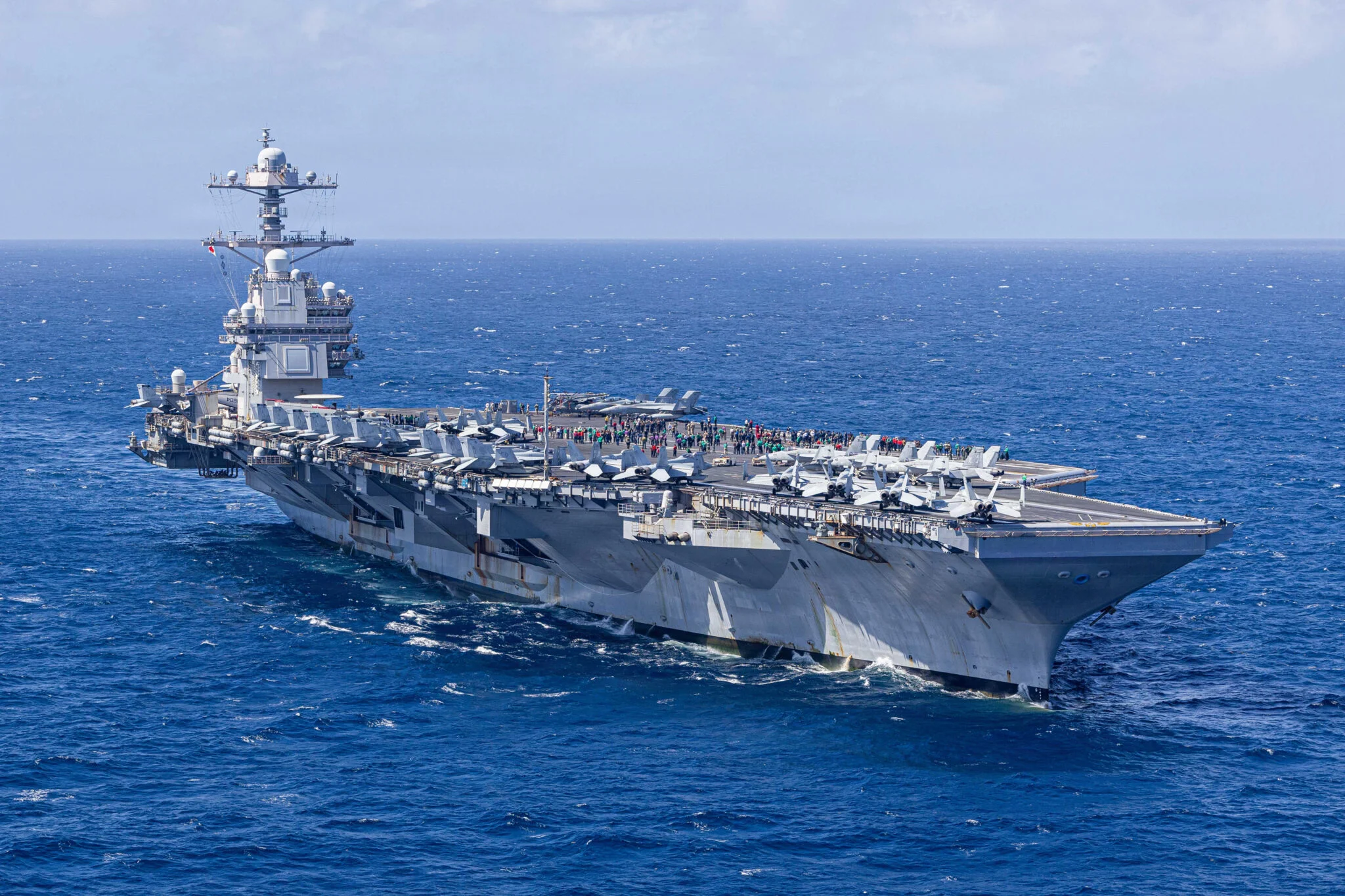
One of the most significant developments involved the USS Abraham Lincoln, a U.S. aircraft carrier operating approximately 250–300 kilometers off the southeastern coast of Iran near Chabahar. The IRGC reports that four cruise missiles were fired at the carrier, compelling it to retreat southeast into the Indian Ocean. U.S. officials have not confirmed the strike’s impact, though the IRGC claims significant damage and injuries aboard other vessels, including the MST Combat Support Ship.
Brigadier General Ali Mohammad, an IRGC spokesperson, stated that missile and drone attacks repeatedly targeted critical U.S. facilities in Bahrain. One attack reportedly caused 160 casualties among U.S. personnel, according to IRGC claims, and inflicted heavy damage to military infrastructure. While these numbers remain unverified by Washington, Iran asserts that battlefield intelligence confirms the operation’s effectiveness.
Why This Matters
“True Promise 4” highlights the evolving nature of Iran’s asymmetric strategy. By combining missiles and drones, Tehran is able to challenge a technologically superior adversary while minimizing direct exposure to conventional naval forces.
The operation threatens U.S. strategic objectives in the Persian Gulf, including protection of maritime shipping lanes and energy security. The retreat of the USS Abraham Lincoln, if confirmed, would represent a rare tactical setback for U.S. naval operations in the region.
For regional security, the operation raises alarms about escalation. Gulf states, including Bahrain and nearby allies, face heightened risks to military and civilian infrastructure. Simultaneously, global energy markets remain sensitive to Gulf instability, particularly disruptions to shipping through the Strait of Hormuz.
What Analysts or Officials Are Saying
U.S. defense officials have not publicly confirmed Iranian casualty claims or the reported retreat of the Abraham Lincoln. Analysts note that such reports, if accurate, underscore the vulnerability of U.S. naval assets to concentrated missile and drone strikes in narrow waterways.
Military experts describe “True Promise 4” as a calculated asymmetric campaign. Iran is leveraging geographic proximity and rapid strike technology to impose costs on U.S. forces while avoiding large-scale conventional engagements.
Regional security observers caution that the operation could trigger further retaliation from U.S. or Israeli forces, potentially widening the conflict beyond the Gulf. Analysts also emphasize the psychological impact: demonstrating the ability to challenge a U.S. aircraft carrier carries symbolic as well as operational weight.
Daljoog News Analysis
The launch of “True Promise 4” represents a turning point in Gulf hostilities. Tehran’s approach blends strategic messaging with operational impact, using missile and drone capabilities to challenge superior forces without entering full-scale naval warfare.
If Iranian claims of casualties and vessel damage hold, the operation will highlight a growing gap between traditional naval assumptions and modern asymmetric threats. It also underscores a broader point: regional actors can inflict measurable losses on U.S. forces without confrontation in open seas.
Strategically, the operation puts Washington and its allies in a difficult position. Every strike carries potential escalation, and the balance between deterrence and overreaction has become increasingly delicate. The unfolding scenario also illustrates how asymmetric operations can ripple across energy, diplomacy, and military planning in a tightly interlinked region.
What Happens Next
Washington is expected to reassess naval deployments and defensive measures in the Gulf. Reinforcements, enhanced missile defense systems, and protective patrols may be implemented to mitigate further strikes.
Iran appears committed to continuing “True Promise 4” as a retaliatory measure against U.S. and Israeli aggression. Future attacks could extend to additional regional targets or maritime routes, potentially impacting civilian shipping and energy flows.
Diplomatic channels may attempt to de-escalate tensions, but analysts warn that miscalculations could rapidly broaden the conflict. Global observers will closely monitor the Gulf, where strategic, economic, and security risks remain unusually high.
Daljoog News will continue reporting on “True Promise 4,” providing analysis of ongoing military actions, regional implications, and potential outcomes.