


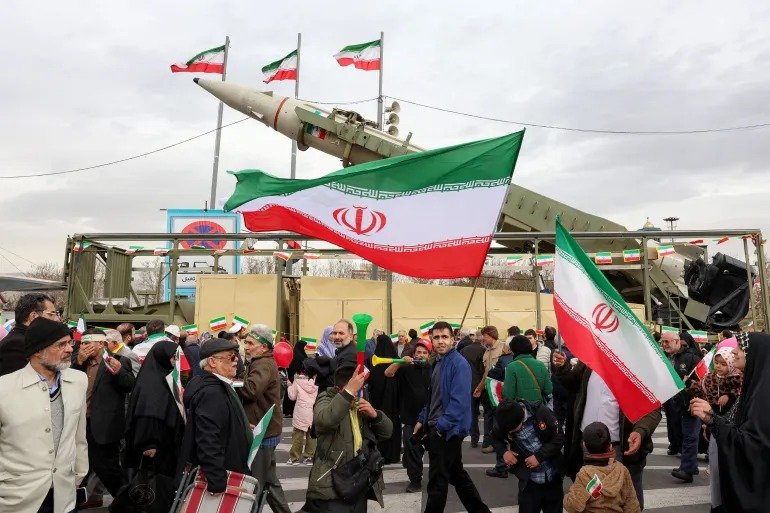
Iran has unveiled a new strategic capability with its Fattah-2 hypersonic missile, raising tensions across the Middle East. Early reports suggest the missile has successfully struck multiple high-value targets in Israel.
According to Daljoog News analysis, the Fattah-2 represents a major leap in missile technology. Its speed and maneuverability challenge existing air defense systems, highlighting a growing strategic gap in the region.
The timing of this deployment, following a series of regional conflicts, signals Iran’s intent to assert technological and military influence. Analysts warn the move could trigger a recalibration of defense strategies across the Middle East and beyond.
What Happened?
Since March 1, Iran’s Fattah-2 missile has reportedly executed several precise strikes on strategic Israeli sites. While Israel has not released official casualty or damage reports, multiple sources confirm the missile’s advanced performance.
The Fattah-2 is equipped with a hypersonic glide vehicle, allowing it to enter the upper atmosphere at extreme speeds while changing trajectory mid-flight. This maneuverability makes it difficult for traditional radar and interceptor systems to track or neutralize the missile before impact.
Military publications, including Military Watch Magazine, have noted the Fattah-2’s capacity to outpace current defense technologies. Israeli defense contractor Rafael Systems acknowledged that conventional interceptors operate under constraints that the Fattah-2’s speed far exceeds. Analysts say a defense system would need to achieve nearly 30 times the speed of sound to reliably intercept such a missile—a feat currently beyond practical technological limits.
Why This Matters
The introduction of hypersonic weapons like the Fattah-2 is reshaping the Middle East’s military balance. Traditional defense networks in Israel and U.S.-aligned allies face unprecedented challenges, potentially creating vulnerability in previously secure zones.
Experts warn that the presence of a high-speed, maneuverable missile adds complexity to regional security planning. Conventional early-warning systems and layered defense strategies may no longer guarantee protection against swift, unpredictable strikes.
Beyond Israel, neighboring countries and global powers are observing Iran’s display closely. The Fattah-2 not only enhances Iran’s deterrent capabilities but also sends a clear message about its technological ambitions in missile development.
What Analysts or Officials Are Saying
Defense experts highlight that even existing ballistic missiles already pressure regional air defenses. The Fattah-2’s hypersonic profile amplifies these challenges, forcing a reconsideration of both tactical and strategic approaches.
Some Israeli planners are reportedly evaluating a “zone defense” model, which would deploy rapid-response technologies in targeted regions. However, experts note that implementing such a system would require decades of development and massive financial investment.
U.S. and allied analysts caution that hypersonic proliferation may accelerate an arms race in the Middle East. They argue that regional escalation could have broader implications for global security architecture.
Daljoog News Analysis
The Fattah-2 is not simply a missile—it is a statement of technological prowess. By demonstrating the ability to penetrate advanced air defenses, Iran signals a shift in strategic perception, showing that innovation can circumvent even well-established defense infrastructures.
This development underscores a key lesson: as missile technology evolves, geopolitical stability becomes increasingly dependent on rapid adaptation and technological parity. Countries relying solely on traditional defense frameworks may find themselves at a disadvantage.
Daljoog News believes that the introduction of hypersonic systems in the region is likely to reshape defense planning, arms procurement, and diplomatic calculations over the coming years. The balance of power in the Middle East is entering a phase where speed and unpredictability may outweigh numerical superiority.
What Happens Next
Military planners in Israel and allied nations are expected to accelerate research into counter-hypersonic technologies. Multi-layered defense concepts, including kinetic interceptors and advanced radar networks, may be prioritized, but experts warn these solutions will take years to mature.
Meanwhile, Iran is likely to continue showcasing its missile capabilities, potentially influencing negotiations, deterrence postures, and regional alliances. Analysts caution that a hypersonic arms race in the Middle East could introduce new global security uncertainties, with implications far beyond the region.
The Fattah-2’s emergence is a reminder that military innovation can redefine strategic landscapes almost overnight, leaving policymakers and defense experts racing to keep pace.