



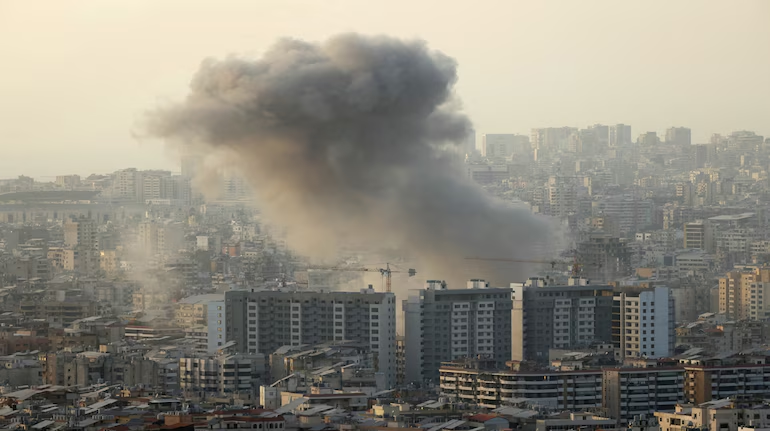
A drone strike targeted an Italian military base in Kuwait, which is jointly used by the United States and Italy. Authorities report no casualties from the attack.
According to Daljoog News analysis, the incident highlights the widening reach of regional tensions, with strategic military sites increasingly vulnerable to unmanned aerial attacks.
Simultaneously, Israel experienced four injuries from rocket fire in multiple urban areas, illustrating the continuing volatility across the Middle East.
What Happened?
The Italian base in Kuwait came under a drone strike, though AFP reports that no personnel were harmed. This base has been used jointly by the United States and Italy for regional operations.
In Israel, four people were injured during rocket attacks. The victims were located in Binai Bage, Ramat Gan, and Petah Tikva, according to the national emergency service Magen David Adom.
Iranian officials, including Supreme National Security Council Secretary Ali Larijani, have accused foreign powers of orchestrating timing in military actions to pressure Tehran. Larijani linked these developments to recent leaks of sensitive U.S. documents revealing connections between prominent American figures and the late Jeffrey Epstein, suggesting coordinated attempts to politically isolate Iran.
Why This Matters
The attack in Kuwait demonstrates how even allied military facilities are now exposed to drone threats, signaling a shift in regional warfare tactics. Meanwhile, the injuries in Israel underscore that civilian populations remain at risk amid missile and rocket exchanges.
Experts highlight that these incidents reflect an escalation in asymmetric warfare, where drones and missile attacks are used to project power without conventional military engagement. Such tactics increase both strategic and psychological pressure on the nations involved.
The broader context suggests that regional adversaries are exploiting timing and information leaks to strengthen leverage, complicating diplomatic negotiations and raising tensions further.
What Analysts or Officials Are Saying
Security analysts note that drone strikes on joint bases represent a growing threat to coalition forces in the Gulf. They emphasize that while casualties were avoided this time, the potential for damage to critical infrastructure remains high.
Israeli defense experts confirm that injuries from rocket attacks, though limited in number, highlight vulnerabilities in urban areas and the need for rapid response mechanisms. Analysts also stress the link between information warfare and military operations, as political narratives influence regional dynamics.
Daljoog News Analysis
The simultaneous attacks in Kuwait and Israel reveal a dual approach in current regional conflicts: the use of high-precision unmanned technology and targeted strikes to exert pressure without full-scale warfare.
Iran’s statements regarding U.S. leaks suggest that information and media strategies are now intertwined with physical attacks, signaling an era where political, economic, and military tools converge in shaping regional outcomes.
These incidents demonstrate that even fortified military bases are no longer immune to unconventional attacks, highlighting the need for integrated security strategies that combine technology, intelligence, and civil preparedness.
What Happens Next
Authorities in Kuwait and Israel are likely to strengthen defensive measures and review emergency protocols in response to drone and rocket threats.
International attention may intensify as allies coordinate on protective strategies for joint bases and regional assets. Observers will closely monitor whether such strikes escalate into larger confrontations or prompt renewed diplomatic efforts to de-escalate tensions.
The evolving situation emphasizes the growing importance of drone defense, rapid urban protection, and strategic intelligence in safeguarding military and civilian infrastructure across the Middle East.