


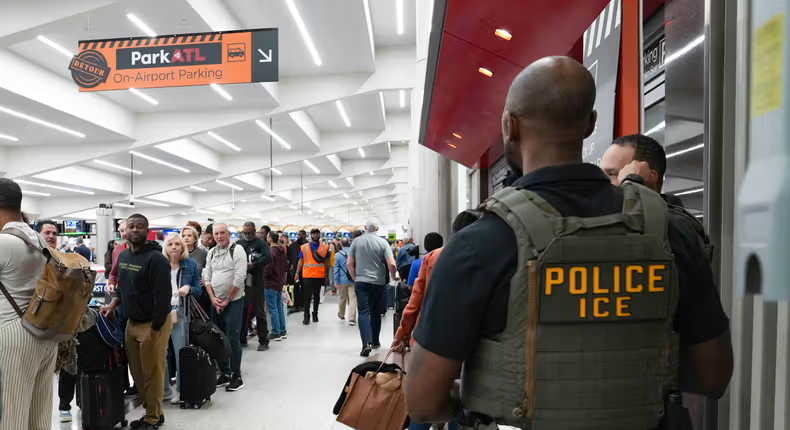
Immigration and Customs Enforcement (ICE) agents could continue patrolling U.S. airports until Transportation Security Administration (TSA) officers return to full staffing, according to border czar Tom Homan. His remarks highlight ongoing operational pressures as the partial government shutdown stretches into its record-breaking duration.
According to Daljoog News analysis, the continued ICE presence reflects broader vulnerabilities in airport security during the shutdown. With TSA officers unpaid for weeks, ICE has been tasked with filling critical gaps, including ID verification and checkpoint management, functions typically handled by TSA staff.
The situation comes at a moment of heightened concern for travelers and federal authorities alike. Thousands of TSA employees have been absent or quit since the shutdown began, leaving some of the nation’s busiest airports grappling with prolonged security lines and operational strain.
What Happened?
Tom Homan, appointed as border czar, confirmed on CBS News’ Face the Nation that ICE agents would remain stationed at airports until TSA operations return to normal. He clarified that the number of ICE agents at each airport would adjust according to how many TSA officers actually resume work.
In a separate CNN interview, Homan indicated that TSA officers could start receiving pay as early as Monday or Tuesday, following President Donald Trump’s directive to the Department of Homeland Security (DHS) to release back pay for the furloughed workers. Even so, Homan stopped short of promising that ICE would immediately leave airports, noting it depends on TSA staffing levels and any permanent departures.
DHS reports that approximately 500 TSA employees have resigned since the shutdown began, and thousands more have called in absent. The cumulative effect has led to long wait times at checkpoints nationwide, with delays lasting several hours at some major hubs. TSA leadership has previously warned that it can take four to six months to fully train a new transportation security officer, underscoring the difficulty of rapidly replacing staff.
House Republicans recently passed a short-term DHS funding bill, but it lacks Senate support and excludes key elements favored by Democrats. The legislative stalemate leaves DHS operations and airport staffing in limbo, even as the shutdown enters its historic length.
Why This Matters
The continued presence of ICE agents at airports signals how the shutdown is reshaping federal security responsibilities. ICE is not traditionally tasked with routine checkpoint screening, yet agents have been filling those roles to prevent bottlenecks. This temporary shift raises operational, legal, and public perception issues, particularly as travelers encounter heightened scrutiny and delays.
Airports remain vulnerable as long-term TSA staffing disruptions persist. Prolonged lines and understaffed checkpoints can affect airline schedules, passenger satisfaction, and national security. For some airports, ICE agents have become a stopgap solution, but this approach is resource-intensive and not sustainable if the shutdown continues.
The situation also highlights the human toll on TSA personnel, many of whom are working without pay, facing personal financial stress, and considering career changes. The broader impact extends to airport contractors, airlines, and the travel industry, which rely on predictable security operations to maintain schedules and passenger confidence.
What Analysts or Officials Are Saying
Officials emphasize that ICE’s role in airport security is temporary but essential under current conditions. A DHS source told CNN that decisions on deployment are made in coordination between ICE leadership and TSA administrators, based on which airports are most affected.
Senate and House leaders remain divided on funding. Senate Majority Leader John Thune, R-S.D., continues negotiations with Democrats but has not signaled a breakthrough. Democratic leaders insist any short-term funding must match the Senate-approved package, which includes provisions TSA advocates say are crucial for operational stability.
Experts caution that any misalignment between TSA staffing, ICE deployment, and funding could exacerbate delays and create security gaps. Analysts also point out that quick solutions are limited; training and onboarding new TSA officers is a months-long process, meaning airport staffing issues could persist well beyond the immediate funding negotiations.
Daljoog News Analysis
Daljoog News analysis suggests that ICE’s extended airport role is both a stopgap and a warning. The federal government is effectively redistributing responsibilities to maintain baseline security, but it is not a long-term solution. If shutdown-related absences continue, airports could face chronic inefficiencies and risk operational backlogs that ripple across the national air travel network.
This scenario highlights a structural vulnerability in U.S. airport operations: overreliance on a single agency for critical screening functions. While ICE agents are competent in law enforcement and security, their duties at checkpoints differ from TSA’s specialized training, raising questions about sustainability and legal liability.
The ongoing funding impasse also underscores the political stakes. As both parties use DHS funding as leverage, the practical consequences—long lines, stressed personnel, and improvised security measures—are felt directly by the public, making it a rare instance where legislative gridlock has an immediate and tangible effect on daily life.
What Happens Next
ICE deployment will likely continue as TSA officers resume work, but the extent depends on how quickly staffing shortages are addressed and whether resignations continue. Federal authorities are monitoring airport-specific conditions to determine the number of ICE agents required at each location.
Legislatively, the next two weeks of congressional recess could stall funding solutions, leaving DHS and airports in a holding pattern. Analysts expect that any meaningful resolution will require bipartisan compromise or a negotiated short-term funding plan that stabilizes both TSA and ICE operations.
Travelers are advised to remain vigilant about airport wait times and plan accordingly. Stakeholders across airlines, security firms, and airport management must adapt to unpredictable staffing, while Congress faces mounting pressure to resolve the longest partial government shutdown in U.S. history.