


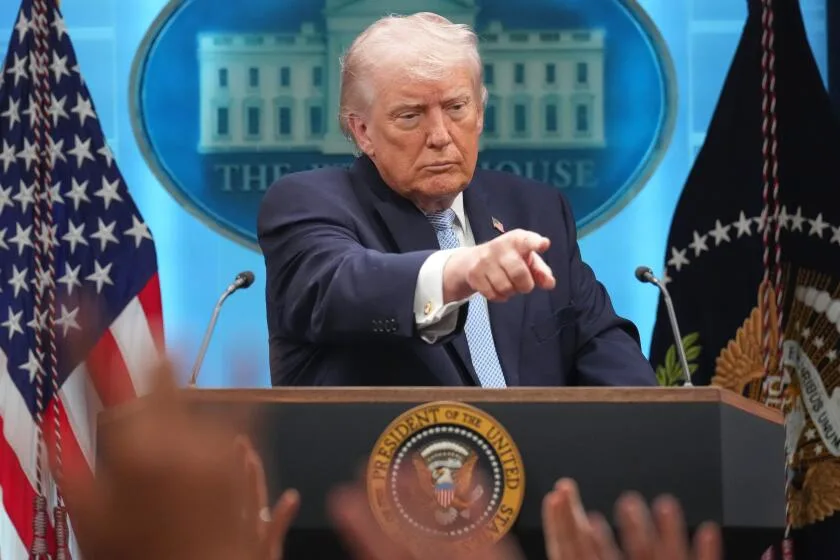
US President Donald Trump’s repeated aggressive remarks against Iran have drawn sharp criticism from Democratic lawmakers. His threats, including warnings of devastating consequences for Iran, are seen as both provocative and destabilizing.
According to Daljoog News analysis, the criticism goes beyond rhetoric. Lawmakers argue that such statements may undermine international diplomacy and risk escalating military tensions in an already volatile region.
Concerns are intensifying in Washington, where questions of presidential authority, judgment, and stability are now central to political debates. The controversy has sparked calls for legal mechanisms to evaluate leadership fitness under the US Constitution.
What Happened?
President Trump has repeatedly used social media and public platforms to issue stern warnings to Iran. His language has been described as threatening, suggesting potential destruction if Iran does not comply with US demands.
Democratic lawmakers, including Representatives Ilhan Omar and Mark Pocan, have condemned these remarks. They argue that Trump’s conduct is inconsistent with the responsibilities of stable leadership. Omar labeled his behavior reckless and dangerous, while Pocan highlighted the risks of placing nuclear decision-making in the hands of an impulsive leader.
Former Secretary of State Madeleine Albright also criticized Trump’s rhetoric, describing it as a threat to humanity and emphasizing the importance of accountability under the law.
In response, lawmakers have raised the possibility of invoking the 25th Amendment. This constitutional provision allows for the transfer of presidential powers if the president is deemed unable to fulfill duties due to incapacity or instability.
Why This Matters
Trump’s statements have implications for both domestic and international policy. Aggressive rhetoric can undermine US credibility, complicate diplomatic efforts, and heighten the risk of military miscalculations.
Domestically, repeated concerns over presidential judgment raise serious questions about governance. Lawmakers’ warnings signal that rhetoric alone is no longer viewed as acceptable within the framework of responsible leadership.
The debate also underscores broader anxieties about the potential misuse of executive power, particularly concerning nuclear authority and foreign policy decisions that could have global consequences.
What Analysts or Officials Are Saying
Political analysts note that this controversy reflects deeper anxieties over executive stability. Trump’s confrontational style, coupled with his unilateral decision-making tendencies, is fueling debates about presidential fitness.
Experts observe that the 25th Amendment, though rarely invoked, serves as a safeguard for extreme circumstances, ensuring continuity and safety of governance. Discussions in Congress suggest that the issue is now being treated as a serious question of competence rather than mere political disagreement.
Internationally, US allies are closely monitoring the rhetoric. Analysts warn that provocative statements toward Iran could strain diplomatic relationships and complicate multinational security coordination in the Middle East.
Daljoog News Analysis
The Trump-Iran controversy highlights a critical tension in American politics: the balance between presidential authority and institutional safeguards. Aggressive rhetoric, especially in nuclear matters, has transformed a public relations issue into a question of national security.
Repeated provocative statements erode confidence not only among lawmakers but also internationally, where allies and adversaries alike monitor US policy for consistency and stability. The legal framework, including the 25th Amendment, exists precisely to address such crises of leadership.
This situation underscores that modern political leadership requires both authority and accountability. In volatile contexts, impulsive decisions can have consequences far beyond domestic politics.
What Happens Next
The debate over Trump’s fitness for office is expected to continue in Congress and public forums. Lawmakers may pursue formal evaluations of his capacity under constitutional provisions if concerns persist.
In the meantime, international attention remains on US-Iran relations. Any escalation triggered by rhetoric or policy missteps could have immediate global consequences, particularly in energy markets and regional security.
Observers suggest that the unfolding situation will test both the resilience of US democratic institutions and the effectiveness of constitutional mechanisms in ensuring responsible leadership.