


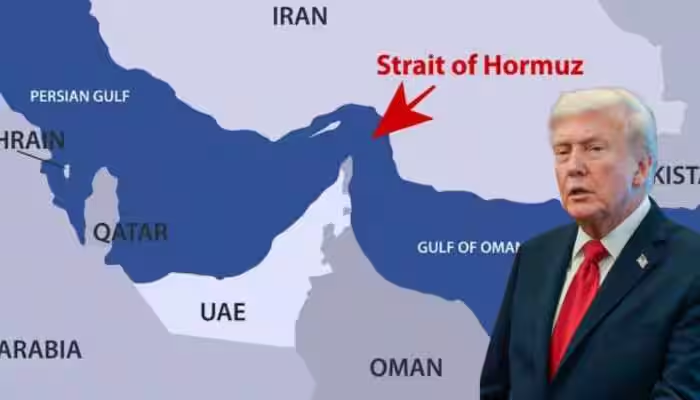
Hormuz Strait blockade tensions escalated sharply after failed Iran–United States negotiations in Islamabad, which lasted more than 21 hours before collapsing without agreement. The situation intensified further when US President Donald Trump publicly called for naval restrictions in the strategic waterway.
According to Daljoog News analysis… the Hormuz Strait blockade tensions reflect how quickly diplomatic breakdowns in the Middle East can trigger wider geopolitical friction involving major global powers and critical energy routes.
The Strait of Hormuz, one of the world’s most important oil transit chokepoints, is now at the center of renewed global concern over shipping security and energy stability.
What Happened?
Hormuz Strait blockade tensions began after reports confirmed that Iran–US talks in Islamabad failed to produce any breakthrough despite prolonged negotiations lasting over 21 hours.
Shortly after the collapse of talks, Donald Trump issued a statement on social media calling for a naval blockade of the Strait of Hormuz. He described the move as necessary amid rising regional instability and urged allied nations to support the initiative.
Trump reportedly encouraged France and the United Kingdom to join the proposed action. However, both countries rejected participation, distancing themselves from any blockade-related military operation.
French President Emmanuel Macron later indicated that instead of escalation, European nations are preparing an international maritime security conference aimed at protecting freedom of navigation in the region.
The Strait of Hormuz remains a vital global shipping route, responsible for a significant share of international oil transportation, making any disruption highly sensitive for global markets.
Why This Matters
Hormuz Strait blockade tensions matter because the Strait is one of the most critical energy corridors in the world, and even limited instability can impact global oil prices and supply chains.
A blockade or restricted navigation scenario could lead to immediate economic consequences, including increased shipping insurance costs and market volatility across energy-dependent economies.
The disagreement between the United States and key European allies also highlights growing divisions in how Western powers approach Middle East security challenges.
While Washington appears more open to direct pressure tactics, European governments are emphasizing diplomatic coordination and multilateral maritime protection frameworks.
What Analysts or Officials Are Saying
Experts monitoring Hormuz Strait blockade tensions describe the situation as a widening gap between military deterrence strategies and diplomatic de-escalation efforts.
European officials have reiterated their commitment to maintaining open shipping lanes while avoiding any direct involvement in blockade actions.
France and the United Kingdom are instead supporting plans for a broader international conference focused on maritime security and reducing escalation risks in the Strait.
Security analysts warn that continued political disagreement among major powers could weaken coordinated responses to future disruptions in this key global shipping route.
Daljoog News Analysis
The Hormuz Strait blockade tensions highlight a deeper fragmentation in global crisis management, where major allies are increasingly divided on how to respond to regional security threats.
The refusal of France and the UK to support a US-led blockade proposal signals a strategic divergence within Western alliances, particularly on the use of naval force in sensitive waterways.
At the same time, Europe’s push for a diplomatic framework suggests a preference for institutional stability over direct confrontation, especially in energy-critical regions.
Daljoog News analysis suggests that without a unified international approach, the Strait of Hormuz risks remaining a recurring flashpoint in global security and energy politics.
What Happens Next
Following the escalation of Hormuz Strait blockade tensions, diplomatic efforts are expected to intensify around the proposed European-led maritime security conference.
Key global stakeholders will now decide whether to participate in structured talks aimed at ensuring freedom of navigation in the Strait of Hormuz.
Energy markets and shipping operators are closely watching developments, particularly any signs of restricted movement or increased military presence in the region.
The next phase will determine whether the crisis moves toward diplomatic stabilization or further geopolitical confrontation in one of the world’s most sensitive maritime corridors.