


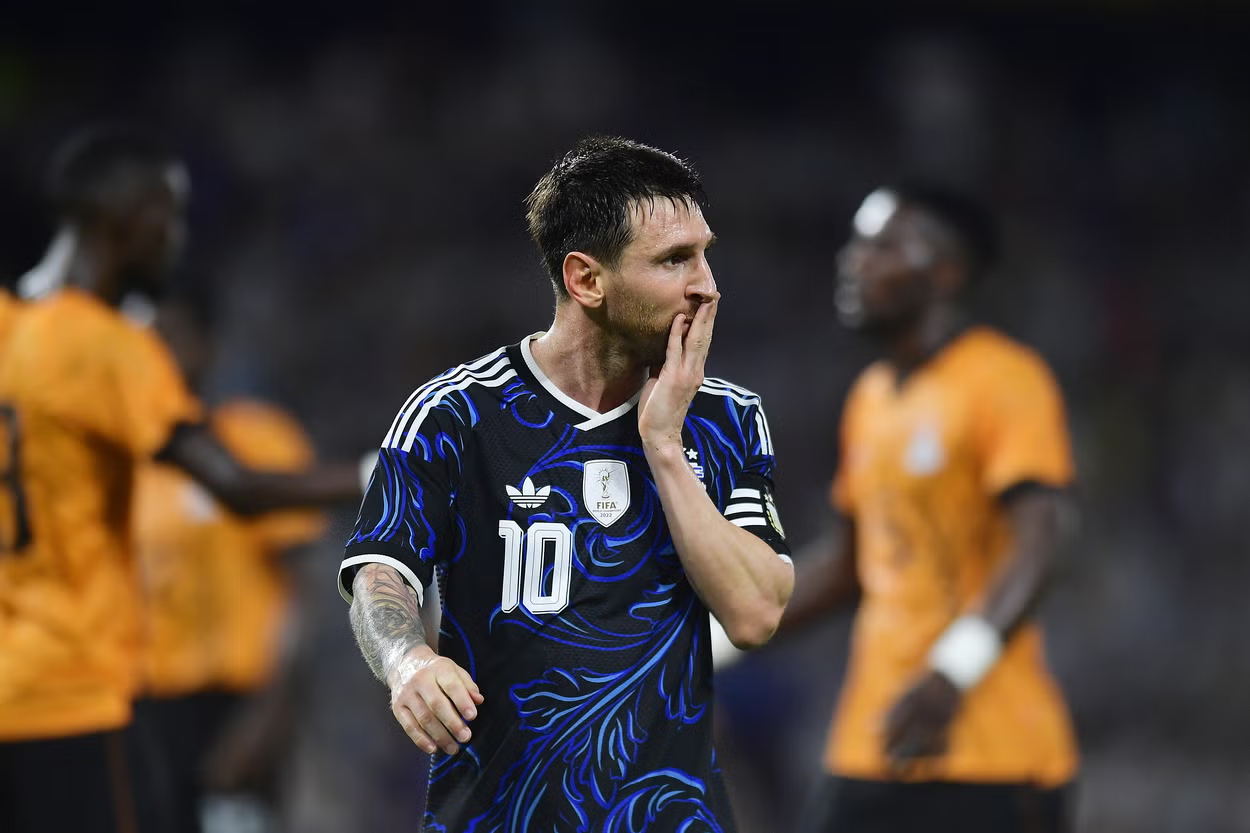
Lionel Messi is now at the center of a legal dispute in the United States after a Florida-based event company filed a lawsuit over an alleged breach of contract linked to Argentina’s friendly matches.
According to Daljoog News analysis, the case highlights growing tensions between football’s commercial expansion and the enforceability of high-value appearance agreements tied to global star athletes.
The development comes as Messi’s presence in Major League Soccer continues to reshape the sport’s popularity and business value across North America.
What Happened?
Lionel Messi has been named in a civil lawsuit filed in Florida by an event management company, which also targets the Argentine Football Association over alleged fraud and contract violations related to international friendlies.
The company claims it paid around $7 million for exclusive rights to organize Argentina’s 2025 friendly matches in the United States. The agreement reportedly included a condition requiring Messi’s participation for at least 30 minutes in each match, provided he was not injured.
However, according to the complaint, Lionel Messi did not play in the Venezuela match and instead attended from a private suite at Hard Rock Stadium in Miami with his family.
The situation escalated when Messi later featured in an MLS match for Inter Miami CF, where he scored twice against Atlanta United, followed by an appearance in Argentina’s match against Puerto Rico.
The lawsuit also challenges a major venue change. A scheduled match at Chicago’s Soldier Field, which can host more than 61,000 fans, was moved to Chase Stadium in Fort Lauderdale, reducing capacity to around 21,500 spectators.
The company argues that Lionel Messi’s absence and the venue shift resulted in losses exceeding $1 million, alongside additional operational damages.
Why This Matters
Lionel Messi is one of the most commercially influential athletes in global football, and his presence has significantly boosted Major League Soccer’s international profile.
This lawsuit raises important questions about how far commercial contracts can go in guaranteeing player participation, especially in exhibition or friendly matches.
It also highlights the financial risks faced by event organizers who rely heavily on star appearances to generate ticket sales, sponsorships, and broadcasting revenue.
If proven, the case could influence how future contracts involving elite players are structured, particularly in the growing US sports entertainment market.
What Analysts or Officials Are Saying
Sports law experts note that Lionel Messi-related contracts often sit in a grey area where sporting discretion and commercial obligation overlap.
Analysts argue that the outcome will depend on whether the participation clause was legally binding and clearly enforceable under US contract law.
The Argentine Football Association has not issued a detailed public response, though similar disputes in international football are often resolved through private settlement rather than prolonged court battles.
Observers also point out that Messi’s dual commitments to club and country make scheduling and appearance guarantees increasingly difficult to manage.
Daljoog News Analysis
Lionel Messi’s lawsuit reflects the growing commercialization of modern football, where player appearances are treated as high-value contractual assets.
Daljoog News analysis suggests that the increasing reliance on star-driven revenue models is creating legal friction between sporting realities and commercial expectations.
While Messi’s global appeal continues to elevate the value of events, it also exposes organizers to significant financial risk when appearances do not unfold as planned.
This case highlights a broader structural issue in global sports: the gap between entertainment-driven contracts and the unpredictable nature of athletic participation.
What Happens Next
The lawsuit involving Lionel Messi is expected to proceed through the Florida civil court system, where evidence will focus on contract wording, obligations, and alleged damages.
Both parties may consider settlement options to avoid prolonged legal exposure and reputational impact, especially ahead of upcoming international tournaments.
If the court rules in favor of the claimant, it could reshape how appearance-based agreements are written in football and other global sports.
For now, the case adds legal uncertainty around one of the most commercially powerful figures in modern sport, with implications that could extend far beyond this single dispute.