

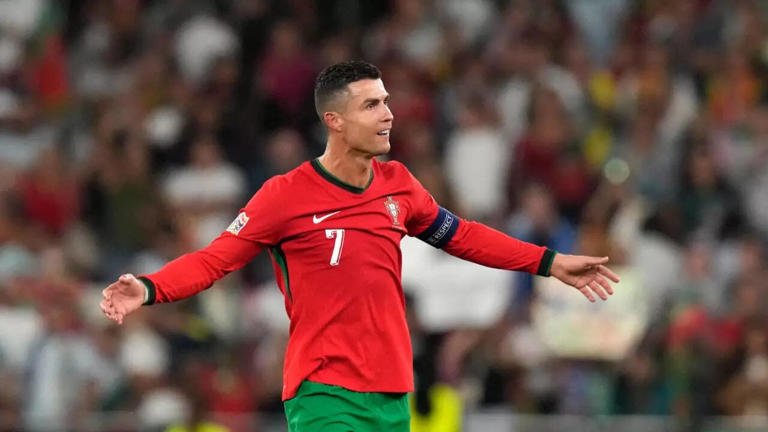
Cristiano Ronaldo 2030 World Cup discussions have intensified after Portuguese superstar Cristiano Ronaldo suggested he may still be playing at the highest level in the next World Cup cycle. His remarks came during a wide-ranging interview on Piers Morgan’s podcast, where he reflected on longevity, performance, and ambition.
According to Daljoog News analysis, the Cristiano Ronaldo 2030 World Cup narrative reflects a broader shift in modern football, where elite players are extending careers far beyond traditional expectations due to advanced fitness, recovery systems, and competitive motivation.
The timing of his comments has also reignited global debate about Portugal’s long-term squad planning, especially as international football begins to look ahead to the 2026 and 2030 cycles with increasing strategic focus.
At the same time, African football has seen a major coaching development, with Ghana appointing experienced Portuguese manager Carlos Queiroz as head coach ahead of the 2026 FIFA World Cup cycle.
Ronaldo’s 2030 Vision and Career Longevity
The Cristiano Ronaldo 2030 World Cup conversation began after Ronaldo openly stated that he still feels capable of competing at elite level football even as he moves deeper into his 40s. Speaking on the podcast, he suggested that his current form and goal-scoring consistency remain strong enough to justify continuing his career.
Ronaldo’s remarks were not framed as a formal announcement but rather as a reflection of his mindset. He emphasized that he continues to score regularly and maintain high physical standards, leaving open the possibility of extending his international career beyond what many previously assumed would be his final tournaments.
The Portuguese forward has already built one of the most decorated careers in football history, including European Championship success and multiple international appearances across different World Cups. Yet his ambition, according to his own words, remains unchanged: to win a World Cup with Portugal.
The Cristiano Ronaldo 2030 World Cup possibility would mark an extraordinary milestone, as it would mean competing at the highest international level well into his mid-40s. In modern football terms, such longevity is rare, even for elite athletes.
What Happened in the Podcast Interview
During his conversation with Piers Morgan, Ronaldo addressed both his current performance and future expectations. He dismissed the idea that age alone determines retirement, instead pointing to his weekly performances as evidence of sustained capability.
He indicated that as long as he continues scoring and maintaining fitness, there is no immediate reason to step away from international football. This has added fresh momentum to the Cristiano Ronaldo 2030 World Cup debate among fans, analysts, and former players.
The interview also highlighted a psychological shift in Ronaldo’s career phase. Rather than focusing solely on short-term milestones, he appears increasingly focused on legacy and long-term impact, both for club and country.
Football analysts note that such statements often serve multiple purposes: motivating current performance, managing public expectations, and reinforcing leadership status within the national team setup.
Ghana’s Major Coaching Move Ahead of 2026
While the Cristiano Ronaldo 2030 World Cup story dominates headlines, African football is undergoing its own transformation. Ghana has appointed Carlos Queiroz as head coach, marking a significant strategic decision ahead of the 2026 FIFA World Cup cycle.
Queiroz brings decades of international experience, having managed multiple national teams and participated in several World Cup tournaments. His appointment signals Ghana’s intent to rebuild structure, discipline, and tactical consistency after a series of mixed performances.
His arrival follows a period of instability in results, including disappointing friendly outcomes. The Ghana Football Association believes his experience at the highest level can help stabilize the squad and improve competitiveness in qualifying campaigns.
For Ghana, this move is not just about short-term recovery. It is part of a longer-term project aimed at building a more resilient national team capable of competing against stronger international opponents.
Why the Cristiano Ronaldo 2030 World Cup Debate Matters
The Cristiano Ronaldo 2030 World Cup discussion is significant because it challenges long-standing assumptions about football careers. Traditionally, players were expected to retire in their mid-30s. However, Ronaldo continues to defy that model.
His sustained performance raises questions about how modern training methods, nutrition, and recovery technologies are reshaping professional sports. Elite athletes are now extending their careers while maintaining high levels of competitiveness.
From a commercial perspective, Ronaldo’s continued presence also has global implications. His participation in future tournaments would significantly increase viewership, sponsorship interest, and media engagement.
For Portugal, however, the challenge lies in balancing reliance on a legendary figure with the need to develop younger talent for long-term sustainability.
Ghana’s Strategy and Queiroz’s Tactical Role
The appointment of Carlos Queiroz reflects Ghana’s desire for structure and experience on the international stage. Known for his tactical discipline, Queiroz is expected to bring defensive organization and strategic clarity to the squad.
His previous experience with multiple national teams gives him a strong understanding of World Cup pressure environments. Ghana’s football leadership is hoping this expertise will translate into improved qualification performance and tournament readiness.
However, analysts also warn that coaching alone cannot solve deeper structural issues such as squad depth, youth development, and domestic league consistency.
Still, the decision signals ambition. Ghana is aiming not just to qualify but to compete more effectively at the global level.
Daljoog News Analysis
The Cristiano Ronaldo 2030 World Cup narrative and Ghana’s coaching overhaul represent two different but connected themes in modern football: longevity and reinvention.
Ronaldo’s continued relevance shows how individual excellence can reshape expectations around aging in elite sports. His mindset reflects a generation of athletes who no longer accept early decline as inevitable.
At the same time, Ghana’s appointment of Queiroz demonstrates how national teams are increasingly relying on experienced leadership to bridge competitive gaps. This is particularly important in global tournaments where tactical discipline often determines success.
Together, these developments highlight a broader evolution in international football strategy. Success is no longer defined only by talent, but also by long-term planning, physical sustainability, and managerial expertise.
The Cristiano Ronaldo 2030 World Cup possibility remains uncertain, but its very discussion underscores his enduring influence on the sport. Whether or not he reaches that stage, his presence continues to shape global football conversations in real time.
What Happens Next
The next phase of the Cristiano Ronaldo 2030 World Cup discussion will depend heavily on his performances in upcoming international and club competitions. If he maintains his current level, speculation is likely to intensify further.
For Ghana, attention will turn to qualification matches under Carlos Queiroz. Early results will be closely watched to assess whether his tactical system is taking effect and improving consistency.
As the 2026 World Cup cycle progresses, both stories will remain relevant in shaping global football narratives. Ronaldo’s longevity and Ghana’s rebuilding effort represent two sides of the same evolving sport: one focused on extending greatness, the other on rebuilding it.