
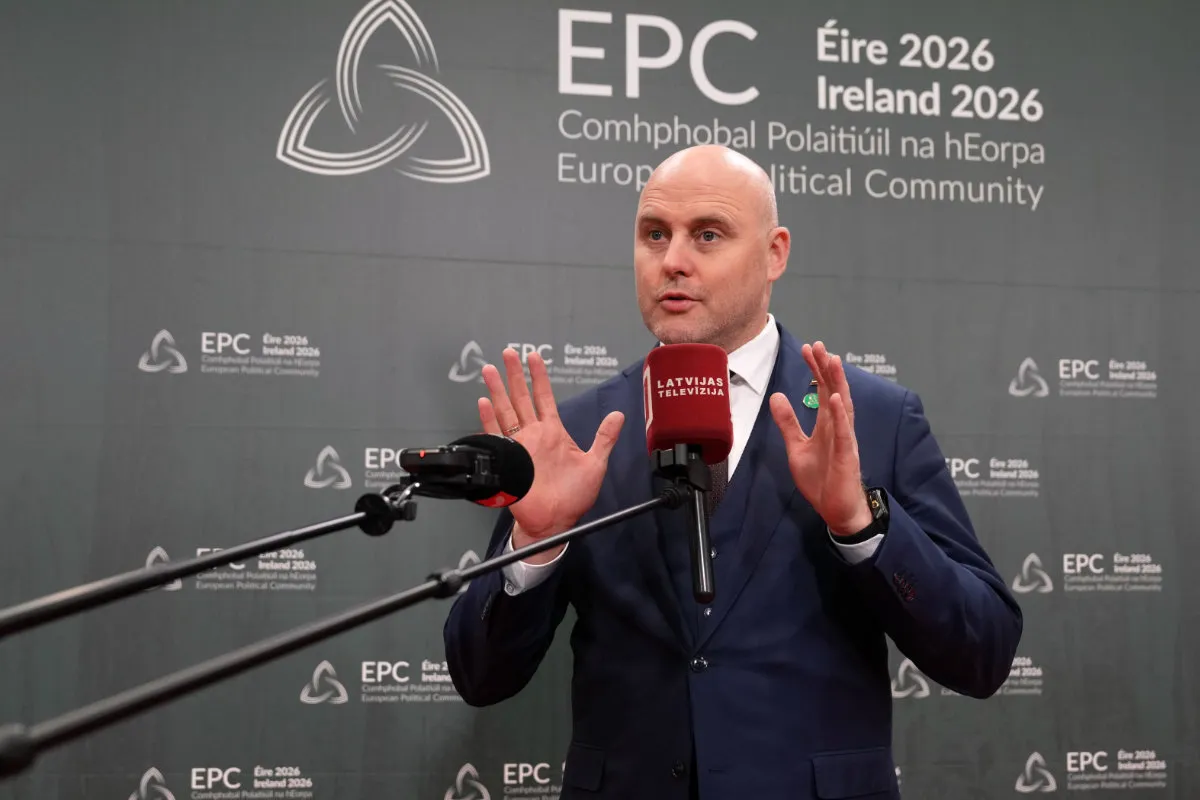
Latvian Prime Minister Andris Kulbergs has rejected Russia’s demand to include broader European security arrangements in negotiations aimed at ending the war in Ukraine. Speaking after European leaders met in Dublin, Kulbergs said Moscow was not in a position to demand changes to Europe’s security structure. His comments reflect growing resistance among European governments to Russian proposals that could affect NATO’s role and the wider military balance across the continent. Russia has pushed for discussions that could involve changes to the alliance’s presence and influence, but several European leaders have strongly opposed those demands.
European governments are also seeking a greater role in discussions led by the United States to end the war in Ukraine. Leaders agreed that Britain, France, Germany, Italy, Poland and European Union institutions should represent Europe in future negotiations with Moscow. Kulbergs said the decision was important because European countries must have a direct voice in talks that could shape their own security. He also questioned whether Russian President Vladimir Putin genuinely wanted peace, arguing that a ceasefire would be a clear sign of serious intentions.
The Latvian leader called on Washington to maintain pressure through sanctions and military support for Ukraine, warning that a lasting settlement cannot be achieved without addressing the security concerns of European countries.