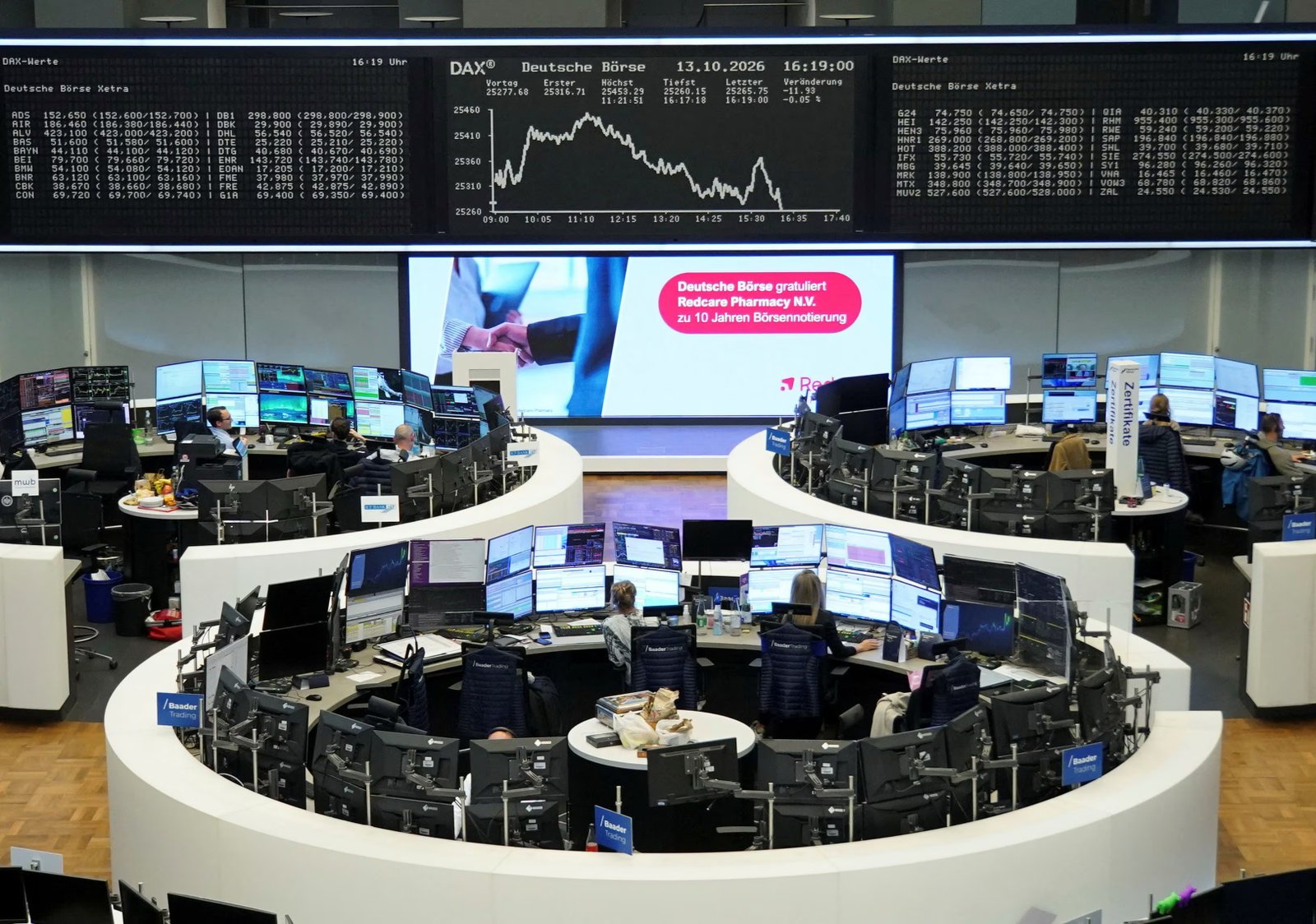



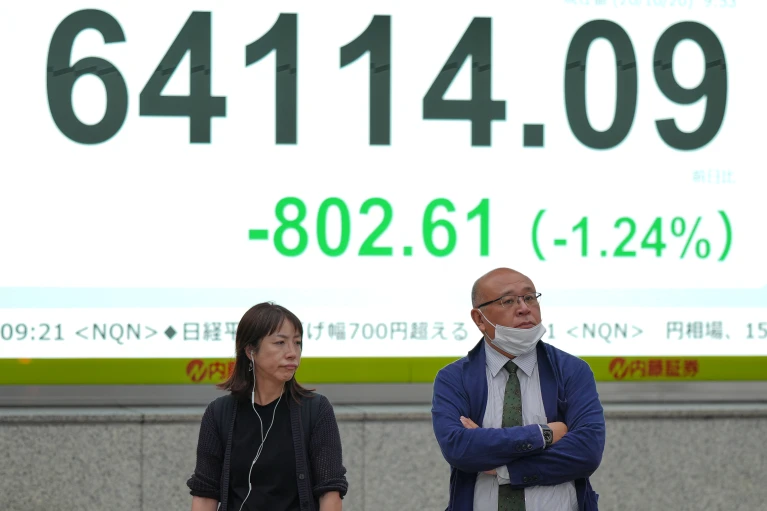
Asian stock markets mostly declined on Tuesday as investors reacted to a mixed session on Wall Street and continued uncertainty around technology shares and energy prices. Traders were also preparing for a busy period of corporate earnings, which may provide a clearer picture of how companies are handling higher costs and changing demand.
Japan’s Nikkei 225 fell 1.3%, while South Korea’s Kospi dropped 4%. Hong Kong’s Hang Seng declined 1.1%, and Australia’s S&P/ASX 200 recorded a smaller loss. The Shanghai Composite also slipped. The broad weakness showed that investors remained cautious even as some technology shares recovered in the United States.
On Wall Street, the S&P 500 gained 0.4% and the Nasdaq rose 1.1%, helped by technology and artificial-intelligence-related companies. Nvidia was among the stocks supporting the market. However, the Dow Jones Industrial Average edged lower, and many companies outside the technology sector continued to struggle.
The different performances highlight a key issue for investors: the market’s direction increasingly depends on a relatively small group of major technology companies. When those shares rise, they can lift broad indexes even if many other businesses are losing value. This can make market conditions appear stronger than the wider economy feels to some companies and households.
Investors are also concerned about the cost of building AI infrastructure. Data centres, chips and computing systems require large amounts of capital. Some companies are using borrowing to support their spending, making interest rates and future earnings especially important. If expected demand fails to appear, investors may question whether the investments will produce adequate returns.
Oil prices added another source of uncertainty. Crude remained elevated amid concerns linked to the war with Iran and its potential effect on energy supply. Higher fuel costs can affect transport, manufacturing and household budgets, while also influencing inflation and the decisions of central banks.
The coming earnings reports will help investors judge whether major companies can meet expectations. Strong results and clear forecasts may support confidence, while disappointing revenue or rising costs could trigger further selling. Markets are particularly sensitive to guidance because investors want to know whether current valuations can be justified by future profits.
For Asian economies, the movements matter because many companies depend on global trade and technology supply chains. Changes in demand for chips, electronics and digital services can influence exports and investment plans.
The market declines do not necessarily signal a lasting downturn, but they show that confidence remains fragile. Investors are balancing enthusiasm for AI with concerns about valuations, borrowing costs and the broader economic environment.