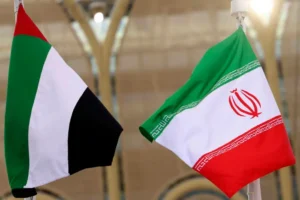


High-risk nuclear negotiations between the United States and Iran are set to resume in Geneva, as military signaling and political warnings intensify across the region.
According to Daljoog News analysis, the second round of talks comes at a moment when both diplomacy and deterrence are moving in parallel — raising the stakes well beyond the negotiating table.
The discussions are unfolding in Geneva, long considered neutral ground for sensitive diplomacy, yet the atmosphere surrounding this round is anything but calm.
What Happened?
The renewed negotiations follow months of rising tension between Washington and Tehran.
U.S. President Donald Trump indicated he will not personally attend the Geneva meeting but will remain closely engaged in the process.
Earlier, Secretary of State Marco Rubio suggested that direct talks with Iran’s supreme leader were possible if necessary.
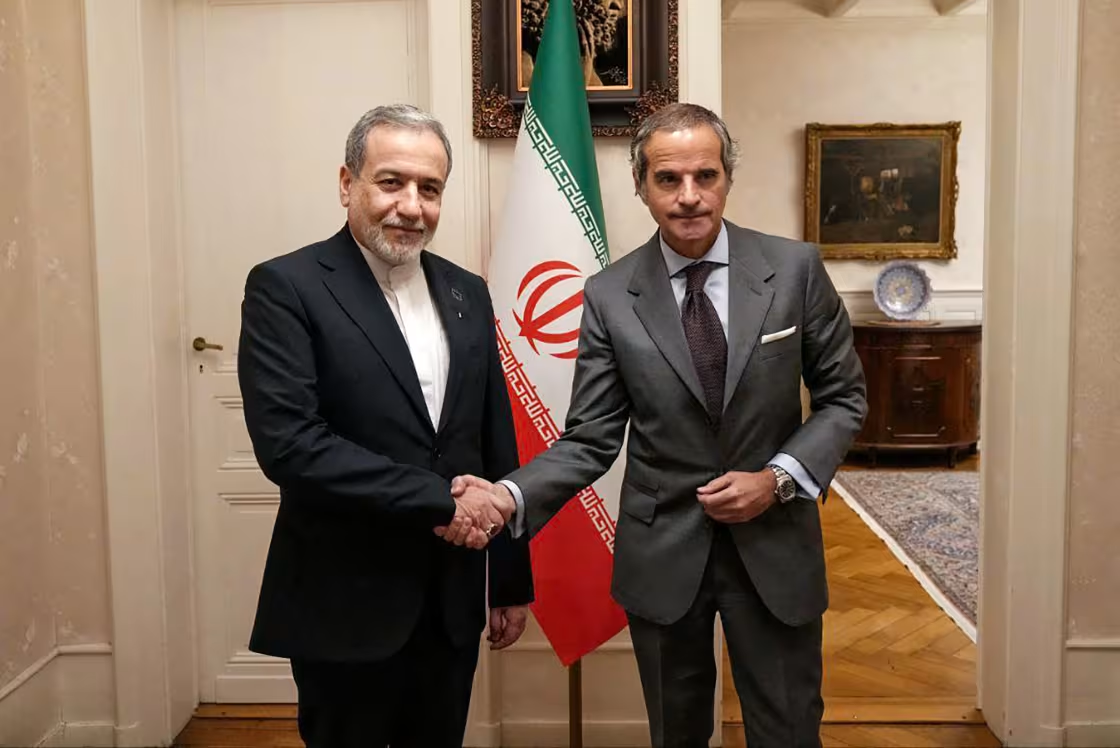
Iran’s Foreign Minister Abbas Araghchi has already arrived in Geneva to lead Tehran’s delegation. He stated that Iran seeks a fair and balanced agreement but will not negotiate under pressure or threats.
Meanwhile, Iran’s Supreme Leader Ali Khamenei issued a stern warning that any military strike against Iran could escalate into a wider regional conflict.
Ahead of the talks, reports indicate that the United States increased its military presence in the Gulf region, deploying an additional aircraft carrier.
At the same time, Iran’s Islamic Revolutionary Guard Corps conducted naval drills in the Strait of Hormuz, reinforcing its strategic leverage over a key global oil transit route.
Why This Matters
The central obstacle remains uranium enrichment.
Washington demands that Iran halt enrichment activities on its soil entirely and expand negotiations to include ballistic missile capabilities and other military programs.
Tehran rejects that framework. Iranian officials maintain that their nuclear program is peaceful and insist they will not agree to zero enrichment.
Iran has signaled openness to limited restrictions, but only in exchange for meaningful sanctions relief.
The dispute is not technical alone. It reflects deeper mistrust accumulated over years of sanctions, withdrawals from agreements and regional confrontation.
The outcome of these talks could shape Middle Eastern security for years.
If negotiations fail, the risk of escalation rises. If they succeed, they could stabilize energy markets and reduce immediate military tension.
What Analysts or Officials Are Saying
International observers describe the situation as a classic case of negotiation under pressure.
Diplomats point out that military posturing often accompanies high-level talks, especially when credibility and leverage are central concerns.
Araghchi also met with the head of the International Atomic Energy Agency in Geneva for technical discussions.
The agency seeks clarity on Iran’s stockpile of highly enriched uranium following recent strikes on facilities at Natanz, Fordow, and Isfahan.
Inspectors aim to resume comprehensive monitoring at these sites, though Iran has limited access, citing safety and radiation concerns.
Energy analysts warn that any disruption in the Strait of Hormuz would immediately affect global oil flows, as a significant portion of world crude passes through the narrow corridor.
Daljoog News Analysis
This round of talks reflects a paradox.
Both sides appear serious about diplomacy, yet neither is stepping back from military positioning.
Washington wants structural limits on enrichment and expanded oversight. Tehran wants sanctions relief without surrendering sovereign nuclear rights.
Neither position leaves much room for easy compromise.
Iran’s naval drills and U.S. carrier deployment function as silent messages: negotiations are backed by force readiness.
Such parallel signaling increases complexity. A single miscalculation — whether maritime or rhetorical — could derail diplomacy.
Yet history shows that breakthroughs often emerge precisely when tension peaks.
Geneva now carries symbolic weight. It represents not only a venue for negotiation but a test of whether deterrence and dialogue can coexist without tipping into confrontation.
The coming days will reveal whether rhetoric gives way to pragmatic compromise.
What Happens Next
Delegations are expected to continue technical and political consultations in Geneva over the coming days.
Progress will depend on whether both sides narrow their differences on enrichment levels, inspection access, and phased sanctions relief.
Regional actors will watch closely, particularly Gulf states whose economies depend on stable oil exports.
If preliminary understandings emerge, follow-up meetings could be scheduled quickly.
If talks stall, military signaling may intensify further — especially around the Strait of Hormuz.
For now, global attention remains fixed on whether diplomacy can prevent another escalation cycle in the Middle East.