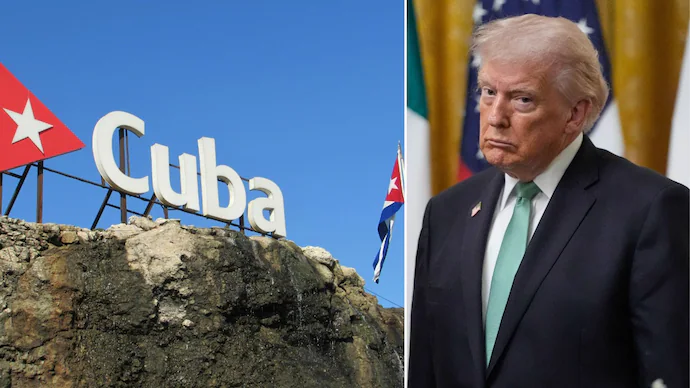

U.S. President Donald Trump has drawn sharp criticism after making controversial remarks about Saudi Arabia’s leadership during a public speech in Miami. His comments quickly spread online and triggered strong reactions across political and public circles.
According to Daljoog News analysis, the remarks risk weakening a long-standing strategic relationship between Washington and Riyadh at a time when regional stability remains uncertain.
The timing adds weight to the controversy. U.S.-Saudi ties play a central role in Middle East security, global energy markets, and wider diplomatic coordination, making public rhetoric especially sensitive.
What Happened?
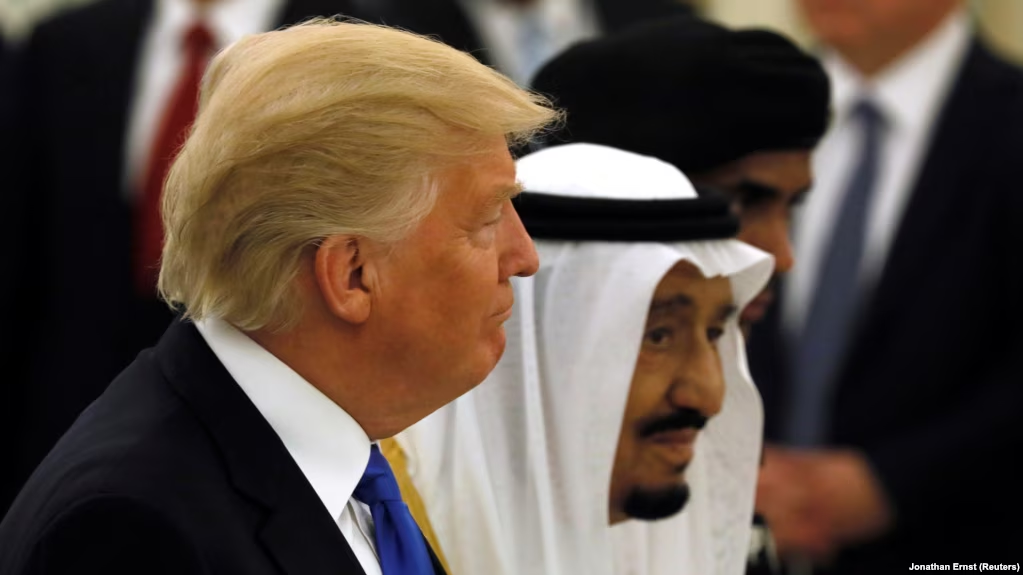
During a speech on Friday in Miami, Trump spoke about his past visit to Saudi Arabia and his interactions with Salman bin Abdulaziz Al Saud.
He highlighted the استقبال and respect he received during the visit, noting that the Saudi king personally accompanied him despite health challenges. Trump also claimed that Saudi officials viewed the United States as significantly stronger under his leadership compared to previous years.
The situation escalated when Trump used offensive language to describe Saudi Arabia’s position in relation to the United States. He suggested that the kingdom has become highly dependent on Washington and now has limited options outside of aligning closely with his leadership.
The remarks were rapidly shared across social media platforms, drawing immediate criticism and sparking debate about diplomatic conduct.
Why This Matters
The United States and Saudi Arabia maintain a critical partnership that influences global politics, particularly in defense, intelligence sharing, and energy supply.
Public statements that appear disrespectful toward Saudi leadership can create tension in a relationship built on mutual interests and strategic coordination.
The broader concern lies in timing. The Middle East is already facing multiple challenges, and strong cooperation between Washington and Riyadh is often seen as a stabilizing force.
Language used by top leaders can shape perceptions among allies and rivals alike. Statements like these risk complicating diplomatic efforts and may introduce uncertainty into an already fragile geopolitical environment.
What Analysts or Officials Are Saying
Political analysts have described the remarks as unusually direct and potentially damaging when directed at a close ally.
Experts note that while the United States holds significant influence, openly framing the relationship as one-sided may not sit well with Saudi leadership, which values sovereignty and regional authority.
Some observers believe the comments reflect Trump’s broader communication style, which often emphasizes strength and dominance to appeal to domestic audiences.
At the same time, reactions online have been largely critical, with many questioning the tone and its implications for international diplomacy.
Daljoog News Analysis
Trump’s remarks highlight a shift toward more confrontational rhetoric in global diplomacy, where public messaging sometimes replaces traditional restraint.
While Washington remains a powerful partner, Saudi Arabia is far from passive. Its influence over global oil markets and its strategic position in the Middle East give it considerable leverage.
Describing the relationship in terms of dependence rather than partnership risks eroding trust. Diplomatic relationships often rely on careful balance, not public displays of hierarchy.
There is also a long-term consideration. As global power dynamics evolve, countries like Saudi Arabia are expanding their international partnerships. Statements that appear dismissive could encourage diversification away from traditional alliances.
From a political perspective, such rhetoric may resonate domestically but could carry costs in maintaining stable international relationships.
What Happens Next
Attention will now turn to how Saudi Arabia responds, whether through official statements or quiet diplomatic engagement.
Observers will monitor any signs of strain in key areas such as defense cooperation, energy coordination, and regional policy alignment.
In the coming weeks, both sides may seek to stabilize the situation to avoid lasting damage to their partnership.