



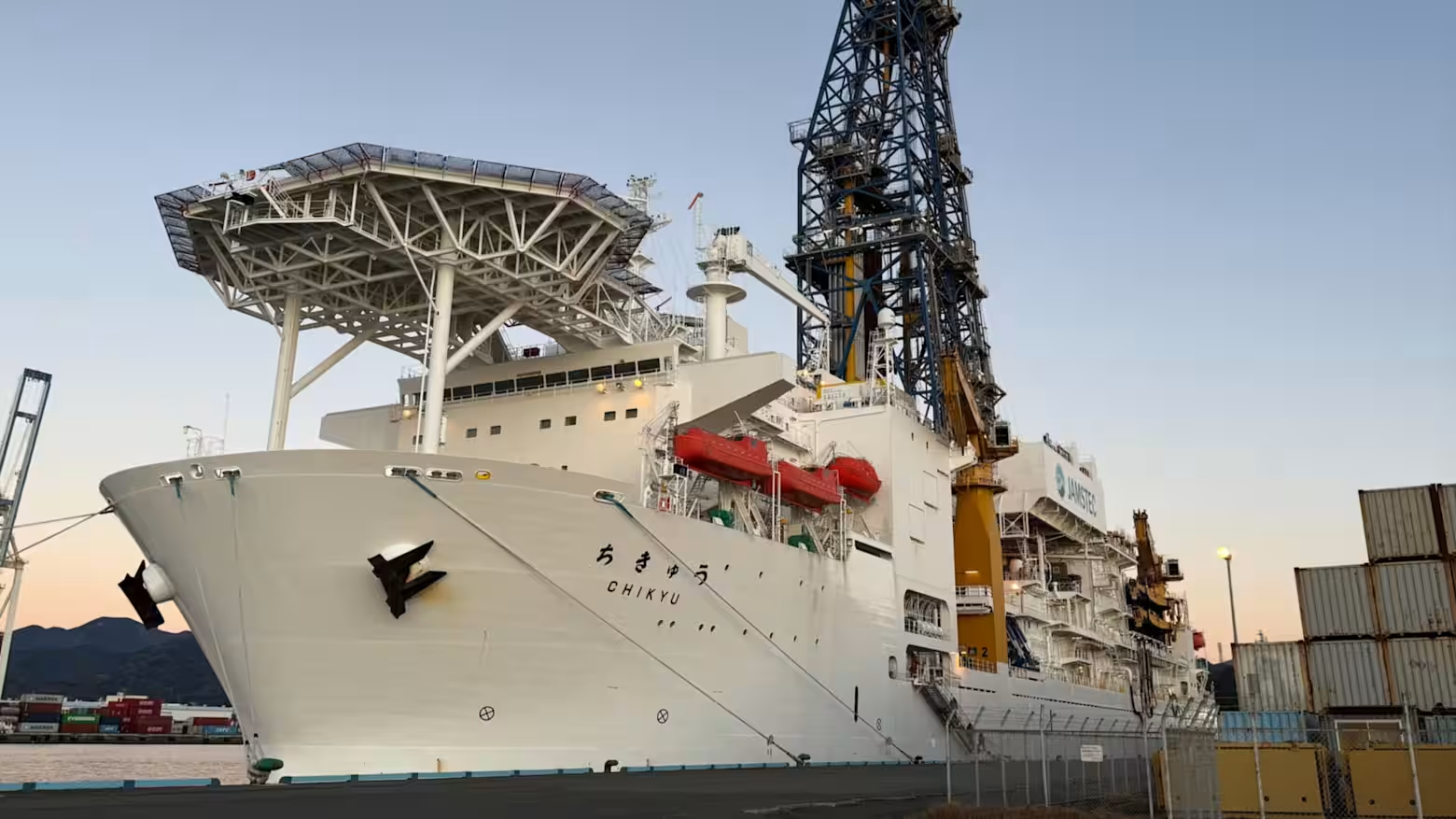
Japan has embarked on a groundbreaking effort to secure its own rare earth minerals, launching the world’s first deep-sea trial to extract the valuable resources. On Monday, the research vessel Chikyu departed for a remote coral atoll near Minamitori Island, about 1,900 kilometers southeast of Tokyo, to study seabed mud rich in rare earths. The month-long mission aims to lift rare earth sludge from depths of 6 kilometers to the ship, marking an unprecedented attempt in mining history.
The project is part of Japan’s broader strategy to reduce its dependence on China for minerals essential to electronics, automobiles, and defense equipment. Tensions have risen recently, as Beijing restricted exports of items with both civilian and military uses, including some critical minerals needed by Japan.
“One of our missions is to build a supply chain for domestically produced rare earths to ensure a stable supply of minerals essential to industry,” said Shoichi Ishii, head of the government-backed project. The vessel departed from Shizuoka port under clear skies, with Mount Fuji visible in the distance.
China has not confirmed a broader ban on rare earth exports, but state media reported that the measure is being considered. The restrictions have heightened concerns among Japan and its Western allies, who are now actively seeking alternative sources. Finance ministers from the Group of Seven countries are expected to discuss rare earth supply chains at a Washington meeting on Monday.
Japan has faced rare earth supply challenges before. In 2010, China temporarily restricted exports following a maritime dispute, which exposed the risks of heavy reliance on a single supplier. Since then, Japan has reduced its dependence on China from 90 percent to 60 percent. This was achieved through overseas projects, such as a partnership between trading house Sojitz and Australia’s Lynas Rare Earths, along with recycling initiatives and alternative manufacturing methods that use fewer rare earths.
The Minamitori Island project is Japan’s first attempt to source rare earths domestically. “The fundamental solution is to be able to produce rare earths inside Japan,” said Takahide Kiuchi, executive economist at Nomura Research Institute. Analysts warn that for certain heavy rare earths, such as those used in electric and hybrid vehicle motors, Japan remains almost entirely dependent on China, posing a significant risk to its automotive sector.
The government and private companies have built strategic stockpiles since 2010, though volumes are undisclosed. Officials also stress the need for continuous diversification of supply chains to prevent overreliance on any single source. Kazumi Nishikawa, principal director of economic security at the trade ministry, noted that companies often react to supply disruptions but may forget lessons once the crisis passes.
The Minamitori project, launched in 2018 with a government investment of 40 billion yen (around US$250 million), remains in its trial phase. No production target has been set, and estimated reserves have not been disclosed. If successful, a full-scale mining trial is planned for February 2027. Historically, seabed mining was considered uneconomical due to high costs. Analysts suggest that ongoing supply disruptions and rising prices could make the project viable in the near future.
The project has also drawn attention from China. During preliminary surveys in June 2025, Chinese naval ships monitored the vessel’s operations nearby. Ishii expressed concern over the presence of the fleet, calling it an intimidating display. China maintains that its actions comply with international law and has urged Japan to avoid exaggerating threats.
Japan’s deep-sea rare earth trial represents both a technological milestone and a strategic move to secure critical resources. As global competition for rare earths intensifies, the success of this project could shape Japan’s industrial independence and strengthen its resilience against supply chain disruptions.