



North Korea fired multiple ballistic missiles into the East Sea early Sunday, South Korea’s Joint Chiefs of Staff reported. The launches continue Pyongyang’s recent show of military strength, but the timing suggests a message aimed at Seoul and its allies.
The missile launches occurred a day before South Korean President Lee Jae Myung meets Chinese President Xi Jinping in Beijing. Lee began a four-day state visit to China on Sunday, with the summit scheduled for Monday. Analysts say the talks will likely focus on strengthening bilateral relations, but North Korea’s activities are expected to dominate discussions.
The Lee administration hopes to engage Pyongyang, but direct inter-Korean talks remain unlikely. China’s role is seen as key in any potential dialogue. Some observers also note that the launch coincides with the U.S. detaining Venezuelan President Nicolás Maduro, which may have influenced North Korea’s timing.
Seoul’s Joint Chiefs of Staff said the missiles were fired from near Pyongyang at about 7:50 a.m. They traveled roughly 900 kilometers before landing in the sea. South Korean and U.S. militaries are analyzing the projectiles and sharing intelligence with Japan, which confirmed that the missiles fell outside its exclusive economic zone.
The launch prompted South Korea’s National Security Office to convene a meeting, urging Pyongyang to stop violating UN Security Council resolutions. Analysts estimate the missiles have a range of about 1,000 kilometers, similar to projectiles fired in November last year.
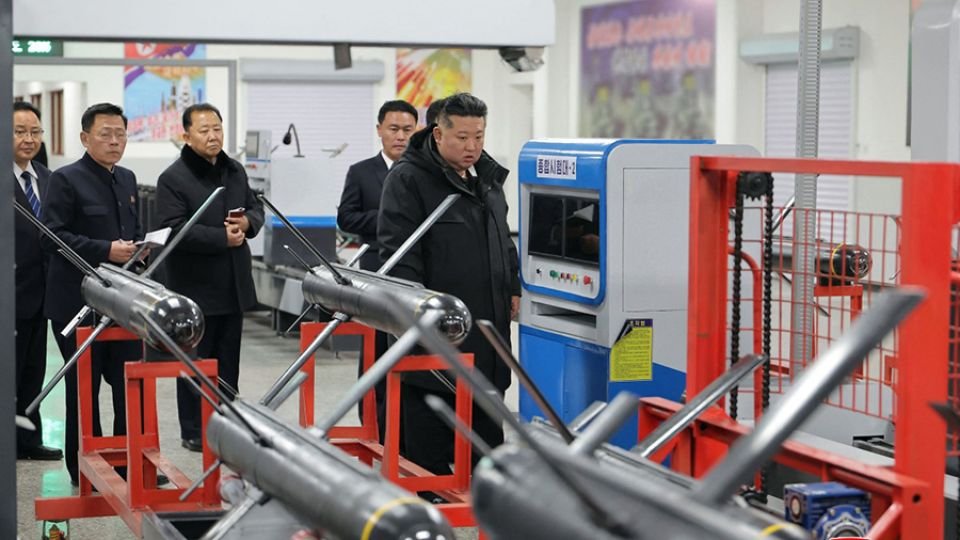
State media in North Korea reported that leader Kim Jong-un inspected a key munitions factory on Saturday. He reviewed the production of tactical guided weapons, including the North Korean version of the Spike missile. The official Rodong Sinmun newspaper said Kim assessed modernization progress for faster and more efficient manufacturing systems.
Kim also ordered a review of 2026 production plans and directed a 2.5-fold increase in precision-guided weapon output. These weapons are designed to replace multiple-launch rocket systems, reflecting Pyongyang’s focus on modernizing its military arsenal.
Recent coverage in North Korean media has highlighted Kim’s direct oversight of weapons programs. Last week, the Korean Central News Agency reported that Kim supervised strategic long-range cruise missile tests. He emphasized the importance of maintaining nuclear deterrence and said North Korea would continue the “unlimited and continuous development of nuclear power.”
State media also showed Kim inspecting a nuclear-powered submarine project last month. He ordered expanded production of missiles and artillery, reinforcing the regime’s commitment to strengthening both conventional and nuclear capabilities.
The repeated missile launches signal Pyongyang’s intent to showcase its military strength and test regional responses. Analysts warn that these actions could raise tensions across Northeast Asia and complicate diplomatic efforts.
The timing, just before the Seoul-Beijing summit, underscores the strategic messaging North Korea seeks to convey. While South Korea aims to engage diplomatically, Pyongyang continues to emphasize its military readiness, signaling that it remains a critical factor in regional security dynamics.