


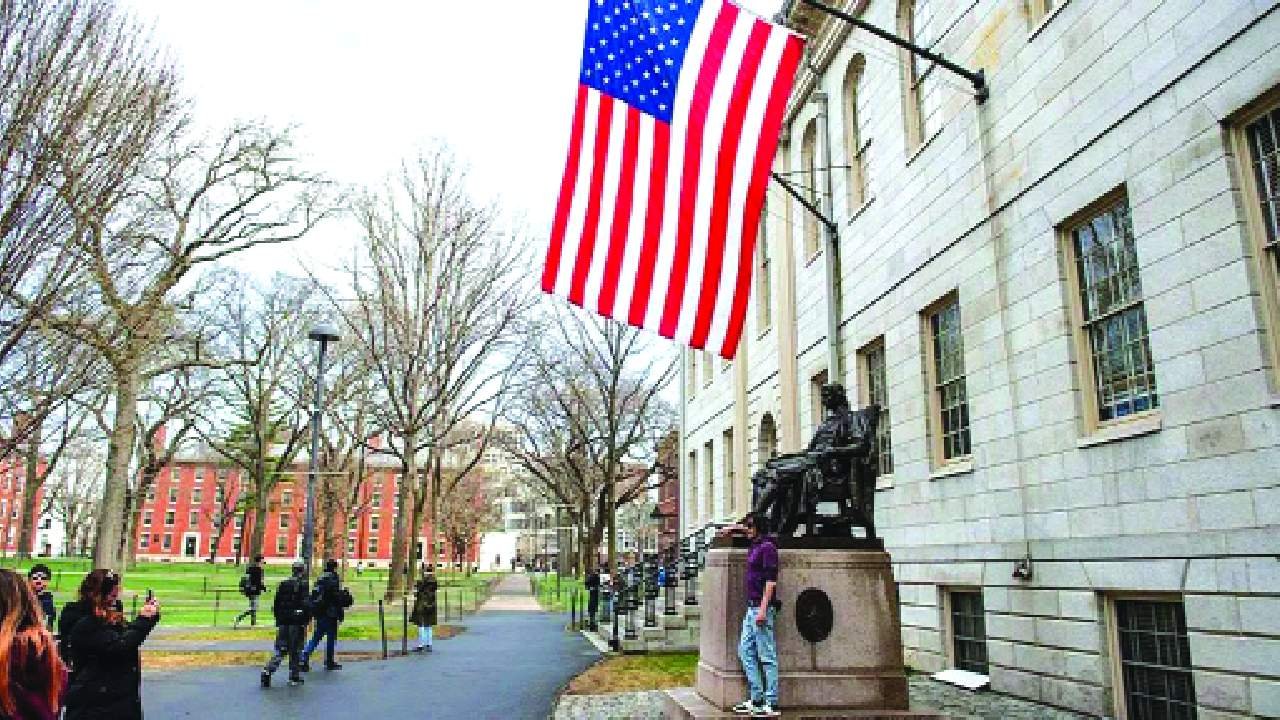
The U.S. Department of Defense has decided to sever all institutional ties to Harvard University’s military education programs, bringing an end to a long-standing relationship between the Pentagon and one of the country’s most influential academic institutions.
According to Daljoog News analysis, the move reflects more than a policy shift. It signals a deepening ideological clash between the Trump administration and elite universities over national values, security, and academic influence.
The decision comes at a time when tensions between Harvard and the White House have intensified, with disputes now spilling into federal education and defense policy.
What Happened?
On Friday local time, U.S. Defense Secretary Pete Hegseth announced that the Pentagon would terminate all professional military education programs linked to Harvard University. The decision covers military fellowships, certificate programs, and other forms of structured academic cooperation.
Hegseth said the Defense Department had previously sent promising military officers to top universities, including Harvard, to help bridge understanding between the armed forces and civilian society. However, he argued that this objective was no longer being met.
According to the defense secretary, officers returning from such programs were increasingly influenced by ideas he described as incompatible with core U.S. military values. He claimed that participants were returning with globalist and extremist perspectives rather than with a strengthened commitment to national defense priorities.
The announcement formally places Harvard outside the Pentagon’s professional military education framework.
Why This Matters
The decision marks a significant turning point in the relationship between the U.S. military and the higher education sector. Harvard has long served as a training and research hub for policymakers, diplomats, and military leaders.
Pentagon officials have indicated that this review will not be limited to Harvard alone, raising concerns that similar partnerships with other universities could also be reconsidered.
The move may reduce opportunities for military officers to engage with civilian academic environments, a practice historically seen as valuable for strategic thinking and leadership development.
It also reignites debate over academic freedom and political pressure on universities, particularly when ideological disagreements are framed as national security concerns.
In this context, the issue extends beyond education. It highlights growing polarization between federal authorities and academic institutions, with potential long-term consequences for policy-making and civil-military relations.
What Analysts or Officials Are Saying
Defense Secretary Hegseth leveled several serious allegations against Harvard. He accused the university of encouraging Hamas, tolerating attacks against Jewish communities, and continuing to promote race-based discrimination.
He also claimed that some of Harvard’s research programs have links to the Chinese Communist Party, which he described as a direct risk to U.S. national security.
The Pentagon stated that it would now review military education and research partnerships with other universities as part of a broader reassessment.
Harvard President Alan Garber rejected the allegations outright. He said the university would not surrender its independence or abandon its constitutional rights under political pressure.
Garber emphasized that Harvard has consistently opposed antisemitism and considers that stance a moral obligation rather than a political position.
Daljoog News Analysis
The Pentagon’s decision appears to be as much political as it is administrative. It reflects the Trump administration’s broader skepticism toward elite academic institutions and their perceived ideological leanings.
While cutting ties with Harvard may resonate with certain political audiences, the long-term consequences could be complex. Historically, the U.S. military has benefited from exposure to diverse civilian perspectives, academic research, and critical debate.
From Daljoog News’ perspective, severing these links risks narrowing the intellectual environment in which future military leaders are trained. It also intensifies the longstanding tension between academic independence and government oversight.
If similar actions are taken against other universities, the issue could escalate into congressional scrutiny or legal challenges, particularly around constitutional protections and federal authority.
What Happens Next
The Pentagon has confirmed that it will review military education and research programs at other universities, suggesting that further suspensions are possible.
Harvard may respond through legal channels or policy advocacy, having already signaled its determination to defend its institutional autonomy.
The situation is likely to influence broader debates over education policy, national security, and the role of universities in shaping public service leadership in the United States.