

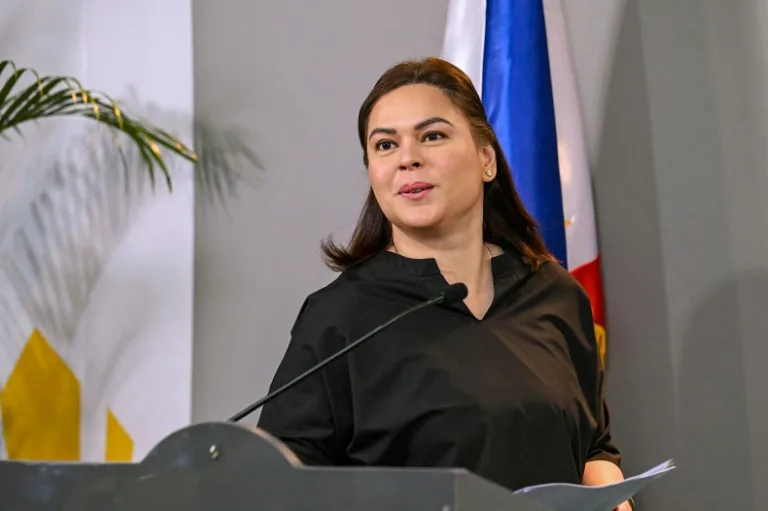
Philippine Vice President Sara Duterte officially declared her candidacy for the country’s 2028 presidential election on Wednesday, stepping into a high-stakes political battle with President Ferdinand “Bongbong” Marcos Jr. The announcement marks a bold escalation in the long-running rivalry between two of the nation’s most powerful political families.
According to Daljoog News analysis, Duterte’s declaration signals a continued fragmentation of the Philippine political landscape, highlighting how personal rivalries, family dynasties, and corruption allegations dominate national politics. Her campaign is likely to reshape alliances and set the stage for a heated contest five years before the election.
The announcement comes amid overlapping political crises: Duterte faces renewed impeachment threats, her father, Rodrigo Duterte, faces pre-trial hearings at the International Criminal Court over alleged crimes against humanity, and Marcos contends with a major domestic scandal involving questionable flood-control projects.
What Happened?
In a public address on Wednesday, Sara Duterte framed her presidential bid as a commitment to national service, while criticizing Marcos’s record. “I offer my life, my strength, and my future in the service of our nation,” she said, before confirming, “I am Sara Duterte. I will run for president of the Philippines.”
Daughter of former president Rodrigo Duterte, Sara accused Marcos of corruption and failing to honor promises made during their brief political alliance, which helped secure their 2022 landslide victories. The feud between the Duterte and Marcos clans, simmering since the first months of their shared term, has escalated into open confrontation in recent years.
Her announcement comes days before Rodrigo Duterte faces a pre-trial hearing at the International Criminal Court in the Netherlands. The hearing, scheduled over four days, will determine whether sufficient evidence exists to move forward to trial on alleged crimes committed during his controversial anti-drug campaigns.
Sara Duterte herself is under renewed scrutiny, with a fresh impeachment complaint filed by members of the Philippine clergy on February 9, one of three recent complaints lodged in a matter of days. By contrast, two impeachment complaints against Marcos were dismissed by the House justice committee, which cited insufficient substance.
Under the Philippine constitution, impeachment cases trigger a Senate trial. A guilty verdict would bar Duterte from political office, potentially derailing her 2028 presidential ambitions.
Why This Matters
Duterte’s announcement sets up a likely confrontation between two powerful political dynasties, reflecting a broader pattern of family-led politics in the Philippines. Her candidacy could reshape voter alliances and challenge Marcos at a time when his administration faces both public backlash and legal controversies.
Marcos, meanwhile, is grappling with a flood-control scandal that has implicated friends, allies, and even family members. Reports suggest taxpayers may have lost billions of pesos due to questionable projects, a situation that has fueled public scrutiny and political criticism.
This emerging contest also underscores the fragile interplay of law, politics, and public perception in the Philippines. With ongoing impeachment attempts and high-profile international legal proceedings, both families are navigating a highly charged environment that could influence the outcome of the next national election.
What Analysts or Officials Are Saying
Observers note that Sara Duterte’s campaign is likely to galvanize supporters loyal to the Duterte legacy while drawing sharp opposition from Marcos allies. Analysts expect the feud to dominate headlines in the coming months, influencing not just voters but also legislative and judicial maneuvering.
Legal experts point out the potential implications of ongoing impeachment complaints and ICC proceedings. The timing of these cases could either strengthen or weaken Duterte’s bid, depending on whether the legal challenges succeed or stall. Marcos’s handling of domestic scandals, particularly the flood-control issue, will also play a critical role in shaping public opinion.
Political analysts suggest that the Philippine electorate may increasingly see the 2028 election as a referendum on corruption, governance, and the influence of political families rather than purely policy debates.
Daljoog News Analysis
Sara Duterte’s presidential announcement is both a strategic and symbolic move. By entering the race early, she signals readiness to confront Marcos and positions herself as a continuity figure for her father’s political base. The bid also highlights the enduring role of personal rivalries and political dynasties in Philippine governance.
The overlapping legal and political crises facing both families suggest the 2028 election will be unusually volatile. Duterte’s campaign will need to navigate impeachment threats, her father’s international legal scrutiny, and the public’s growing concern over corruption and mismanagement under Marcos.
Daljoog News assesses that the coming years will likely see intensified political maneuvering, pre-election alliances, and media campaigns aimed at shaping voter perception. The election will not only determine leadership but may also redefine power dynamics among the country’s elite families.
What Happens Next
Sara Duterte will begin building her campaign infrastructure, solidifying alliances, and framing a policy platform in the months ahead. Analysts expect early skirmishes with Marcos’s supporters, media debates, and potential legal challenges over the impeachment complaints.
Marcos’s administration will also be under pressure to address ongoing scandals while countering the political momentum generated by Duterte’s announcement. The outcome of her campaign, alongside legal and political developments, will shape the Philippine political landscape leading up to 2028.