

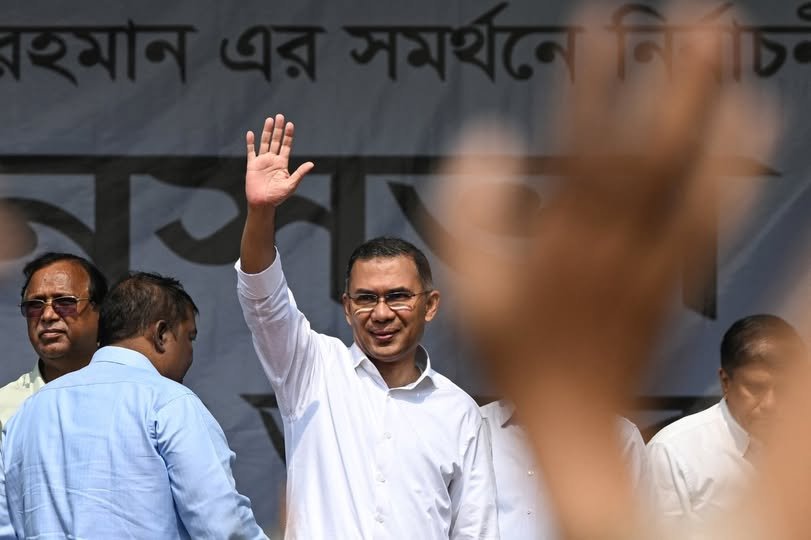
Tarique Rahman was sworn in as Bangladesh’s prime minister on Tuesday, following a decisive election victory for his Bangladesh Nationalist Party (BNP). The ceremony took place outside the parliament building in Dhaka, with President Mohammed Shahabuddin administering the oath.
According to Daljoog News analysis, Rahman’s rise reflects a dramatic shift in Bangladesh’s political landscape. It follows the 2024 student-led uprising that led to the removal of former Prime Minister Sheikh Hasina and the interim government’s 18-month tenure.
Rahman now faces the challenge of fulfilling the reforms outlined in the July National Charter, a sweeping governance overhaul approved by more than 60 percent of voters. The timing underscores a pivotal moment in Bangladesh’s political evolution.
What Happened?
On Tuesday, Rahman pledged to carry out his duties “in accordance with the law” as he assumed the prime ministership. Lawmakers were also sworn in inside parliament by Chief Election Commissioner AMM Nasir Uddin, pledging loyalty to Bangladesh.
The BNP secured at least 212 of the 300 parliamentary seats in last week’s elections, giving it a clear two-thirds majority. The Jamaat-e-Islami party captured 77 seats, while Sheikh Hasina’s Awami League was barred from participation. Cabinet members were scheduled to take their oaths later in the day.
The inauguration drew foreign dignitaries, including Pakistan’s foreign minister and India’s parliamentary speaker. Despite tight security, hundreds of citizens gathered outside parliament to witness the historic event. Observers noted a strong demand for new voices and younger representatives in government.
Why This Matters
Rahman’s administration marks a major political realignment in Bangladesh, ending nearly two decades of Awami League dominance. The new government inherits the responsibility of implementing the July National Charter, a transformative document proposing over 80 reforms to the governance system.
Key changes include introducing term limits, establishing a bicameral parliament, and curbing the governing party’s ability to make unilateral amendments. Analysts say these measures aim to address longstanding demands for transparency, accountability, and broader representation, particularly from younger voters who drove the 2024 uprising.
The election also signals a shift in Bangladesh’s international posture. The presence of foreign dignitaries at the swearing-in demonstrates global attention to the country’s new leadership and its potential impact on regional stability and trade.
What Analysts or Officials Are Saying
Political analysts suggest Rahman’s early focus will be on consolidating parliamentary support and executing the National Charter reforms. Observers note that his government faces high expectations from citizens seeking fresh leadership and policy innovation.
Media reporting emphasizes the demand for younger and more qualified lawmakers. Analysts predict that Rahman’s cabinet will include new faces reflecting these expectations, signaling a generational shift in governance. The reforms, if fully implemented, could reshape Bangladesh’s political system and reduce long-standing centralization of power.
Daljoog News Analysis
Rahman’s ascent represents both continuity and change. While the BNP retains its established political base, the July National Charter introduces unprecedented checks on authority, reflecting public demand for reform. Daljoog News analysis indicates that Rahman’s administration will be judged not just on party loyalty but on its ability to deliver meaningful institutional change.
The July uprising and charter approval highlight the growing influence of youth and civil society in shaping national politics. Rahman’s government must navigate the tension between established party structures and the new expectations of citizens who demand accountability, inclusion, and modernization of governance.
What Happens Next
In the coming weeks, Tarique Rahman is expected to finalize his cabinet and begin implementing the National Charter’s reforms. Attention will focus on how the new government handles legislative changes, policy rollout, and public engagement.
The international community is likely to monitor Rahman’s early decisions closely, particularly regarding economic policy, regional diplomacy, and adherence to democratic norms. Domestically, the government will face pressure to demonstrate that the promises of the July National Charter translate into tangible change for Bangladesh’s citizens.
The next few months will test Rahman’s ability to balance political authority with the reformist expectations that propelled him to power, setting the tone for the country’s trajectory in the years ahead