

The Pentagon press corps, once a top assignment for elite journalists, has dramatically shifted in makeup. Traditionally, this role was reserved for reporters from established newspapers and news channels. Today, the press room is dominated by rightwing activists and partisan commentators.
Last week, during a key Pentagon press briefing amid ongoing controversies, more than a dozen attendees were rightwing media figures. These included allies of former President Donald Trump, members of Turning Point USA, and staff from a fledgling media company founded by a pillow entrepreneur.
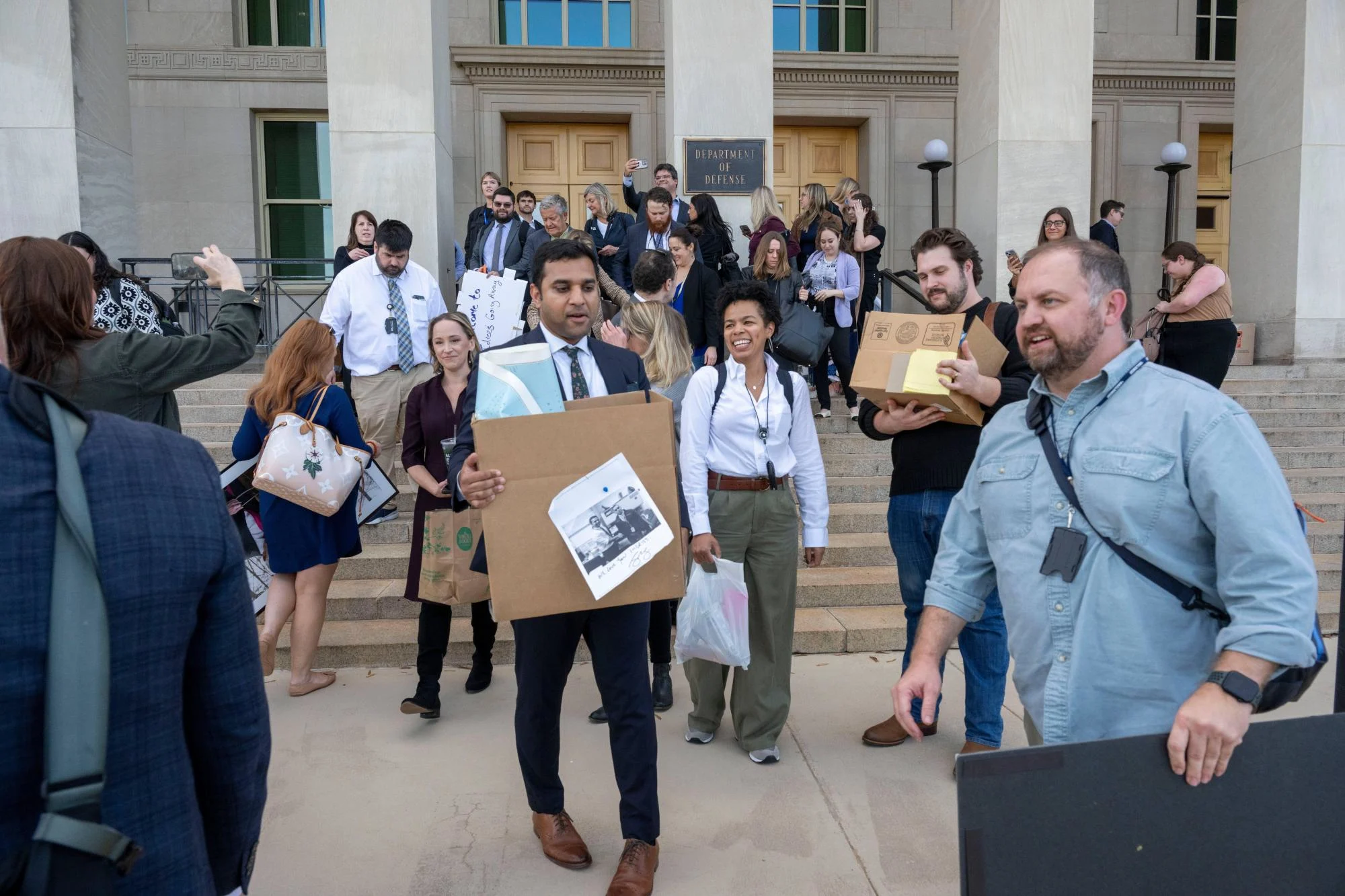
This shift followed a mass exit of credentialed journalists from traditional media. In October, many reporters surrendered their Pentagon press passes rather than sign a 21-page document imposing strict limits on journalistic activities. These rules restricted reporters to only using officially provided information and limited access to certain Pentagon areas.
Afterward, the Pentagon granted press access to numerous rightwing media figures who agreed to the new conditions. Among them were Laura Loomer, a Trump supporter known for controversial views; LindellTV, run by MyPillow CEO Mike Lindell; and Matt Gaetz, former congressman turned host at One America News Network.
Experts warn that the new press corps lacks independence. The current members are largely hyper-partisan, conservative outlets or social media personalities, raising questions about their ability to hold the Pentagon accountable.
Carole-Anne Morris, a journalism professor, explained, “Severely limited access to the already secretive military-industrial complex is incredibly problematic. These journalists will mostly relay information spoon-fed by Pentagon officials. They cannot investigate independently, which undermines journalism’s role in democracy.”
The concern comes at a critical time. The Pentagon has faced recent controversies, including a report from its inspector general revealing that Defense Secretary Pete Hegseth used the messaging app Signal to share sensitive operational details about a mission in Yemen. The incident exposed risks to national security and led to calls for his resignation. Additionally, questions remain about a double strike on a suspected drug boat in the Caribbean.
Independent scrutiny is vital, but the new press corps appears poorly equipped. Rightwing outlets such as Turning Point USA, the Daily Signal, the Gateway Pundit, and the Post Millennial often focus on partisan narratives rather than investigative reporting. Critics argue this limits the public’s access to unbiased, factual information about the military.
The New York Times has filed a lawsuit against the Pentagon and Hegseth, claiming the restrictions violate First Amendment rights. Gregg Leslie, director of the First Amendment Clinic at Arizona State University, said, “Anything that limits what journalists can say or do, or discriminates based on viewpoint, is unacceptable. These rules undermine the independence essential to press freedom.”
Despite criticism, the Pentagon has defended the changes. A recent statement described the onboarding of more than 70 independent journalists, bloggers, and social media influencers. The department claims this “new media” approach is designed to reach a broader segment of the American public. Pentagon press secretary Kingsley Wilson said, “We want to make sure that we’re reaching as many Americans as possible.”
However, critics argue that reaching more people does not compensate for a lack of journalistic rigor. They say the Pentagon’s move has transformed a once-respected press corps into a platform for partisan commentary, limiting transparency and accountability.
As scrutiny of military actions continues, the role of an independent press is more important than ever. Analysts warn that the current press corps may struggle to provide unbiased oversight, leaving the public without crucial insights into the Pentagon’s operations.