

Fresh speculation is emerging over whether Afghanistan’s ruling Taliban could take a position if tensions between Iran and the United States escalate into open conflict.
According to Daljoog News analysis, recent rhetoric and regional military positioning have fueled debate about whether the Taliban would align with Tehran in the event of a wider confrontation.
The issue has resurfaced amid renewed strain between Washington and Tehran, placing Afghanistan back into the broader regional security conversation.
What Happened?
Following the 2021 withdrawal of US forces from Afghanistan, large quantities of military equipment were left behind and later fell under Taliban control. The withdrawal was overseen by the United States Department of Defense.
At the time, US officials acknowledged that significant numbers of armored vehicles, aircraft, drones, and small arms remained intact during the rapid evacuation.
Discussion has also re-emerged around the strategic relevance of Bagram Air Base, once the largest US military installation in Afghanistan. The base’s location has long been viewed as strategically important in regional calculations.
Taliban authorities have publicly stated they would not permit the return of foreign military forces to Afghan territory.
Why This Matters
Afghanistan shares approximately 921 kilometers of border with Iran. The geographic proximity makes logistical coordination theoretically possible if any form of cooperation were pursued.
If the Taliban were to provide direct military support to Iran—or become involved in combat—it could significantly shift the regional security balance across South Asia and the Middle East.
However, analysts caution that such a move would carry serious risks.
The Taliban are now a governing authority, not an insurgent movement. Afghanistan faces economic fragility, humanitarian pressures, and limited international recognition. Entering a regional war could deepen isolation and trigger additional sanctions.
Experts suggest that political signaling or limited indirect support—rather than full-scale military engagement—would be more plausible under current conditions.
What Analysts Are Saying
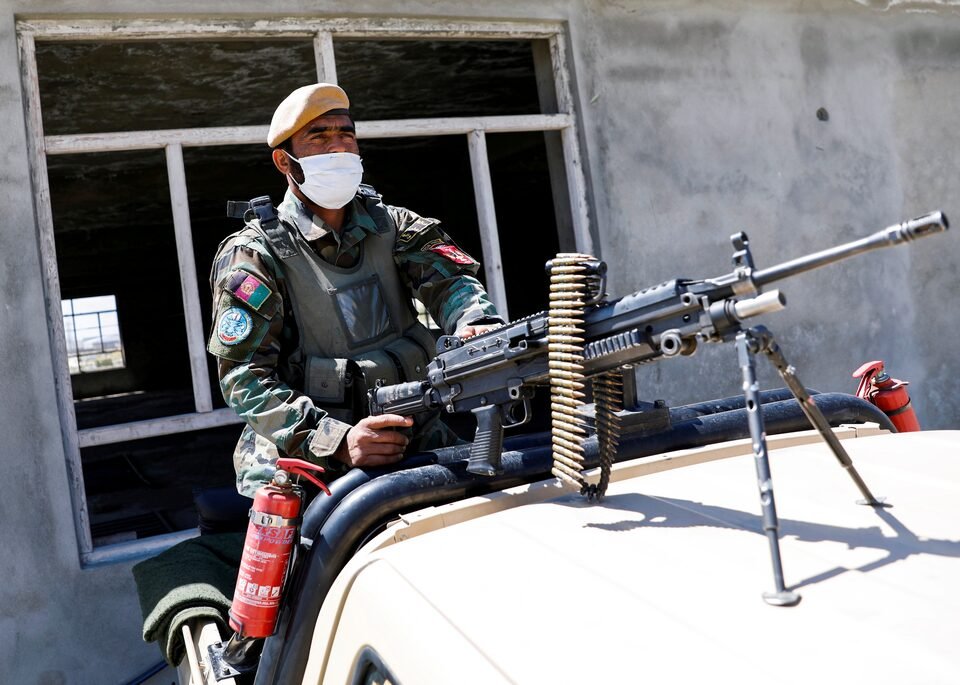
Estimates of the exact volume of US-origin military equipment now under Taliban control vary. Reports suggest the group possesses hundreds, possibly thousands, of armored vehicles, along with helicopters and surveillance drones.
However, maintaining and operating advanced military systems requires sustained logistics, training, and supply chains—capabilities that may be limited.
While the Taliban gained extensive experience fighting US forces over two decades, interstate warfare presents a different operational challenge than guerrilla conflict.
Security experts note that possessing equipment does not automatically translate into full operational readiness.
Daljoog News Analysis
Current discussions about Taliban involvement appear more rooted in strategic messaging than confirmed military planning.
The Taliban’s primary focus remains internal consolidation of power, economic survival, and securing diplomatic engagement from regional actors.
Direct involvement in an Iran-US conflict could expose Afghanistan to retaliation or deeper international isolation.
Still, the combination of geography, existing weapon stockpiles, and past combat experience ensures the Taliban remain a factor in broader regional calculations.
Any miscalculation could widen the scope of instability beyond bilateral tensions.
What Happens Next
Developments in Iran-US diplomacy will likely determine how serious these concerns become.
If diplomatic channels remain open, the likelihood of expanded regional engagement may decrease. However, further escalation could raise pressure on neighboring states to clarify their positions.
International observers are watching closely to see whether Taliban statements remain rhetorical—or translate into concrete policy shifts.